



Idaho pauses executions into 2026 as prison system preps for firing squad
Published at
Kevin Fixler, Idaho Statesman
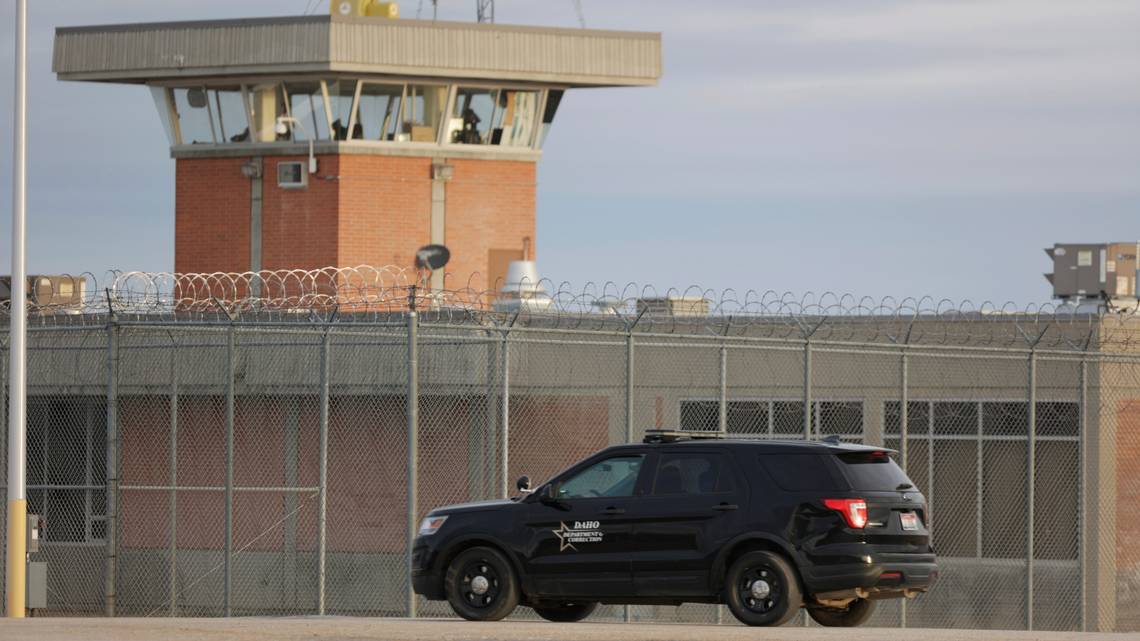
BOISE (Idaho Statesman) — Executions are on hold in Idaho.
The state prison system suspended its ability to carry out the death penalty through at least the end of the year as officials begin the transition to firing squad executions. The move requires a remodel at the maximum security prison to be ready when the new law prioritizing the controversial method takes effect in July 2026.
The Idaho Department of Correction announced it is set to start renovating the state’s execution chamber, located in the wing known as F-Block at the prison complex south of Boise. The project is expected to take six to nine months to complete, IDOC said in a news release issued on the social platform X on Friday before the extended holiday weekend.
“As of May 23, 2025, F-Block will be taken completely offline due to construction,” the release read. “As a result, all executions and execution-related procedures will be unavailable, including execution by lethal injection.”
IDOC did not immediately respond Tuesday morning to a request for the final cost as renovation of the execution chamber begins under new Director Bree Derrick, who stepped into the role last month. The remodel was last estimated to cost almost $1 million, IDOC spokesperson Sanda Kuzeta-Cerimagic told the Idaho Statesman earlier this year. The agency planned to have an updated estimate once it was ready to move forward with construction, she said.
The Death Penalty Information Center tracks the evolution of capital punishment in the U.S. The Washington, D.C.-based nonprofit does not take a position on the death penalty.
“It’s up to the voters of Idaho to determine whether they approve of this kind of tremendous investment of time, money and resources by state officials into pursuing more executions instead of funding community safety projects and victim family resources and other more meaningful endeavors that would keep communities safer,” Robin Maher, the nonprofit’s executive director, told the Statesman by phone.
IDOC will meet required timelines for the remodel and budgetary demands for the firing squad project, the agency said in its news release.
“We are confident that we will be able to make that happen in advance of the July 1 effective date next year,” Derrick told an Idaho legislative committee in March.
Idaho is one of 27 U.S. states with capital punishment. Five of those states have a firing squad on the books, but only Idaho will have it as its main method for carrying out the death penalty after Gov. Brad Little signed it into law. Lethal injection will remain the state’s backup method.
Before that, Idaho executed prisoners by hanging them to death, and did so nine times dating to statehood in 1890, according to the Idaho State Historical Society. The state shifted away from hangings in 1978 in favor of lethal injection, and since then the prison system has executed three prisoners by that method.
IDOC already barred from pursuing executions
Idaho has not executed a prisoner in nearly 13 years, the last time in June 2012. Prison officials tried to put to death Thomas Creech, the state’s longest-serving death row prisoner, in February 2024, but failed to do so when the execution team could not find a suitable vein for an IV to administer lethal injection drugs.
Creech, now 74, survived the attempt and has remained in legal limbo for more than a year. He is currently under a stay of execution on a constitutional rights claim that a second attempt to put him to death would be cruel and usual. That claim is still under a federal judge’s review.
“I laid on that table and fully expected to die that day,” Creech later told the Statesman in a phone interview. “And actually, to be honest with you, I still feel like I’m dead and this is just the afterlife.”
Creech, found guilty of three murders in Idaho, is one of nine prisoners on the state’s death row. Chad Daybell, convicted of murdering a prior wife and his current wife’s two children, is the latest addition to the group.
High-profile defendant Bryan Kohberger also is up for a possible death sentence if he is convicted on charges of killing four University of Idaho students in November 2022. His capital murder trial is scheduled to start this summer in Boise.
Meanwhile, a federal judge already barred the state prison system from pursuing an execution until it made upgrades to provide witnesses with access to the room where the execution team prepares and administers lethal injection drugs. The ruling came after three media outlets, including the Statesman and East Idaho News, sued IDOC for access for execution witnesses — members of the press among them — to the concealed room next to the execution chamber.
RELATED | Judge blocks Idaho executions until prison officials improve media access
U.S. Magistrate Judge Debora Grasham for the District of Idaho, who granted the preliminary injunction against executions in Idaho, cited previous precedents from the 9th Circuit Court of Appeals in her decision. That court has generally ruled in favor of the “significant public interest in upholding First Amendment principles” when constitutional rights claims are made against the government, Grasham wrote.
The Idaho Attorney General’s Office represents IDOC in the lawsuit, and last week appealed the preliminary injunction decision to the 9th Circuit Court. The Attorney General’s Office did not immediately respond Tuesday morning to a request for comment from the Statesman about its appeal and IDOC’s suspension of executions while it completes the firing squad renovation.