



A glacier outburst is underway in Alaska. It’s sending a surge of water downstream toward Juneau
Published at
CNN Meteorologist Mary Gilbert, Amanda Musa, CNN
(CNN) — A wave of water gushing out of an Alaskan glacial lake is causing a river to surge to a record level and is threatening significant flooding in the state capital of Juneau for the third consecutive August.
“A glacial outburst has occurred at Suicide Basin. The basin is releasing and flooding is expected along Mendenhall Lake and River,” Juneau officials said in a Tuesday news release. “Officials recommend residents in the 17ft lake level inundation zone evacuate the area until the flood waters recede.”
Suicide Basin is a glacial lake attached to the Mendenhall Glacier that runs up against the western portion of Juneau, about 10 miles from the city’s center. The basin formed as parts of its glacier melted and retreated and now acts like a giant bucket, filling up with rain, snow and ice that slowly melts over the summer.
Eventually, Suicide Basin gets so full that it escapes the surrounding ice of the Mendenhall Glacier. When that happens, water gushes out into the nearby Mendenhall Lake and eventually surges down the river.
The Mendenhall River, which flows along the west side of the city, eclipsed its previous record high level of 15.99 feet Wednesday morning after rising more than 7 feet since the National Weather Service issued the first flood warning for the area Tuesday morning.
It’s expected to crest at around 16.7 feet sometime Wednesday morning, well above the previous record crest set just last August.
The river pulled in large trees as it rose overnight, making conditions even more hazardous. “It’s very dangerous right now. Stay away if you can,” said Andrew Park, a meteorologist with the National Weather Service in Juneau, warning any mariners in the area to “keep your eyes peeled for big trees.”
Waters rose quickly after the glacial outburst began late Tuesday morning. Significant flooding was reported in the Mendenhall Lake that evening, with more than three feet of water gathering in some areas, according to the weather service.
Last year’s glacier outburst caused the river to surge to 15.99 feet, unleashing destructive flooding in Juneau that impacted more than 100 homes. City officials characterized the flood severity as “unprecedented.” The river level in 2024 topped the one reached during 2023’s early August glacial flood by a full foot.
Officials urged residents to prepare
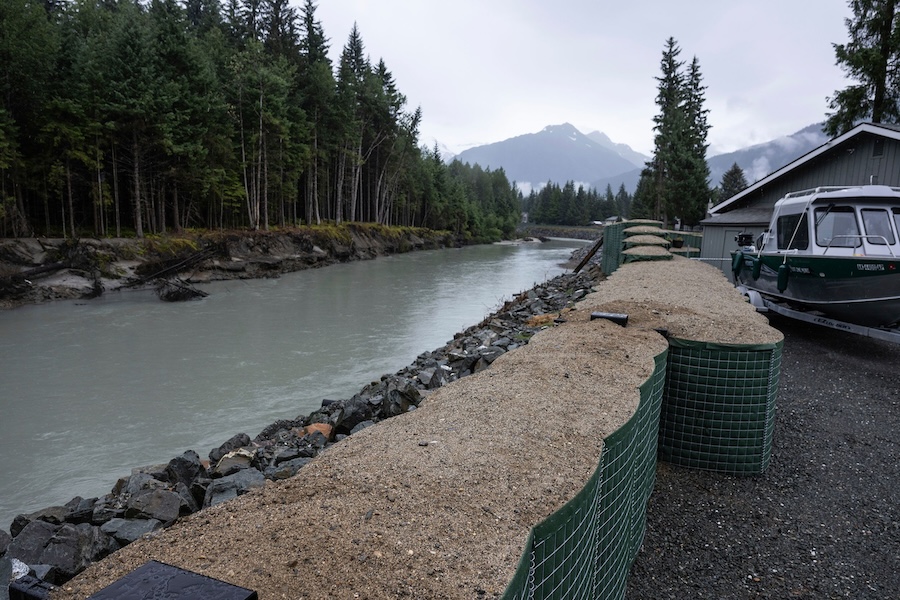
Juneau installed a flood barrier along the area that was inundated in 2024, a city spokesperson told CNN. There are roughly 1,000 residents and businesses in that part of the city, the spokesperson said Tuesday.
Officials urged everyone in the inundation area to evacuate Tuesday night.
“Don’t wait, Evacuate TONIGHT,” the city said in a Facebook post.
“This is likely to become a life-threatening situation. If you are told to evacuate, stop what you are doing and immediately go to an emergency shelter or another safe location,” said Republican Sen. Lisa Murkowski in an X post Tuesday.
On Sunday, Alaska Gov. Mike Dunleavy issued a preemptive disaster declaration to better streamline emergency response efforts to the outburst.
“By issuing this declaration before the flood occurs, we can position state resources and personnel in advance to support local and tribal governments in their efforts to protect lives, homes, and essential services,” Dunleavy said in a statement. “Our goal is to act early to reduce impacts and preserve community safety.”
The capital of Alaska, Juneau has a population of about 33,000, according to the the US Census Bureau. The city is surrounded by coastal waters to the west and south.
Why does this keep happening?
The glacial lake outbursts have become a regular occurrence since 2011 and have worsened considerably each year since 2023.
They are yet another consequence of climate change due to fossil fuel pollution. The Arctic, including Alaska, is warming twice as fast as the rest of the planet as global temperatures rise.
This is causing glaciers, like these in Alaska, to thin or melt altogether.
Rising temperatures have severely reduced the expanse of the Mendenhall Glacier and its Suicide Basin, creating the annual glacial lake outburst hazard as ice gets replaced by liquid water and rises closer and closer to that “bathtub” edge throughout the summer.
Studies in recent years have shown that between 10 and 15 million people globally are exposed to impacts of glacial lake outburst flooding like what’s unfolding in Juneau.
Glaciers are melting and losing mass globally at an increasingly rapid rate as the world warms, producing more and larger glacial lakes, a 2024 study found. The uptick in number and size of glacial lakes is expected to increase the frequency of outburst flooding events in the future.
This weather-related story is brought to you by Pony Express Car Wash, Idaho's premier express car wash destination, renowned for its commitment to exceptional service and quality. Voted the No. 1 car wash company in Idaho for three consecutive years, we pride ourselves on delivering an unparalleled experience for every vehicle and customer. Our state-of-the-art facility utilizes name-brand soaps and cutting-edge equipment to ensure your car receives the ultimate clean. Established in eastern Idaho in 2019, Pony Express is proud to be a locally owned and operated company that caters to the unique car washing needs of our Idaho Friends and neighbors. We invite you to experience the difference at Pony Express, where your satisfaction is our ultimate goal.