



Old American Falls makes ‘The Atlas of Drowned Towns’
Published at | Updated at
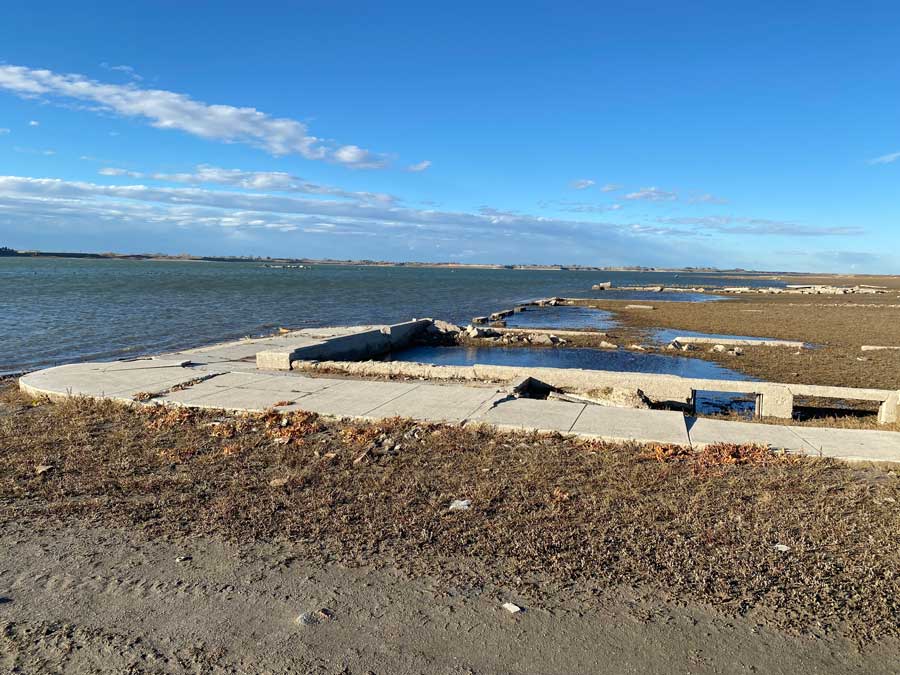
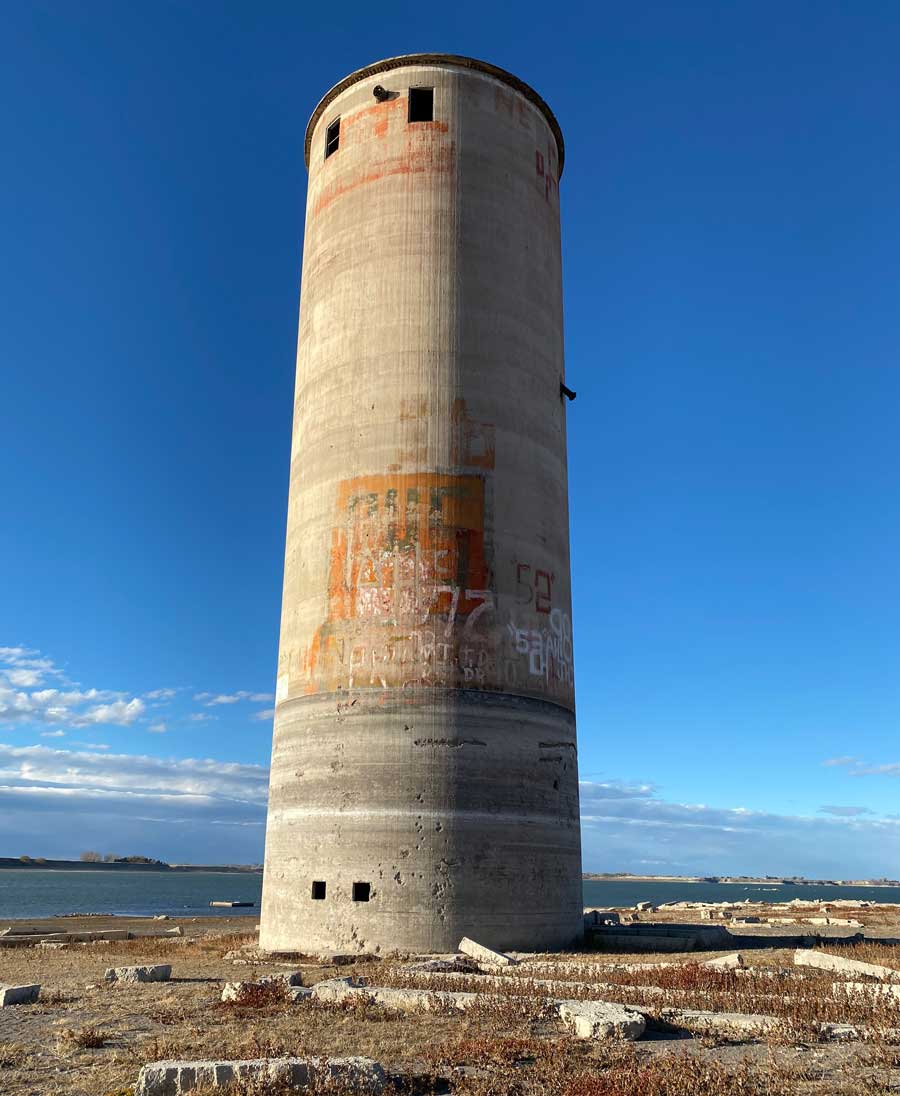
AMERICAN FALLS – An aging concrete grain silo overlooking the American Falls Reservoir stands as if it were originally planned to be a lighthouse in the landlocked state.
Truth is, that grain silo is one of the few remnants of old American Falls.
Where you see water used to be dry land filled with homes and businesses until the American Falls dam was built in 1927.
American Falls is one example of a “drowned town.”
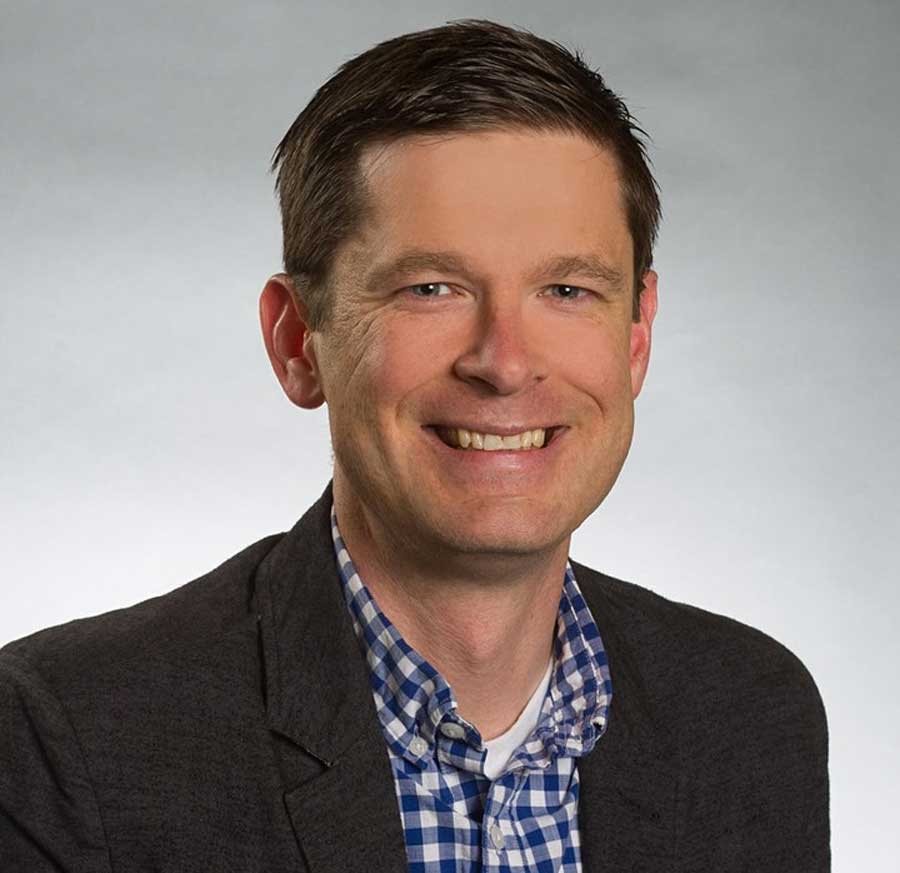
“A drowned town is any place that was moved or eliminated to make way for the reservoir, for a large dam; and so, this was deliberate displacement of people for the purposes of having space for a reservoir,” associate professor at Boise State University Bob Reinhardt explained.
Reinhardt is on a mission to help catalog as many of them as he can through his new initiative, “The Atlas of Drowned Towns.”
The atlas is an interactive map where internet historians can click and learn more about individual towns that have been displaced.
There are thousands of drowned towns across the United States. Primarily seen in the American West, these towns were lost due to a growing demand for agricultural output.
As a result, dams were built to “make the desert bloom,” a phrase indicative of the mindset of the time.
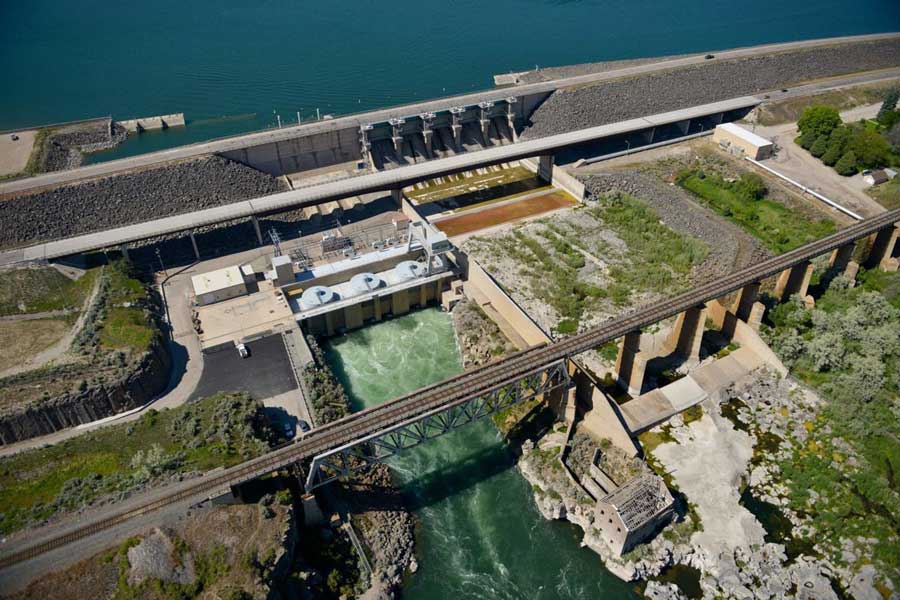
These dams were built during the dam building boom that lasted from the 1920s to the 1970s; each one with a unique challenge to be solved.
“It’s either for irrigation,” Reinhardt said. “Or increasingly for the purposes of hydropower, and then in the Pacific Northwest, flood control. … On the East Coast of the United States, often that, had to do with drinking water, providing drinking water supplies.”
Some of the towns have articles associated with them, like the towns of Center and Van Wyck, formerly located along the Payette River.
“Republican U.S. senate candidate Elmo Smith said here Friday that ‘only incessant hammering’ will make Green Peter and Foster dam projects in the Willamette valley a reality,” reads the article associated with the two towns.
Others have oral histories with individuals that were displaced by the dams, giving you a sense of what it looked like to be displaced by companies putting the projects in place.
One such man was Alfred Jenks, a man whose history was recorded, shortly after his town was condemned to be put under water.
He spoke to interviewers about his feelings of being displaced in favor of a dam.
“I hated it! It done away with my native homeland that I loved as much as anything I ever did love. I hated to leave it. Of course, I was always against any dam, really, because look at our fish runs has been destroyed,” Jenks said in an oral history collected in 1976.
The goal of the project is to preserve what towns were lost and when, and collect as much evidence of the people who were displaced as possible.
These collections can include diaries, oral histories, articles or any piece of history that can help us understand the past.
“My project, which is focused really on the experiences of people that had to leave their homes, the artifacts that we choose to put on the website have a lot to do with trying to convey that experience and to convey the memories that people have and that they create about their lost communities,” Reinhardt said.
When displaced by the various projects, the ones at the most risk of losing everything were those that were in marginalized communities of states and counties with less political leverage, or money to raise their concerns to their local lawmakers. Tenants who rented space rather than owning it were at the most at risk of being overridden by the company installing the dam.
“Eminent domain law in the United States as such that you don’t really get anything if you’re renting property. You’re just given notice that you’re going to have to move. The landlord owns the property,” Reinhardt explained.
You can share those stories, materials, or tips through the website.
Reinhardt also encourages anyone with information to reach out to the team at drownedtowns@boisestate.edu.
The project is new, and Reinhardt hopes that you will get involved in the project.
“I hope that it is a self-sustaining and community collaborative project that provides the processes and the tools and the infrastructure for historians, history buffs, the people that were displaced and their descendants to participate in further informing a broader public about the scale, the scope and the meaning of displacement,” Reinhardt said.