




Pocatello City Council ends mayoral runoff elections
Published at
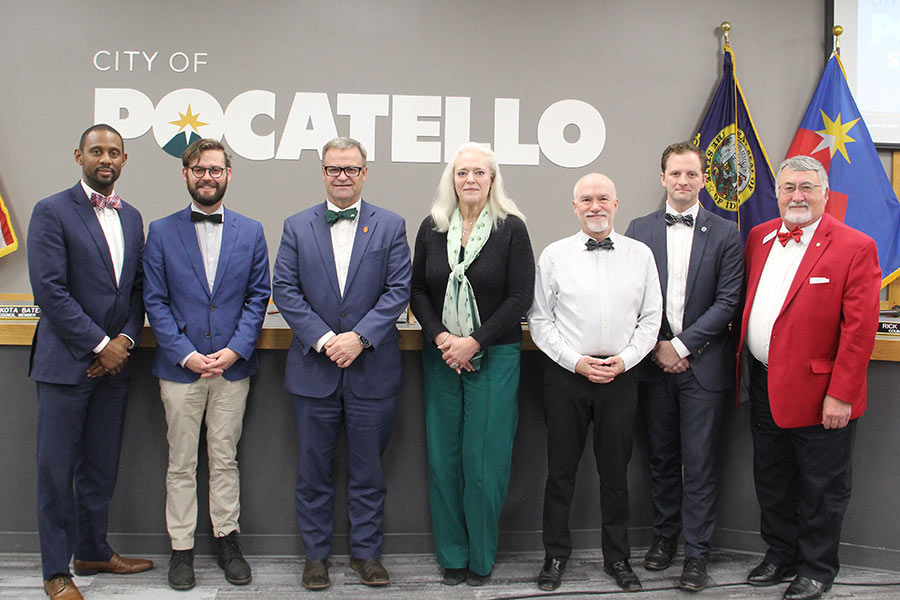
POCATELLO – A city in southeastern Idaho will no longer have runoff elections if a mayoral candidate does not receive a majority of the vote.
At the Pocatello City Council meeting last week, the governing body addressed a motion to amend Pocatello’s municipal code to “eliminate the majority requirement and runoff process for the office of mayor,” the agenda reads. The council voted unanimously in favor of the motion, ending the practice of mayoral runoff elections.
Rick Cheatum, an outgoing council member and member of the Idaho House of Representatives, was the first councilman to advocate for ending the runoff process.
“All other local and state races, except for those that have primaries, are decided in the first vote. … They come to the November election and the winner takes all,” Cheatum said.
In the council meeting, Cheatum brought up conversations he had with Idaho Secretary of State Phil McGrane, who confirmed that the candidate who receives the most votes in the first election wins the runoff in the vast majority of cases.
“(Ranked-choice voting has) covered up most of the documentation that I can find, but it’s McGrane’s opinion, and he said he read a study a couple of years ago, which we could not find, that it remains the first-place candidate wins the election about 96% of the time in Idaho,” Cheatum said in the meeting.
In Pocatello, Mayor-elect Mark Dahlquist won both the general and a runoff election in 2025, adding over 2,000 votes to his total in the second round. He earned 40% with 5,153 votes and then 62% with 7,238 votes, while Greg Cates received 31% with 3,938 votes and then 38% with 4,424 votes.
The mayoral runoff in Idaho Falls saw a different outcome, with Mayor-elect Lisa Burtenshaw adding nearly 900 votes to her total in the runoff election. Burtenshaw got 55.19% with 6,435 votes to Jeff Alldridge’s 46.81% with 5,663 votes. In the November election, Alldridge received 5,599 votes to Burtenshaw’s 5,537 votes.
RELATED | Mark Dahlquist triumphs over Greg Cates in Pocatello mayor race
RELATED | Voters oust Pocatello Mayor Brian Blad; runoff now set between two challengers
Cheatum says outcomes like the one in Idaho Falls are “very rare.”
Councilman Hayden Paulsen stated that, through his research, he found that over the course of 90 years, Boise has had four runoff elections, and only one has resulted in the candidate who came in second place defeating the plurality.
With this municipal ordinance now eliminated, if no candidate receives a majority in a mayoral election, the candidate who receives the plurality of votes wins. This is the same method used to determine winners of City Council races.
Something Cheatum and Paulsen both referenced was the cost to taxpayers when conducting a runoff election; funding a mayoral runoff election costs between $60,000 and $70,000.
Although this amount is a fraction of the city’s overall budget, Paulsen emphasized how far it could go towards improving the city, saying it could have been used to build two to three new playgrounds, fund all this year’s additional funding requests from nonprofits or pay the yearly wage of a city employee.
“That’s not chump change. We could actually use that money for good things for the city, but instead we have to run polls, when the outcome is pretty much guaranteed from the November election,” Paulsen said.
Both councilmen also pointed out how even if they hadn’t held a mayoral runoff election this year, the outcome would have been the same.
And Cheatum spoke to the way a run-off election changes the tone of a campaign.
“(When) nobody gets a majority, (there are) usually a lot of candidates … and when you get down to two, it becomes a very personal, different kind of campaign. Oftentimes, it’s not presenting what your expectations are and what you’re going to do. It becomes character assassination,” Cheatum told the council.
Paulsen agreed with that sentiment, he told EastIdahoNews.com.
“November to December of 2025 was the most hostile, toxic, divisive experience I have had in my time in politics,” Paulsen said. “If we can get rid of one month of that, please.”
While different citizens may have varying opinions on what they want for the future of Pocatello, Paulsen emphasized the importance of seeing each other as part of a community.
“We are in this together as Pocatello. Like, the feds aren’t coming to save us, the state isn’t coming to save us. We have to be (in this) together,” Paulsen said.