



Sex work. Reckless driving. Wearing masks. Idaho lawmakers want to crack down
Published at
Carolyn Komatsoulis, Idaho Statesman
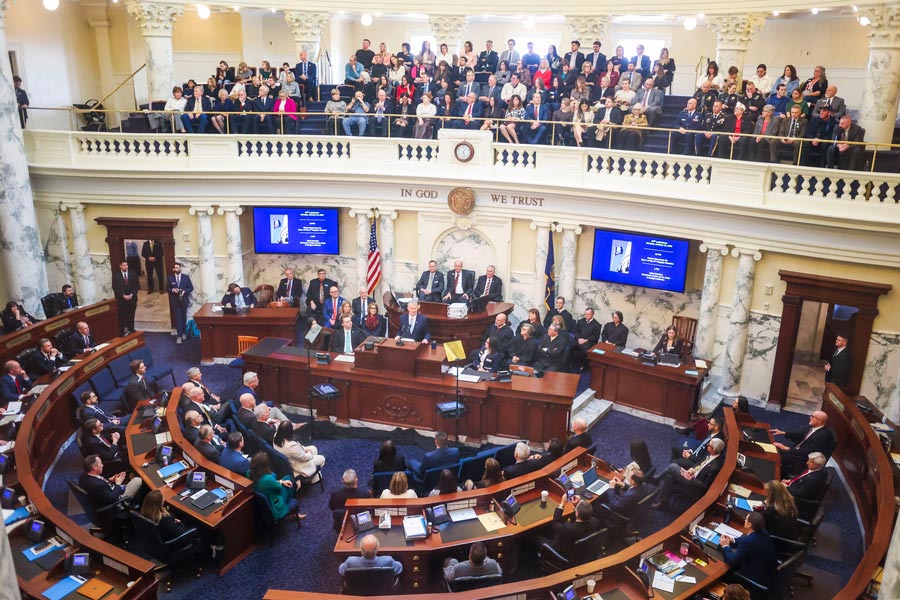
BOISE (Idaho Statesman) — Idaho’s 2026 legislative session is off to the races, with lawmakers introducing proposals Thursday to crack down on soliciting sexual activity, reckless driving and wearing masks while committing a crime.
All the proposals were unanimously approved by in the House Judiciary, Rules and Administration Committee for introduction as bills. Here’s what legislators proposed:
1. Harsher penalty for soliciting sex work if you’re over 21
Rep. Britt Raybould, R-Rexburg, brought back a bill to make soliciting commercial sex work a felony after lawmakers killed a previous version in the 2025 legislative session.
Soliciting a sex worker is a misdemeanor on the first offense and a felony on offenses after that. The Idaho Attorney General’s office recommended the change in a 2024 human trafficking report to address the “demand side” of the market, but lawmakers in a Senate committee in 2025 balked at making the penalties harsher.
“Maybe there’s an 18-year-old boy, who’s awkward and has never had any friends and he goes out and he makes a mistake, now he’s immediately a felon,” Sen. Brandon Shippy, R-New Plymouth, said during a committee hearing in March 2025.
In response to the feedback, Raybould’s 2026 version keeps the charge as a misdemeanor on the first offense if the suspect is age 18 through 20 but makes it a felony the first offense for those 21 years or older.
A misdemeanor sentence carries a sentence of at least five days and up to one year in jail, a fine of up to $2,000, or both, according to the bill text. In comparison, a felony sentence comes with at least six months in jail and up to three years, a $10,000 fine or both.
2. New penalty for speeding 20 mph above limit near schools
Rep. Mike Pohanka, R-Jerome, introduced a bill that would let officers charge someone with reckless driving if they’re speeding over 20 miles per hour more than the speed limit in a school or construction zone.
“We’ve had issues with people exceeding the speeding limit,” Pohanka told lawmakers in a Thursday committee meeting. “We’ve had too many children get hit, seriously injured as well as people killed or multiple crashes in construction zones. And this is hopefully going to help mitigate and keep our motoring public safe.”
In December, at least three Treasure Valley students were hit by cars near their schools in a single week, according to previous Statesman reporting. It’s unclear if the drivers were speeding.
3. Enhanced penalty for wearing a mask during a crime
Newly appointed Rep. Don Hall, a Twin Falls Republican whom Gov. Brad Little selected in December to fill a vacancy left by Lance Clow, introduced a bill to make it illegal for people to wear a mask when committing or trying to commit a crime.
Other states and some members of Congress have introduced similar bills, including in New Jersey, New York and North Dakota. In New York, a broader proposal to ban masks on the subway drew criticism about stifling protests.
“When an individual chooses to conceal their identity … they are making a conscious decision to evade justice and escalate the encounter,” Hall said. “This is a common-sense measure to support victims and our law enforcement officers.”
Rep. Heather Scott, R-Blanchard, questioned what would happen if someone committed a crime while wearing a religious head covering and what to do if an individual purposely wears a religious head covering to potentially get around the bill.
Hall said it depends on the intent of the person, and the judge and prosecutor can decide whether to add the bill’s proposed penalty of a fine up to $2,500, up to a year in prison or both. The penalty would be in addition to the penalty for the crime itself.
“I think it’s the intent,” Hall said. “It still gives law enforcement the option of discretion.”
Not all bills introduced Thursday were aimed at getting tougher on lawbreakers.
4. Protection for people who stop to help
Rep. Marco Erickson, R-Idaho Falls, introduced a bill to protect people from liability who stop and help someone with a mental health or suicidal crisis.
Idaho faces serious mental health problems, including the fifth-highest youth suicide rate nationwide from 1999 to 2020 and a shortage of psychiatrists.
Erickson said his work in suicide prevention involves trainings for people in topics like mental health first aid.
“In the past, when we created this good Samaritan law, people were providing regular types of first aid,” Erickson said. “Now, in the work you come across on a regular basis, you’re going to have more frequencies of cases where you’re interacting with someone who is actively having a mental health break.”
What’s next?
After bills are approved by the committee for introduction in the House, lawmakers can hold a hearing on the bill in a House committee. The committee can vote to move a bill forward to the full House. If the House passes it, the process is repeated on the Senate side. A bill passed by both houses goes to the governor to sign or veto.
Idaho’s annual legislative session began Monday.