



Panelists express concern about ‘anti-immigration’ legislation during public Pocatello meeting
Published at | Updated at
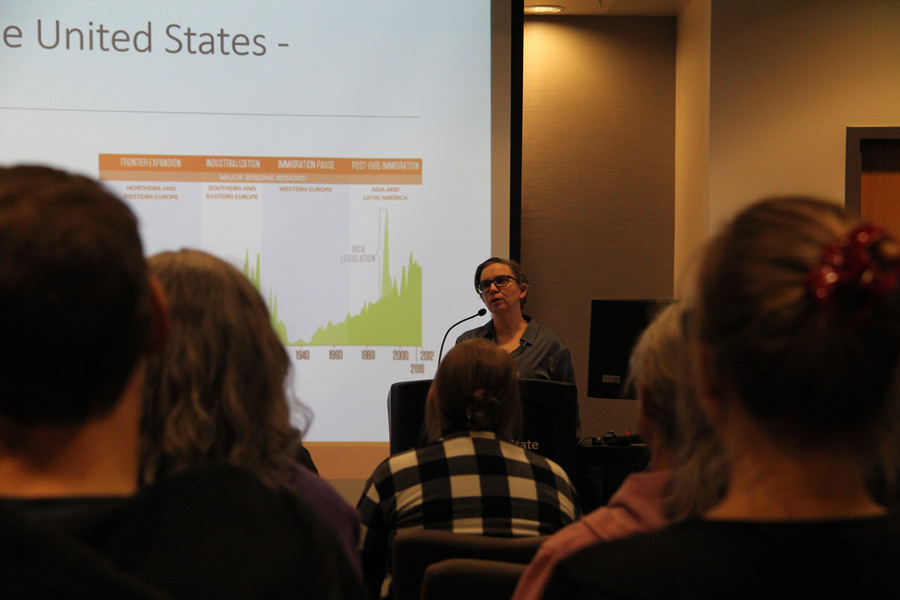
POCATELLO – Over 100 concerned citizens gathered in Idaho State University’s Rendezvous Building to hear from a variety of experts on increased ICE activity across the country, and what it could mean for their community.
Together in partnership, Bridges Idaho and the Idaho State University Political Science Club held its second ‘Prepare Now’ meeting over the weekend. It focused on how people in the community can “protect and advocate for those who are targeted by ICE and legislation,” the event’s description reads.
Dehumanizing rhetoric against immigrants
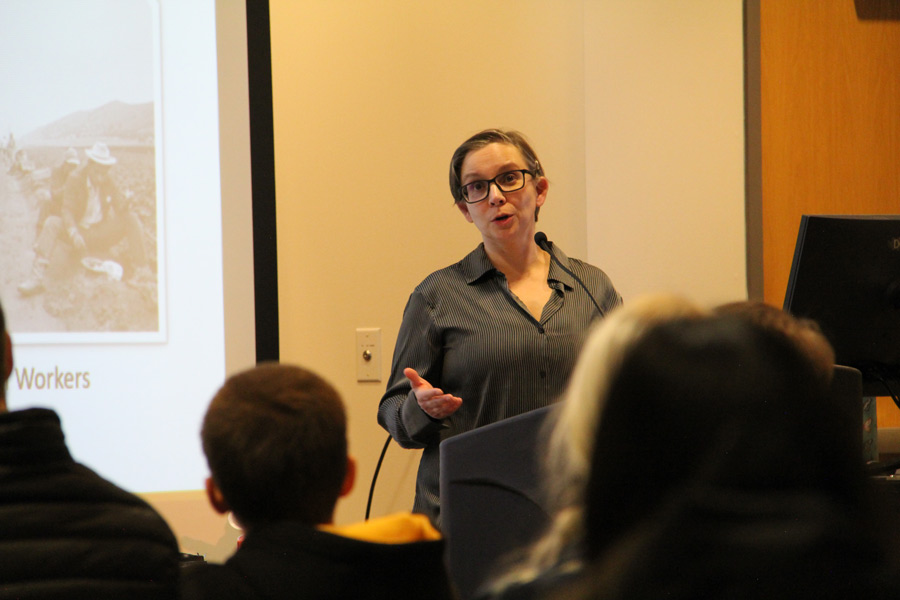
Deirdre Caputo-Levine, P.h.D., a professor of sociology at ISU, drew attention to a statement from Sen. Brian Lenney, R-Nampa, on a series of immigration proposals at the Capitol building in Boise.
“When we’re talking about immigration, it’s a human rights issue,” Lenney said, according to the Idaho Capital Sun. “This is about demographic replacement, and they’re doing that via refugee resettlement programs, human trafficking and cheap slave labor.”
Caputo-Levine called this “worrying,” because it refers to a conspiracy theory called the “Great Replacement Theory.”
“People who espouse the great replacement theory argue that Western nations, with majority white populations, are having their populations purposefully replaced by people of color,” Caputo-Levine said. “Sometimes, the group that’s blamed for orchestrating this is the set of wealthy elites. Sometimes it’s a Jewish cabal.”
She said the most recent form of Great Replacement Theory came about through a 2011 book by French author Renaud Camus. “Members of the alt-right” popularized it in the U.S., according to Caputo-Levine.
“Tucker Carlson has referred to replacement theory in his show,” she said.
Caputo-Levine quoted from 2023 Census data on immigration in Idaho, saying that 94% of the population was born in the U.S., with 6% being born in another nation. Out of that 6%, around 40,000 are people who are undocumented.
Oftentimes, she says people will use the term “illegal immigrant” to refer to people whose immigration status is undocumented, when it’s “a lot more complicated than we tend to think about in our everyday discourse.”
Using this language feeds into the narrative painted by the Great Replacement Theory, says Caputo-Levine.
“We’re seeing a use of language to dehumanize … people who are immigrants in a variety of forms,” Caputo-Levine said.
She said fears of a “great replacement” provide the fuel for harsh and restrictive immigration legislation.
What panelists shared about anti-immigration legislation
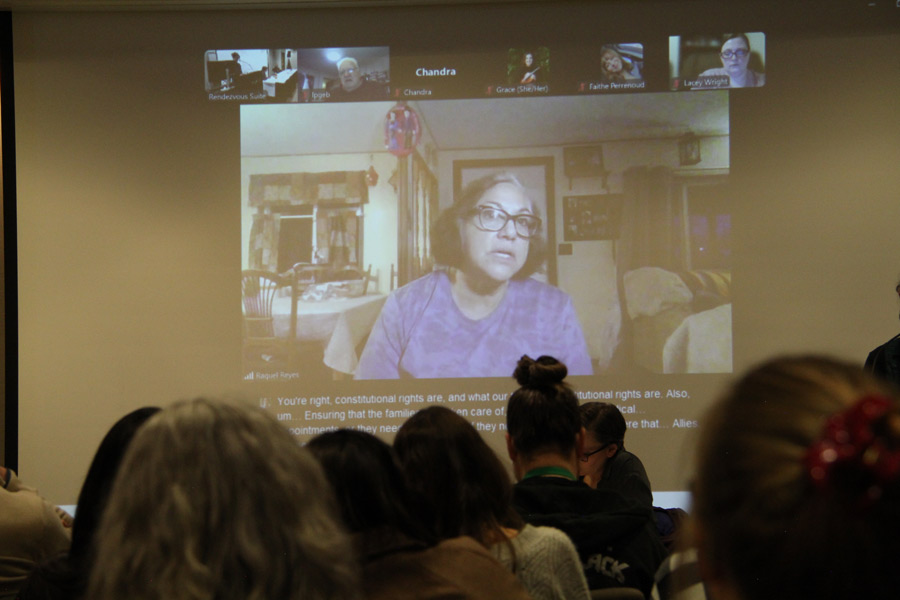
Raquel Reyes, the programs and operations director for Protecting Our Dreams and Empowering Resilience (PODER), says there are around 15 bills that have been introduced in the Idaho legislature that she classifies as “anti-immigrant,” and it’s hurting people.
“This hurts our families because it puts them in fear to go seek assistance,” Reyes said. “As it is, it’s hard for them to even leave their homes. Although we’re not seeing the same ICE … aggressiveness here in Idaho, we know that they are present.”
Pocatello Police Chief Roger Schei referenced HB 659, one of three bills relating to immigration that the Idaho Chiefs of Police Association opposes. The legislation would require local law enforcement agencies to enter into a memoranda of agreement with ICE.
“This is a scary bill because it’s coming down to where it would be ‘papers, please,’ and that is not what the police department is used for. That’s a dangerous road … to go down,” Schei said.
Schei said there’s already a process for deporting someone who has been arrested and booked into jail, where their immigration status is checked.
“If they are in the country illegally, then ICE will come and deport them out of the jail,” said Schei.
Reyes also spoke on HB 656, which proposes tracking student immigration status in public schools. Another bill, HB 592, would require hospitals that accept Medicaid to report patient immigration status.
The way she puts it, the legislation that’s been proposed makes immigrant families afraid and deters them from accessing healthcare, education and participating in daily life. She says it’s important for everyone, not just immigrants, to know what their rights are.
“If ICE or anyone that’s under the Department of Homeland Security were to come to your property, what is your role? What can you do to defend yourself and not allow them to come into your building and your school property? I think that’s one of the really important things to get educated on,” Reyes said.
Answering audience questions
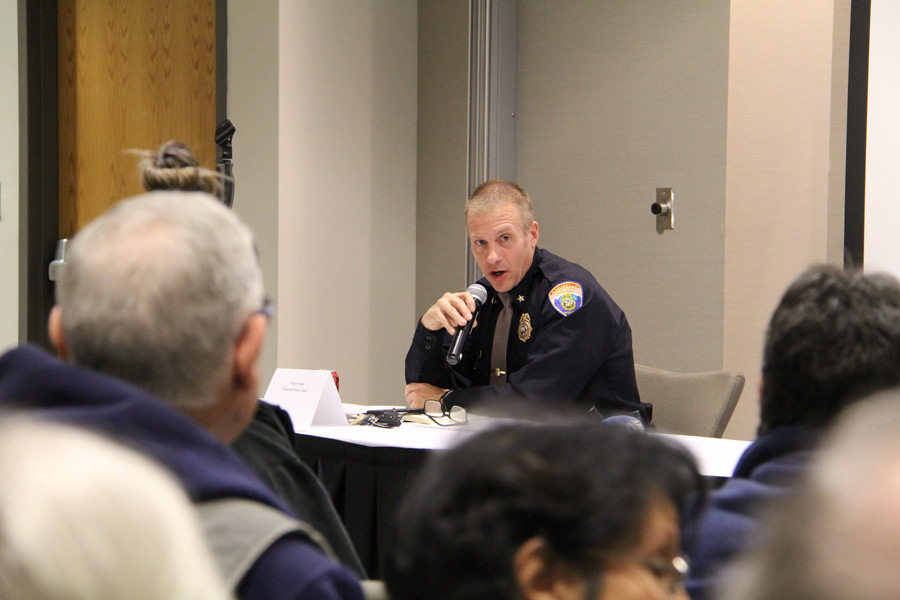
During the question and answer portion of the event, Schei was asked what people should do if they encounter ICE agents. While he said that you’re not likely to encounter ICE in Pocatello, those who do should treat them like any law enforcement agency and follow directions.
“Identify them. Ask them for their name, ask them for their badge number, ask them for a card. If they’re legit, they should give you that information. Ask them what agency they’re from,” Schei said. “Be cooperative. Show them whatever they’re asking for. If you want to video, stand across the street and video. We expect that.”
Earlier in the meeting, Schei said that he and Sheriff Tony Manu don’t want ICE to come in and “make a spectacle” out of arresting someone.
Schei said that he doesn’t think ICE will use shock-and-awe tactics in Pocatello, and expressed why he personally disagrees with using those tactics in most situations. He said that he has only covered his face in situations where there was a high chance of danger.
“I’m not afraid to hide who I am, and I don’t think any law enforcement officer should,” Schei said.