



Controversial bill raises questions about Harriman State Park’s future
Published at | Updated at
IDAHO FALLS – A bill awaiting the governor’s signature could put the future of Idaho’s oldest state park at risk.
SB 1300, which passed the House floor last Tuesday with a vote of 41-29, provides for Senate advice and consent, as well as gubernatorial appointment for the directors of the Idaho Departments of Transportation, Fish and Game, and Parks and Recreation.
The bill was delivered to the Governor’s office at 3:48 p.m. on March 26. As of April 1, it’s been five days since the legislation arrived on Gov. Brad Little’s desk. Under Idaho law, the bill becomes law automatically if the governor does not sign it by the end of the day.
In March, Sen. Doug Okuniewicz, R-Hayden — the bill’s sponsor — told EastIdahoNews.com the directors of most state agencies are appointed by the governor and subject to Senate confirmation. The goal of this bill, according to Okuniewicz, is to bring these departments in line with all the others to make it more consistent.
“I’ve experienced some side effects from that level of autonomy that they possess currently. They end up drifting into a policy-making role far more often than other agencies do, and it creates a lot of friction,” Okuniewicz said. “That’s the exclusive domain of the Legislature.”
Okuniewicz says checks and balances are an important function of government, and that the ability to have Senate confirmation for these executive agencies should be implemented.
RELATED | Bill could put the future of Idaho’s oldest state park at risk
Many have expressed concerns about the bill since its introduction. Opponents say it violates an agreement that led to the creation of Harriman State Park in Fremont County and, if enacted, could transfer ownership of the park back to the Harriman family.
In 1963, the Harrimans gifted the 11,000-acre property that now comprises Harriman State Park to the state, on the condition that the Legislature establish a “professionally staffed career park service whose personnel shall be chosen on the basis of merit alone.”
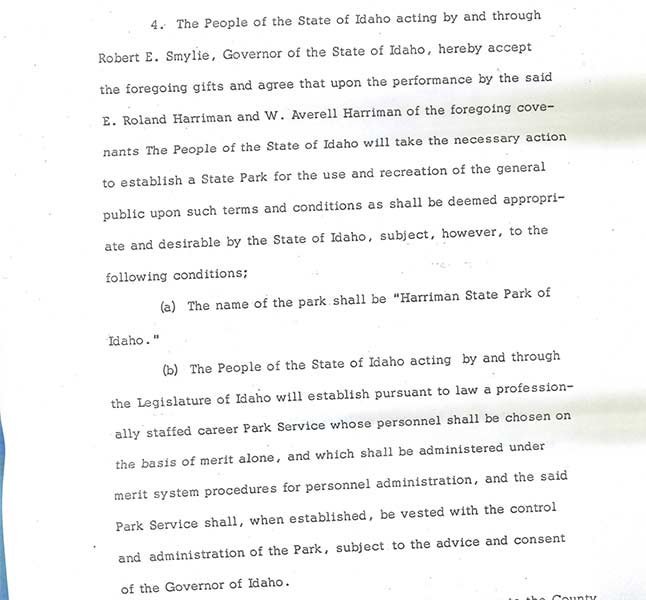
The Parks and Recreation department was created two years after this agreement was codified in state law. Since then, it’s been governed by a six-person board, with each member representing a different geographic area of the state. Under Chapter 42 of Title 67, the board has the power “to appoint a director to serve at its discretion.”
In March, Okuniewicz said the original agreement makes no mention of a director of a Parks and Recreation department and that people are misinterpreting that line. This bill will not affect Harriman State Park, he says, because the Legislature would never appoint someone without merit.
“We would never do something that put any of our parks at risk,” Okuniewicz said in March. “It’s unfortunate that a bunch of people think that’s the case.”
Sixteen lawmakers from eastern Idaho voted against the bill. Sen. Mark Harris, R-Soda Springs, and Rep. Barbara Ehardt, R-Idaho Falls, are the local legislators who voted in favor of it.
In March, Harris said Idaho Attorney General Raul Labrador assured them this bill would not violate the agreement, and that gave him confidence to vote for it.
Ehardt was not available for comment Tuesday, but she did issue a written statement to EastIdahoNews.com.
“The changes included in SB 1300 are consistent with all other agency appointments. The Idaho Department of Transportation, Fish and Game, and Parks and Recreation currently have no oversight. This legislation provides that,” Ehardt writes.
Okuniewicz referenced similar statements from the attorney general and legislative council. In his testimony before the House State Affairs Committee on March 20, Okuniewicz read legal analysis from Attorney Elizabeth Bowen in the Idaho Legislative Services Office.
“There’s no inherent conflict between the provisions of SB 1300 and the instruments that conveyed Harriman State Park to the state of Idaho,” Bowen said, according to Okuniewicz. “While the instruments provided criteria for park service personnel, the instruments did not specify a selection process or selection authority.”
“As long as the director of Parks and Rec is appointed on the basis of merit, the state has complied with the conveyance instrument,” added Bowen.
‘I fear for the future of Harriman State Park’
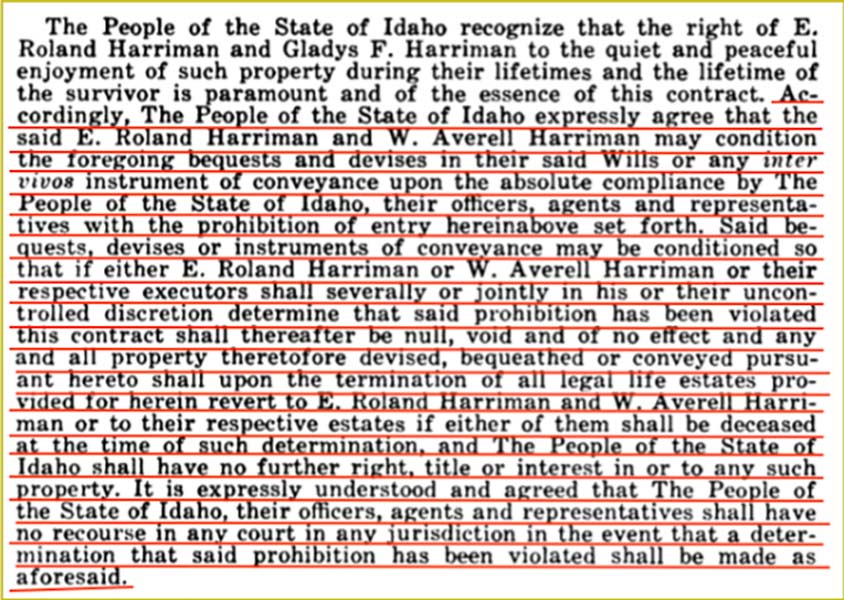
Opponents of the bill point to the assignment and assumption of leases, recorded in Fremont County by Rolland Harriman on March 18, 1977. This document officially designed the 11,000-acre parcel as Harriman State Park and outlined the roles of the executors of the Harriman estate. If they “shall severally or jointly … determine that said prohibition has been violated,” the document says, “this contract shall thereafter be null, void and of no effect.”
In that instance, the property, according to the agreement, shall revert back to the Harriman estate, and the state will have no recourse if the Harriman family takes legal action.
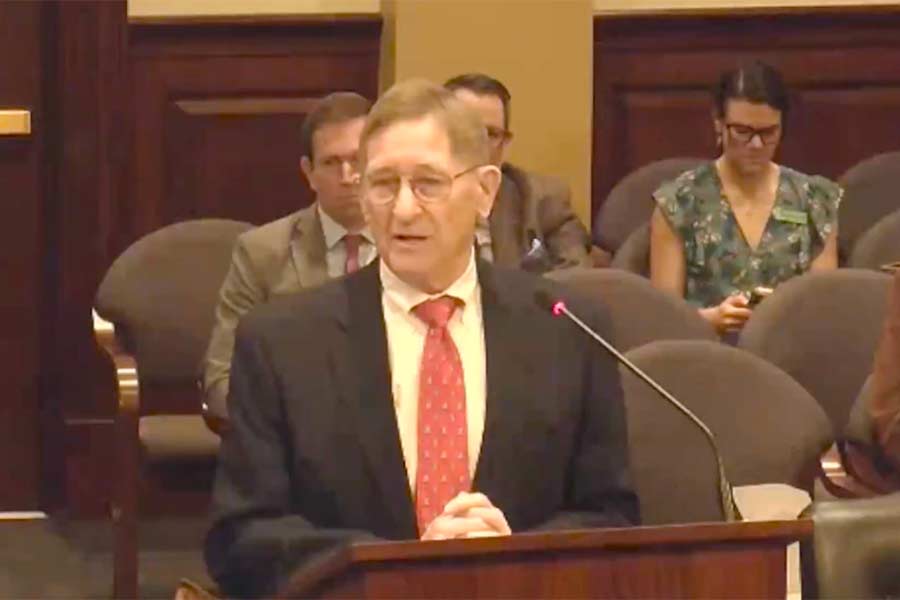
Tom Dixon is the grandson of Roland and Gladys Harriman, who entered into the agreement with Roland’s brother, Averell, and Gov. Robert Smylie. During the committee hearing, Dixon explained that if the director of parks and recreation is appointed by the governor, he will serve at the governor’s will rather than the “professionally staffed” board.
Committee chairman Brent Crane, R-Nampa, asked Dixon if the family was concerned a political appointee would destroy the park.
“The fear is that … the person works at the will of the governor and not the will of the park. It is somebody that could change every time there’s an election or a budget change and if the director disagreed with the governor, they’re out the door. You don’t have a real park professional in there (if the position is appointed by the governor),” Dixon said.
Several others spoke against the bill, including Idaho Wildlife Federation Executive Director Nick Fasiano, Trout Unlimited policy advisor Michael Gibson, Idaho Outfitters Guide Association President Jeff Bitton, and Friends of Harriman State Park President Charlie Lansche, to name a few.
Lansche noted in his testimony that this type of legislation is not new. Similar legislation was introduced in 2009, 2018 and last year, all of which were defeated.
The Harriman family’s “extraordinary gift has benefitted all Idahoans, and it is in the state’s interests to honor those terms,” Lansche said. “Forcing the Idaho Dept. of Parks and Rec to serve at the pleasure of the governor risks the loss of the state’s integrity and the park itself.”
“I, like so many eastern Idahoans, am heartsick about the 2026 Idaho Legislature passing S1300,” Leanne Yancey, a member of the Island Park Historical Society, says in a written statement.
Harriman State Park is three miles south of Island Park, and IPHS maintains a working relationship with the Harriman family.
“I fear for the future of Harriman, and I feel sorry for the Harriman Family and the uncertain future and decision they must face. My disappointment in our state for breaking its promise and disrespecting and dishonoring the precious gift of Harriman is bitter,” says Yancey.
Dixon was asked whether the family would pursue legal action if the bill became law. He replied that the family would consider all legal options.
WATCH THE HOUSE COMMITTEE HEARING IN THE VIDEO ABOVE.