




First-year legislator Mike Veile faces former legislator Chad Christensen for Legislative District House 35A
Published at | Updated at
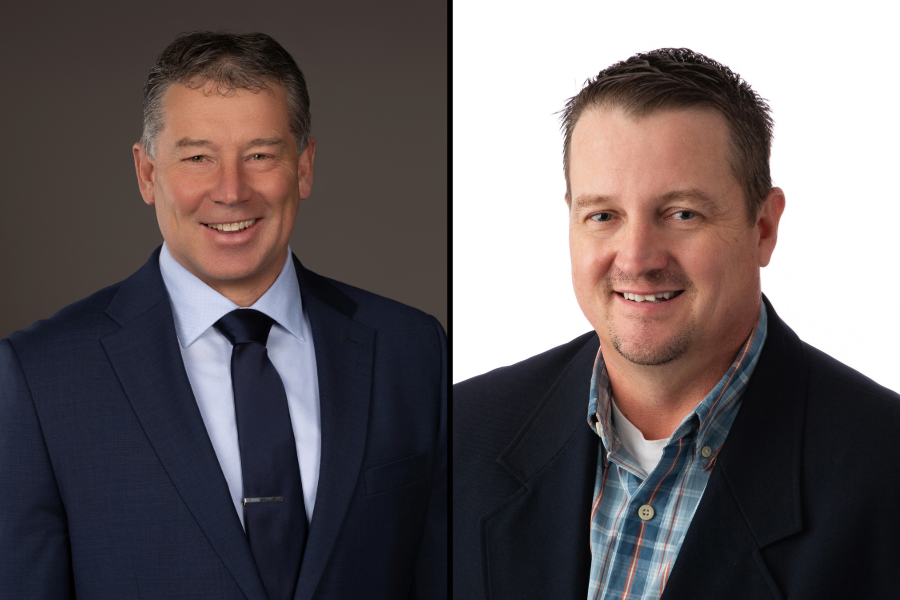
IDAHO FALLS — A first-time state legislator is competing against a former state legislator who wants to head back to Boise to represent constituents in Idaho District 35A.
The May primary will see many of Idaho’s representatives and senators facing competition to retain their positions.
Idaho Representative 35A incumbent Mike Veile was appointed by Gov. Brad Little in 2025 to fulfill a position left by Kevin Andrus, who took a job as the state director of the U.S. Farm Service Agency. Veile is now looking to retain his seat.
Former legislator Chad Christensen served two terms in Boise before losing the seat to Josh Wheeler in 2022. He’s now looking to get back in on the action.
EastIdahoNews.com sent the same eight questions to Veile and Christensen. Their responses, listed below, were required to be 250 words or less, and were only edited for minor punctuation, grammar and length.
The primary election is on May 19.
Tell us about yourself — include information about your family, career, education, volunteer work, and any prior experience in public office.
Veile: I am Mike Veile, the District 35A Representative. I grew up in Rexburg and attended Utah State University, where I earned both my bachelor’s and master’s degrees in mechanical engineering. During that time, I met my wife, who is from Downey, Idaho. We have been married for nearly 31 years and are the proud parents of four children, all of whom also attended Utah State.
My career began in smelting and refining in Salt Lake City, but we wanted to return to Idaho and have now lived in Soda Springs for 28 years. My professional career continued in heavy industry, where I worked in elemental phosphorus production as both an engineer and a manager. I have since left industry and now operate my own engineering firm.
My experience has given me the opportunity to serve on various boards and task forces throughout the state. Much of my volunteer work has been connected to Idaho’s fish and game resources, including service with the Idaho Fish and Wildlife Foundation and the Idaho Landowner-Sportsman Advisory Council. I also valued my time with the Idaho Association of Commerce and Industry. Most recently, and most rewarding, was my service as a Soda Springs School Board member, which gave me a firsthand understanding of the critical role public education plays in our communities.
Christensen: I was born in Idaho Falls. I grew up being taught the importance of hard work, playing baseball, learning to appreciate the outdoors, and learning to love my Creator. I graduated from Skyline and served an LDS mission in San Diego. I have two sons that I adore. My 18-year-old just received an academic scholarship to ISU and my 26-year-old son bought a home at 21-years-old, he was also an outstanding hockey player. I have 5 stepchildren that I love. One is a manager at Dutch Bros in Pocatello, one is on a mission in South Carolina and he is an exceptional football player, one just graduated high school and wants to be on the cheer team at BSU, the youngest two are outstanding athletes. My wife Lana has been a huge blessing in my life and I truly love her.
I served in the U.S. Army for 12 years. I served in law enforcement as a county probation officer, state felony parole officer, state welfare fraud investigator, and a military police investigator. I graduated from Ricks College and ISU with a Bachelors of Science in Political Science. I have been an insurance agent and am currently a crane operator for a friend’s business and a real estate agent for Silvercreek.
I love the Idaho mountains, streams, rivers, and forests. I feel a great solace being in the mountains. I am closest to God when I am amongst his creations. I love to hunt, fish, snowmobile, dirt bike, camp, and
Why are you seeking political office within your community? Briefly explain your political platform.
Veile: I am seeking political office because I value involvement, service, and the opportunity to help shape my community’s future. In recent years, my professional work gave me the chance to spend significant time in Boise and observe the Legislature firsthand. That experience strengthened my interest in public service and deepened my appreciation for the legislative process. Now, with greater flexibility in my professional life, I am in a position to serve and help influence issues I care deeply about.
My platform is centered on four priorities.
First, I support public education. Idaho’s schools need flexibility, local control, and the freedom to innovate without being overwhelmed by excessive regulations and unfunded mandates. Teachers are professionals who deserve respect and support.
Second, I am committed to keeping public lands and resources public. Idaho’s outdoor heritage is central to our way of life, and public access must be protected. At the same time, responsible resource development can strengthen local communities and preserve opportunities for future generations.
Third, I support Idaho’s critical industries, including phosphates, nuclear energy, and semiconductor manufacturing. These industries are vital to our economy, our workforce, and our nation’s independence. Government should encourage their success through workforce development and reasonable regulation.
Finally, I believe in efficient government and fiscal discipline. Idaho must continue to live within its means, protect taxpayers, and provide essential services effectively. I will work to keep government limited, efficient, accountable, and focused on practical results for the people of our state.
Christensen: I believe in strict adherence to the U.S. Constitution. There are no exceptions. If a bill is not Constitutionally aligned, it will NOT have my support. I have a strong desire to stay true to my principles of protecting God-given rights. These rights are supposed to be protected in the U.S. Constitution. However, these rights are trampled on day after day. They are trampled on by individuals and groups in this country. Unfortunately, the biggest culprits our governments. Too often, our elected officials do not represent their constituents. Too often, they are self-serving by benefiting from other entities. Their constituents are the furthest thought from their minds.
I have and will continue to represent with honor and integrity. I expect to be held accountable. I believe in a limited federal government. Unfortunately, the Idaho government has allowed the infiltration of the federal government for decades upon decades. It will take some dedication and hard work to unravel the federal government puppet strings.
I have proven myself as a legislator that supports freedom and liberty, the U.S. and Idaho Constitutions, limited government, no new taxes and not increasing government spending, free market, etc. I have a lifetime score of 99.3% with the American Conservative Union (a national organization that puts on CPAC).
The Constitution was designed to allow the states more power than the federal government. Idaho must push back within the boundaries of the Constitution. The federal government has become a beast, in which our Founders fought so hard against.
What are the greatest challenges facing people in your district? What is your plan to meet and overcome those challenges?
Veile: District 35 encompasses Bear Lake, Caribou, Teton, and parts of Bonneville and Bannock
counties. It is a large and diverse region, but several common challenges resonate across all of
these counties.
County funding is in a critical state, particularly in rural areas. There are limited funding options for essential local services such as sheriffs, fire protection, and ambulance response. These pressures become even more severe during seasons of high recreational use. I have seen a growing willingness in the Legislature to impose unfunded mandates on local governments. Local control should be the rule, not the exception. Requiring counties to absorb additional costs through property taxes is not fiscally conservative. Water protection is another major challenge. Protecting the Bear, Teton, and Snake River systems will require a generational effort built on thoughtful, technical solutions. That includes pursuing a once-in-a-lifetime storage plan and the commitment to implement it.
Public education in Idaho is also hampered by excessive rules and regulations. Educational choice and flexibility have allowed some public charter schools to develop successful models that should also be available to traditional public school districts. Public schools need the freedom to innovate and replicate what works.
Christensen: The biggest challenges people in my district face is runaway inflation, rising housing costs, excess taxation, the violation of rights, education cuts and government officials that do not represent them. Idaho recently cut the funding for the public online high school program in half. Idaho has a lot of programs, commissions and other waste that can be cut before we cut the public online school program or any education budget. Much of my district is very rural and benefits a lot from the online program. Health and Welfare has paid for many gay pride parades. Government should not be paying for such things and those dollars need to be funding the essentials such as fire, police, education (public and school choice), roads, bridges, National Guard and other infrastructure. We don’t need to be funding social agendas! We only need to fund the essentials to lessen the tax burden on our residents.
The people in my district are also overburdened by property taxes. People that are retired and on limited budgets need relief. I have heard a lot of great ideas to help with this. Again, only funding the essentials will give property taxpayers relief.
My district also has issues with short term housing rentals (Air BnB, etc.). Many residents feel like their peace has been violated by these rentals in Lava Hot Springs, Teton Valley and the Bear Lake area. We need to find a way to honor property rights for all-involved and to honor the right to enjoy your
How will you best represent the views of your constituents — even those with differing political views? How do partisan politics play into your role as an elected leader?
Veile: While the most extreme partisan issues may generate headlines, many of the issues that affect our communities most are not inherently partisan. Rural health care, roads and bridges, property taxes, first responders, and water are all issues that impact everyone regardless of party.
I spoke with numerous constituents this year on a wide range of issues, and never once did I ask about their party affiliation. A representative is elected to represent all the people in the district.
With the dominance of the Republican Party in Idaho, there are relatively few traditional partisan initiatives in the Legislature. Most legislation originates within the Republican majority.
That said, my core principles are Republican: fiscal conservatism, local control, respect for law and order, support for an educated citizenry, and respect for life. Those principles are grounded in our constitutional foundation. At the same time, I believe in pragmatism, humanity, and practical solutions. Government should be by the people and for the people, not against the people.
Christensen: First of all, when I served in the legislature, I was a representative of the people and a servant to them. I never viewed myself as being their leader. I will be their servant once again. I never served to be self-serving. I served to stand for the people and give them a voice. I have always run on the principle of protecting God-given rights and the U.S. Constitution. In the past, constituents voted me in for this very reason. I will never do anything that contradicts that. I will always represent anyone when it aligns with the Constitution, freedom and conservative values to include honoring life.
I have worked with Democrats in the past when cracking down on sex offenders. I had a bill that added ‘daycares’ to the law that convicted sex offenders couldn’t be near schools. A couple of Democrats helped me and supported this bill. This bill was signed by the governor into law. I will always reach across the aisle, if needed, to help protect the rights of Idahoans and uphold the Constitution. I have two important agendas when I get back into office. The recipient welfare fraud unit was disbanded after the director of Health and Welfare promised me it wouldn’t be. I want to bring that unit back and put it with the AG’s office. I also want to take away probation and retained jurisdiction (rider) options for sentencing for certain sexual crime convictions. I will be happy to enlist the help of
What parts of the legislative budget could use more funding? Where are places in the budget where cuts could be made?
Veile: Idaho has a long record of strong fiscal performance. We maintain a balanced budget each year and strive to live within our means. Depending on the years selected, and accounting for inflation and population growth, budget growth has remained exceptionally low. This year, the budget declined.
Education remains a critical budget priority, as it represents more than half of the state’s general fund budget. However, special education and special needs programs continue to carry federally mandated requirements without the funding necessary to meet them. In rural districts, special education can create outsized costs that affect all students. This remains an underfunded area of need.
I believe one of the greatest opportunities is to get more value from the dollars we already spend. Greater efficiencies can be achieved by regionalizing certain services. For example, a single speech-language pathologist could serve multiple rural school districts rather than each district struggling to provide that service independently.
Likewise, more regional approaches to water and wastewater systems can create economies of scale and allow infrastructure dollars to serve more residents. These are examples of where efficiency—not simply cuts for the sake of cuts—should guide our decisions.
Christensen: One of my answers already covered much of this. We only need to be funding the essentials as taxpayers. This means funding fire, police, education (public and school choice), roads, bridges and other infrastructure, National Guard and help for the elderly and disabled. I may have missed some essentials, but you get the point. We don’t need an Idaho Commission for the Arts, public television and radio, or any social program. Government doesn’t need to be involved when private industry can supply the need. Anytime government programs and commissions compete with private industry we have a big problem! These types of things can be cut to supply more funding for fire, police and education….and all essentials as needed. I do know fire and police budgets are suffering all over the state, along with education. I do believe our education system is top heavy with administration costs. We can trim that down, to include getting rid of the state department of education. Our districts can manage curriculum and other details without the state department of education. I also don’t think superintendents should be making 200k a year, in some cases. Streamlining administration costs would free up more money for our children and teachers, this includes public education and the school choice tax credit.
Do you believe ethics investigations in the Idaho Legislature should be kept secret from the public, or do you believe they should be open and transparent? Why or why not?
Veile: I have listened to arguments that ethics investigations are not legal proceedings and therefore are not well suited for full public disclosure, particularly if public release could prejudice future legal action.
However, my basic view is that elected representatives should always be accountable to the people they serve. Real transparency means allowing the public access to the ethics process. There may be times when certain information should be redacted, as we have seen in recent cases, in order to protect victims or other sensitive parties. But ultimately, the process itself should be public.
Christensen: Unfortunately, this issue really hits home for me. While I served in the legislature, my legislative intern was the young woman that was raped in 2021 by a former legislator. I was a strong advocate for her and helped her as much as I possibly could. Court proceedings are not kept secret when someone gets criminally charged. I think it is a serious issue when a lawmaker is accused of an ethics violation. He/she is a public servant and all proceedings and communications must remain public for his/her entire term of office. He/she should be innocent until proven guilty, but the process should remain public. I know there is also a problem with certain legislators not facing ethics hearings when they should. The process is broken and all legislators needs to face hearings if there is a possible violation, instead of being protected by leadership. I know some legislators have not had to deal with ethics hearings when they should have. That is not right and the process needs to change so that leadership cannot protect them
Water availability and management are critical for eastern Idaho agriculture and growth. What specific strategy or legislation would you support to protect groundwater and surface water resources, and what is your timeline for measurable improvements?
Veile: As I mentioned earlier, this is a generational challenge. I am interested in discussions about returning some areas to increased flood irrigation in order to improve aquifer recharge. I would support additional study and pilot efforts to determine whether that approach is viable. In the long term, storage remains the best option. That includes raising the level on certain existing dams in the region, but most importantly, it includes new reservoir storage. Initial studies suggest the potential for five new reservoirs in the Upper Snake and Teton River drainages.
The scale and cost of such an undertaking are significant, and it will take decades to achieve this level of storage enhancement. This is fundamentally an engineering challenge, and engineering challenges require feasibility studies, design work, and long-term funding plans. There are also important considerations involving water rights, environmental impacts, and public safety. Partnerships among agriculture, and local, state, and federal governments will be essential. There is a great deal of work ahead, but we must begin now.
Christensen: While I was in office, I co-sponsored the Bear River Basin Adjudication. “The adjudication reviews all water rights held by local, state, and federal governments, Native American tribes, and private property owners. The commencement order gives water users within the Bear River Basin the option of deferring the filing of small domestic and stockwater claims.” “The adjudication includes both surface water and groundwater rights in those portions of Bannock, Bear Lake, Caribou, Cassia, Franklin, Oneida, and Power Counties within the Bear River Basin.”
I will continue to support all legislation that supports fair water rights for all Idahoans. I know it is a touchy subject. In the old days, people could be killed over water usage . There isn’t an easy or simple answer to help with the current situation in Eastern Idaho. It is a complex issue. I know the Twin Falls area takes water before we are allowed to receive it here. I think that needs to be remedied, all farmers and ranchers should have fair and equal access. I would support any and all legislation that would support fair and equal use. I do believe this needs to be addressed immediately so that East Idaho is never in jeopardy of losing crops. The legislature made some good headway this session with these water issues with these bills: H895 – protecting our farmers from data center usage, S1222 – dealing with domestic wells, SCR 118 – dealing with critical infrastructure, i.e. dams, S1305 – addressed water district budgets
In March 2026, the Idaho House passed House Joint Memorial 17, requesting the U.S. Supreme Court to overturn the 2015 Obergefell v. Hodges ruling that legalized same-sex marriage nationwide. Do you agree with the majority opinion of the Idaho House? Do you oppose same-sex marriage in Idaho?
Veile: This vote wasn’t an easy one because I recognize the strong opinions on both sides of this issue. I also do not take questions like this one lightly because I believe every person should be treated with dignity and respect under the law.
I voted in favor of House Joint Memorial 17 because I believe the Idaho Legislature has a responsibility to express its view on constitutional questions and the role of the states. My vote reflected that institutional and constitutional principles will influence how I vote, even when the policy outcome is more complicated individually.
I understand why people may disagree with this vote, and I respect those concerns. I also recognize that many Idahoans would rather see us spend more time on the issues that directly affect their daily lives, such as water, education, property taxes, and public safety.
Christensen: I do agree with the majority opinion of the Idaho House. Marriage is sacred in the eyes of God and He has only intended for it to be practiced by men and women. I know many people reading this will foolishly say my stance is a violation of church and state. That is completely incorrect. The separation of church and state only refrains the government from acquiring a state-sponsored religion, as England had when our Founders revolted and they still have it to this day. I believe Christianity influenced our Founders to a great extent, but they never wanted to approve a specific state-sponsored Christian religion/organization. They had experienced all of the problems and corruption that it created in England.
The majority of the people in my district honor biblical teachings and these principles have guided many elected officials in creating our governments. Marriage is specifically meant for a man and a woman. I will stand by that. Same sex couples have the freedom to do as the wish. They can create their own organizations and have their own ceremonies. My fear is that some governments will try to force pastors, bishops, preachers to perform same-sex marriages against their will and beliefs. I will fight with everything that I have to prevent this. I do believe government needs to end the licensing of marriage. I strongly believe I shouldn’t have needed a ‘license’ to marry my wife. Government may recognize a marriage, but it had no business issuing permission for