




District 31B incumbent Rod Furniss faces primary challenge from former state lawmaker
Published at
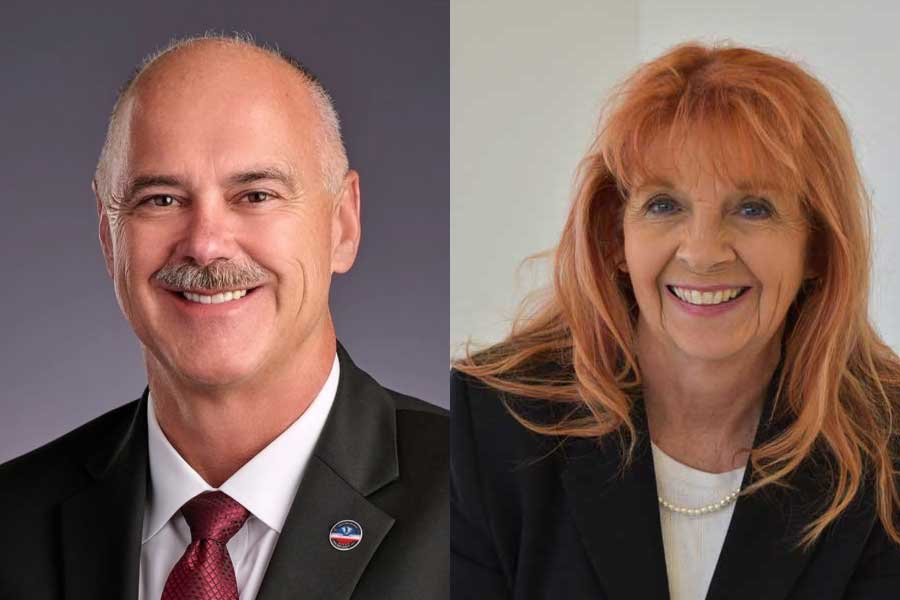
SALMON — Looking to serve a fourth term in the Idaho Legislature, Rep. Rod Furniss answers questions pressing to constituents in legislative District 31B ahead of the May primary.
EastIdahoNews.com sent the same eight questions to Furniss and former state Rep. Karey Hanks. Hanks told EastIdahoNews.com that she would not complete the questionnaire and did not provide a reason.
Furniss’ responses, listed below, were required to be 250 words or less and are only edited for minor punctuation, grammar and length.
The candidate who wins the primary will be on the general election ballot on Nov. 3. The primary election will be held on May 19.
For more candidate questionnaires and further information on this year’s primary election, check out East Idaho Elects.
Tell us about yourself — include information about your family, career, education, volunteer work, and any prior experience in public office.
Furniss: I am a 6th generation Idahoan, as my family homesteaded in the Menan area in the late 1800s. I worked on the ranch and farm until I was 17. The ranch was expanded to Leadore (Oxbow Ranch) and as a young boy I drove a 4020 tractor many times there from Menan. I have been married for 44 years and have 5 children and 12 grandchildren. I hope my posterity will live in Idaho, work in Idaho, and be educated in Idaho. I attended high school in Rigby and played football, basketball, and track. I played football at Ricks College. I graduated from BYU-I and ISU in Finance and have advanced degrees in insurance and financial planning. I worked in banking and have been involved with life and health insurance since 1986. I have been the local and state president of the National Association of Insurance and Financial Advisors and the president of our local education foundation. I grew to love teachers as we helped with financial needs of children and saw the dedication they have. I have served as a State Representative for 8 years and carried over 70 bills and am a local precinct committee member. Committees: Economic Outlook and Revenue Assessment, Joint Finance and Appropriations, Business, Energy (Vice Chair), Revenue and Taxation, Your Health Idaho, Petroleum Tank and Hispanic Affairs. I have served in many positions in Church, mission to Argentina, Bishop, High Councilor, Sunday School Teacher, etc. I enjoy recreating in Island Park and Spencer.
Why are you seeking political office within your community? Briefly explain your political platform.
Furniss: I have a great love for Idaho’s amazing quality of life and a strong desire to serve its people. My education and business experience have prepared me to be a strong advocate for a balanced budget (on JFAC we review over 100 agency budgets), exceptional education opportunities, and a robust productive economy with a goal toward affordability. Legislative District 31 has always been my home. I cherish the pioneer heritage of this area and the “salt-of-the-earth people” that make it unique. I want my family for the next generations to work in Idaho, be educated in Idaho, and play in Idaho. In the Idaho House of Representatives, my faith guides my every decision. I am pro-life because I believe that life is God-given. Abortion is the scourge of the earth and should never be considered except for rape, incest or the health of the mother. Even with these exceptions, abortion should be the last choice considered after much discussion and contemplation. I’m a pro-traditional marriage and believe marriage is the sacred union of one man and one woman. I am pro-second amendment and my guns have always been and will continue to be my right to bear. The Idaho Constitution protects my right to keep my guns regardless of allegations by anyone else.
What are the greatest challenges facing people in your district? What is your plan to meet and overcome those challenges?
Furniss: Water, taxes, affordable housing, safety, federal interference and overcrowding of schools affect the everyday households in Jefferson, Fremont, Clark and Lemhi counties. We have petitioned our federal (government to) always have enough water. We have lowered Idaho income tax rate since I have been in office from 6.9% to 5.3%, and last year gave $450 million back to Idahoans. This year in the Legislature, we have looked at many cost-saving mergers and lowering bureaucracy to utilize the people’s taxes more efficiently. I have voted every time to reduce property taxes or give refunds. High cost of homes has affected affordable housing and stopped young families from the American dream of owning a new home. School funding formulas and facility funding need to be addressed with less burden on property taxes. We have seen this change incrementally over the years. The Governor and the Idaho Legislature have done a great job at keeping Idaho a desirable place to raise a family and be educated. The federal government has finely secured our border. I am opposed to illegal immigration. Legal immigration needs to be addressed on a federal level. Temporary worker visas program needs to be reformed to ensure Idaho has enough workers to not stifle growth.
How will you best represent the views of your constituents — even those with differing political views? How do partisan politics play into your role as an elected leader?
Furniss: In modern times constituents have more access to elected officials than
ever before. Telephone, email, and social media all help inform representatives of Idaho of nearly every event, problem, and concern that constituents have. The best representatives prioritize those concerns and work on those that will affect the most constituents possible, understanding that it will never help 100% or make everyone whole or happy. As a Representative of Jefferson, Fremont, Clark, and Lemhi Counties I represent all who live within the borders. Once elected, a constituent is not defined by political party, religion, race, net worth, gender, age, or education and favoritism has no place one over the other. A problem is a problem regardless of status. My phone number (208-589- 1100) and email(rfurniss@house.idaho.gov) are everywhere and I have nearly 7000 friends on social media. It is my job to listen to constituents and then, if necessary, draft a bill to fix a law or repeal a law. That requires communication skills, writing skills, and persuasion on both sides of the aisle and across the rotunda and with the gentleman on the 2 nd floor.
What parts of the legislative budget could use more funding? Where are places in the budget where cuts could be made?
Furniss: I serve on JFAC, and we go over every agency budget and evaluate their base budgets as well as new requests for one time money and/or ongoing money. Agencies and the Governor do two separate budgets and then JFAC members can approve those budgets or make changes to those budgets. We meet as working groups and split the budgets into categories. This has been most productive as we are able to call the agency directors and ask specific questions to understand each request. A request may be for new cars, employees, desks and computers, software, additions to or maintenance on buildings, rent increases, janitorial contract increases, and many more items. This year a 3% decrease was given to each agency in December and in January an additional 1% in 2026 and 2% for 2027 was requested. This was due to the federal tax law change that lowered our revenues by an additional $155 million in 2026 and $175 million in 2027 that we were not anticipating when we lowered the income tax rate in 2025 to 5.3%. No raises for state employees were given, including teachers. Police and corrections were excluded. Reaganomics suggest that if we give a tax break revenues should increase in the State. I believe that will happen and projections look good. Idaho still maintains a healthy savings account of $880 million should that be needed. Allocation for water projects was fully funded but was a fight to keep it.
Do you believe ethics investigations in the Idaho Legislature should be kept secret from the public, or do you believe they should be open and transparent? Why or why not?
Furniss: NO! The public is entitled to full transparency and accountability. Ethics hearings should be open to the public. Voters should have all information necessary to make informed decisions.
Water availability and management are critical for eastern Idaho agriculture and growth. What specific strategy or legislation would you support to protect groundwater and surface water resources, and what is your timeline for measurable improvements?
Furniss: I grew up at the end of canal in Menan, Idaho and every drop of water was needed and planning for the water was crucial. That has not changed today. I championed a resolution to let our federal partners know that more water storage is needed in Eastern Idaho. In November of 2025 many legislators went to Washington DC on our own expense with 6000 signatures to let them know we were serious about water, and we needed help to increase storage at many dam sites including a desire to rebuild the Teton Dam. Wet water is needed to maintain our ability to put water back into a decreasing aquifer and guarantee that life on a farm continues. When that happens, we get an economic boost in all industries. I have fought to maintain funding in JFAC of $30 million a year for projects that preserve water and increase utilization. The best rate of return Idaho could get on its tax revenue is to invest in water. I have attended many of the meetings leading up to the agreement reached by groundwater users and surface water users and we will test that agreement this year. However, the agreement allows for averaging and credit for recharging the aquifer and this will allow longer term planning and rotation of crops. Pray for rain.
In March 2026, the Idaho House passed House Joint Memorial 17, requesting the U.S. Supreme Court to overturn the 2015 Obergefell v. Hodges ruling that legalized same-sex marriage nationwide. Do you agree with the majority opinion of the Idaho House? Do you oppose same-sex marriage in Idaho?
Furniss: This memorial expresses the Idaho Legislature's commitment to restoring the
definition of marriage as a union between one man and one woman, urging the Supreme Court to reconsider the Obergefell v. Hodges decision and return authority over marriage laws to the states and their citizens. I agree with this and was a co-sponsor of the Memorial. This will not be easy as many constitutional challenges exist, and precedence has been established over the last 10 years.