



Authorities seize bison herd, cite owner for animal neglect
Published at
Logan Smith, KCNC
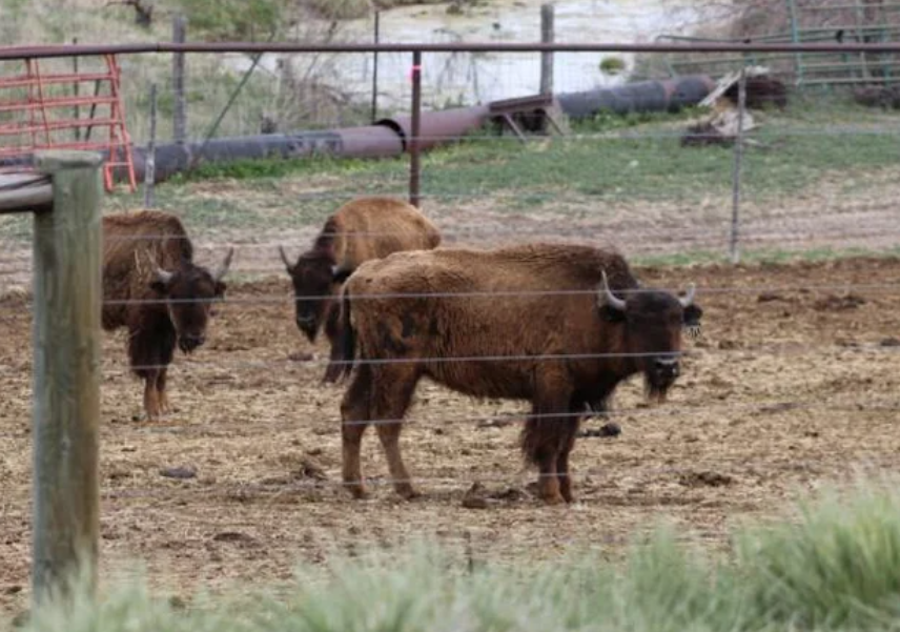
CRAIG, Colorado (KCNC) — State and county authorities took possession of dozens of bison from a private ranch in northwestern Colorado on Saturday and expect to charge the owner with multiple counts of cruelty to animals.
The owner, however, claimed that his bison are raised drug-free and healthy and only appear thin compared to other commercial livestock.
The Moffat County Sheriff’s Office began investigating the herd a month ago “in an effort to remediate ongoing concerns regarding the care and condition of the animals,” MCSO stated in a press release. “Despite those efforts, investigators determined that further action was necessary to protect the welfare of the animals involved.”
Approximately 90 animals were removed from the Lay Valley Bison Ranch, located between Craig and Maybell, on Saturday. Personnel from the Colorado Bureau of Animal Protection and the Colorado State Veterinary Office assisted Moffat County during the seizure of the animals.
Two bison died during the operation. Two other bison and a mule “were humanely euthanized to prevent further suffering,” according to the sheriff’s office.
“It was pretty rough on the buffalo, the roundup,” Lay Valley owner Dan Martin told CBS Colorado a day later, using a more general term to describe the animals.
Martin said he has been raising buffalo for 45 years. For the last 30 years, they’ve been raised without antibiotics, growth hormones, or grains.
“I do my animals natural,” Martin said. “They’re always on the slender side. People now think they should be a little fatter, more robust.”
His animals are turned loose on pasture grass, Martin said, and supplemented with a high-protein alfalfa hay. They will not look like beef cattle at the National Western Stock Show, he added.
“I’m not trying to impress you with size,” Martin said. “Today’s people have pushed the buffalo a little harder. I don’t believe in that. (Lay Valley bison) do get fed. I don’t think they were unhealthy at all.”
John Graves, the current President of Rocky Mountain Bison Association, co-owner of JG Bison in Sheridan, Wyoming, and former Ralphie program manager at CU Boulder, says the animal protection authorities are professionals. He has spoken to Martin, the sheriff’s office, and the state board of agriculture, but he has not seen the seized bison or their body condition scores.
“It’s an unfortunate situation for everyone involved,” Graves said Sunday. “They (authorities) never want to get to the situation where they have to seize animals. It’s a last resort.”
But, he added, “Dan knows what he’s doing. Bison are vastly different than lay cattle. They might appear like their bones are sticking out more than beef cattle. They lose weight naturally over the winter and look ‘raggedy’ when they lose their hair. To the average person, comparing bison to beef cattle is different. Bison appear to be much more slender. They’re lean animals by nature.”
Bison typically lose 10% of their body weight during winter, then fatten up during the summer, according to Graves.
The 2022 U.S. Census counted 9,555 head of bison in Colorado private herds, according to the Rocky Mountain Bison Association. That was the fifth-highest bison count among U.S. states. Colorado then had the second-most bison producers in the country. The average herd size that year was 87 head.
The seized Lay Valley bison are being cared for and evaluated, according to the Moffat County Sheriff’s Office press release.
In that release, MCSO included photos of bones and skulls, presumably of deceased bison, and presumably taken on the Lay Valley property. No explanation was provided.
Martin acknowledged piling bison carcasses in a gulley for erosion control. The image shows dead animals he has placed there for 45 years.
“Every rancher loses some animals,” he said. “Nobody likes to see an animal die. But it’s a natural thing to contend with when you’re raising animals.”
Graves also called the selection a single site for the disposal of deceased animals, “standard practice.”
Martin stated that 85% of the animals seized “were in pretty fair shape.”
The ones not in fair shape, he said, were the result of inbreeding in a closed herd. He explained that he tries to breed stronger animals within the herd and does not bring in outside stock. This gets him superior animals when the genes “match up,” as Martin described. But he admits this also creates a greater risk of genes “not matching up,” as he put it, and weaker animals – runts – are produced. These, he tries to give a couple of years of good life before an early slaughter.
Martin said he is being charged $10/day per animal for the animals that were seized.
“Not a bad rate,” he said, “but I can’t afford to stay in business too long at that rate.”
He wants the case before a judge as soon as possible. He will argue that the disagreement is a matter of different management styles, and not one of neglect or abuse.