



Idaho students participate in the state’s first National Civics Bee
Published at
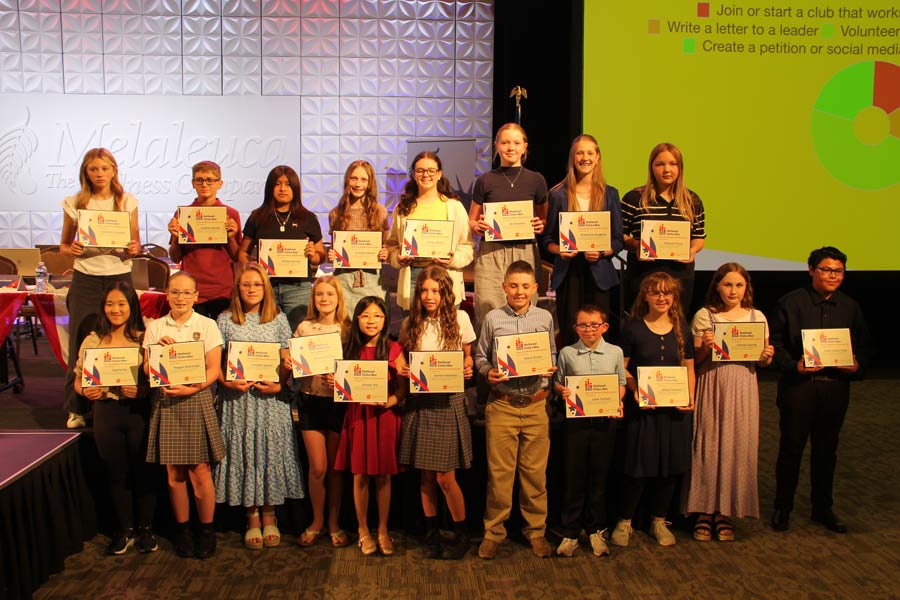
IDAHO FALLS – Students from across the Gem State participated in a competition on Friday that tested their knowledge and civic-mindedness.
Hosted by Melaleuca and the Greater Idaho Falls Chamber of Commerce, the competition took place at Melaleuca headquarters in Idaho Falls. It marked the first time a regional National Civics Bee has been held in Idaho.
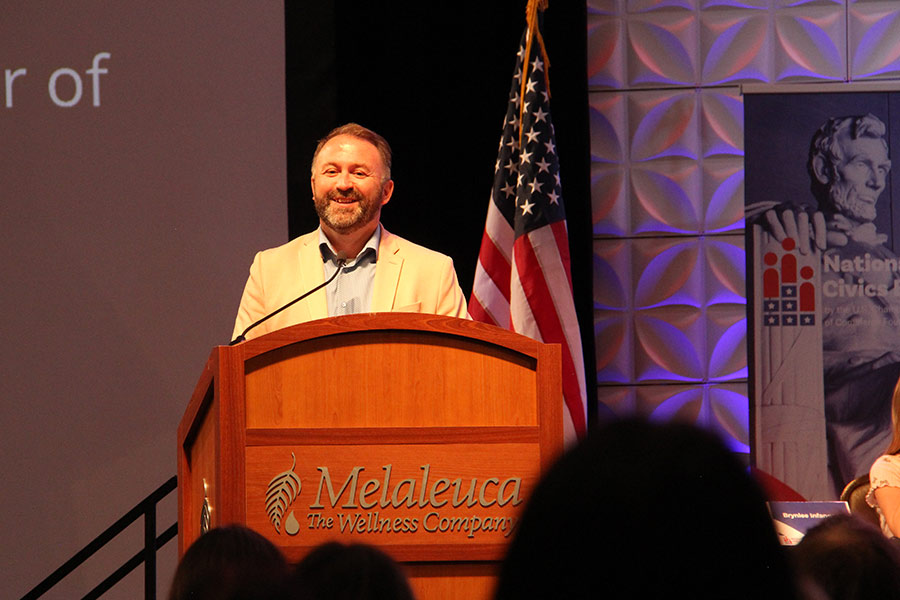
Paul Baker, president and CEO of the Greater Idaho Falls Chamber of Commerce, pointed out that this event is “more than a competition.”
“(This) is actually a celebration of citizenship, leadership and the belief that young people have the power to strengthen their communities,” he said during his opening remarks.
The students who participated are middle school age and hailed from public, private and charter schools, as well as homeschools. They were chosen based on essay questions they answered, and then questioned in person in the first two rounds of the event to test their knowledge of civics and government.
The five finalists were determined based on their scores from rounds one and two, and then presented their project ideas to improve their communities. The finalists were:
- Esmae Hazelton, from Idaho Novus Classical Academy in Avimor. Esmae spoke about the need for new schooling options in her hometown of Star and advocated for a Hillsdale charter school to come to the city.
- McKenna Vaughan, from American Heritage Charter School in Idaho Falls. McKenna spoke to the problem of K-3 students reading below grade level and advocated for a peer-mentor program, in which sixth through eighth grade students mentor their younger classmates.
- Teagan Eilenfield, from Idaho Novus Classical Academy in Avimor. Teagan said that bullying in public schools disrupts students’ right to a good education, and she advocated for an anonymous reporting system as well as educational outreach programs about the harms of bullying.
- Ali Donahoo, from American Heritage Charter School in Idaho Falls. Ali spoke to the problem of students spending excessive time on screens, both at school and at home and advocated for an educational outreach program that would reach directly to classrooms, as well as radio stations and podcasts.
- Lainey Moore, from William Thomas Middle School in American Falls. Lainey said that while there is strong awareness of mental health struggles with teenagers, there is less awareness of those same struggles with younger children. To address this, she advocated for an elementary school-based class for parents and guardians to raise awareness.
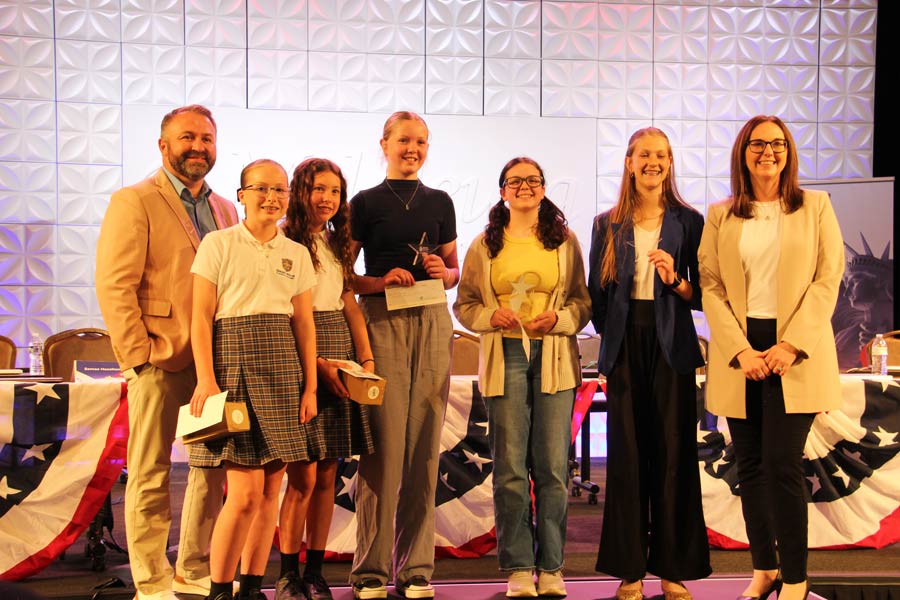
After each finalist finished her presentation, the judges deliberated briefly before announcing the winner.
Esmae Hazelton and Teagan Eilenfield placed fifth and fourth, respectively. Ali Donahoo was awarded third place, McKenna Vaughan got second place, and Lainey Moore walked away as the winner of the entire competition. She will go on to compete in the national competition in Washington, D.C., later this year.
The National Civics Bee was launched in 2022 by the U.S. Chamber of Commerce Foundation, and this is the first year that it has been held in all 50 states and American Samoa, just in time for America’s 250th anniversary.
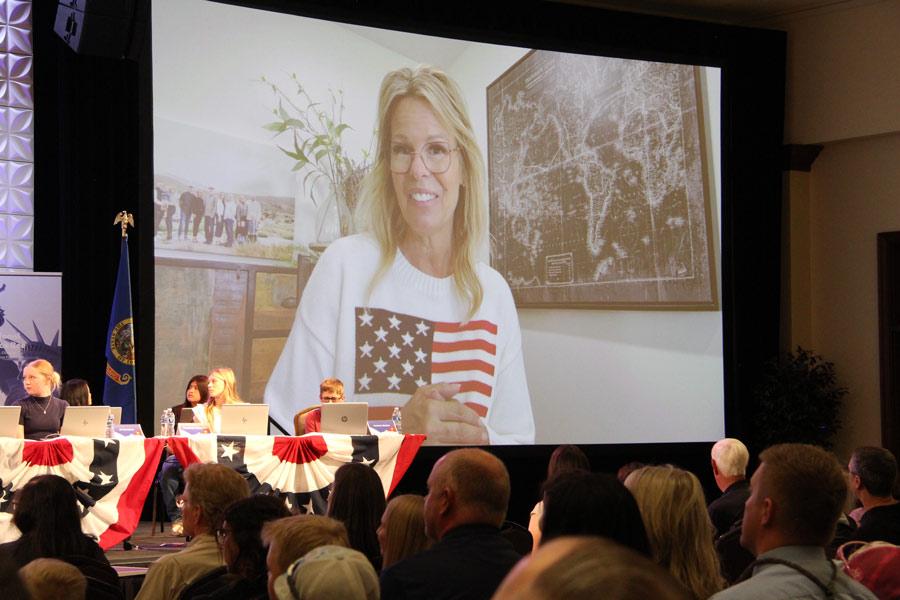
Before the competition began, Debbie Critchfield, Idaho’s superintendent of public instruction, addressed the 20 student participants via video message.
“The future of this country has always depended upon young people willing to learn, lead and care about their communities,” Critchfield told them. “Thank you for being a part of this first chapter in Idaho, and for reminding all of us that America’s next 250 years are already being shaped by students like you.”
Jamie Reynolds, Melaleuca’s chief Human Resources officer, also praised the students for investing in themselves and participating in a competition that will help them be engaged citizens throughout their lives.
“One of the most encouraging things about today, and you guys participating, is that you’re already thinking about real issues. You’re already getting involved, taking time to be educated, but then (also) providing a solution,” Reynolds said. “I don’t know if you guys recognize this or not, but that is leadership.”
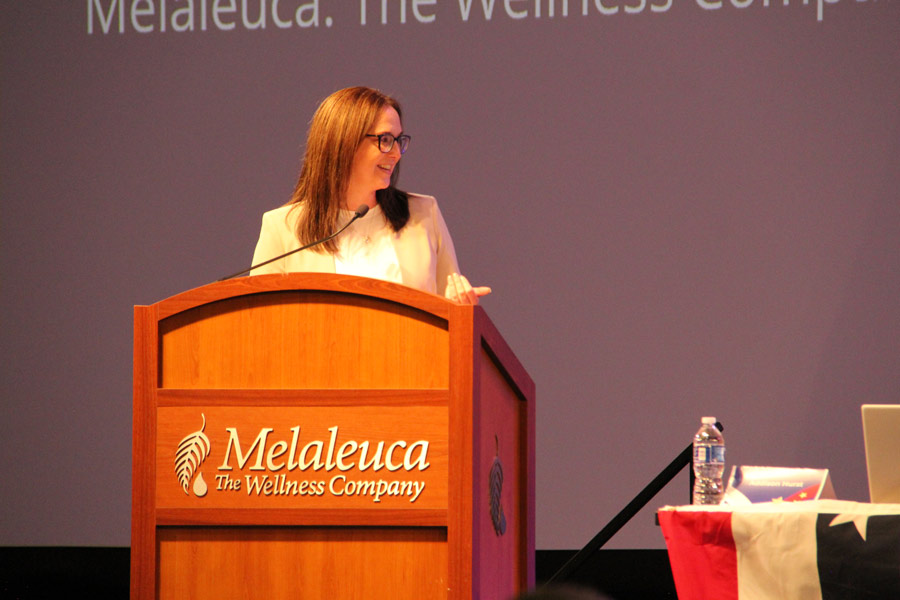
During his remarks, Baker also addressed some of the topics that students wrote about in their essay submissions. The students’ efforts included helping people in need through food drives; giving support for charitable organizations; improving public spaces through better sidewalks, bike lanes and public transportation; and making change through civic processes like proposing petitions or presentations to city councils.
“(These students are) not waiting for someone else to solve problems; they’re imagining how they could become a part of the solution,” Baker said.
He also spoke about how much hope all of the student essays he read gave him for the future.
“Our future is actually very bright, and we have a lot of reason to be happy and joyful and hopeful,” Baker said. “These students have shown us that they care deeply about their communities.”