



The man who brought cloud-seeding to Idaho was at the center of a D-Day forecast feud
Published at | Updated at
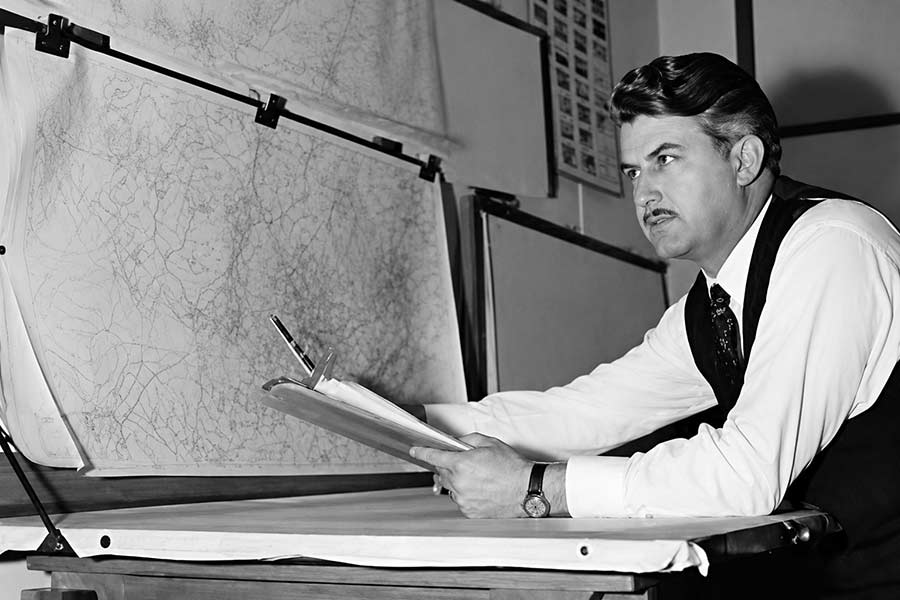
IDAHO FALLS – Long before cloud-seeding became a controversial tool for boosting Idaho’s water supply, the meteorologist who helped introduce it to the state found himself at the center of a high-stakes dispute over the weather forecast that shaped D-Day.
As depicted in “Pressure,” a new film that premiered in theaters over the weekend, Irving Krick — played by actor Chris Messina — analyzed historic weather data for predictable patterns to help make future long-range forecasts. His track record of accuracy caught the attention of Hollywood producer David O. Selznick years earlier, when Krick successfully forecasted calm weather for the outdoor burning of Atlanta scene in “Gone With the Wind.”
Using that methodology, Krick now predicted that the morning of June 5, 1944 — the day Eisenhower was planning the D-Day invasion on Normandy Beach — would be sunny and clear.
James Stagg had been brought in as Eisenhower’s chief meteorologist at the recommendation of Dr. Nelson Johnson, director of the British Meteorological Office. Stagg had a much different prediction than Krick and the two men clashed.
Stagg — played by Andrew Scott in the film — predicted that a powerful storm would hit Normandy Beach at that time and that carrying out an attack would have catastrophic consequences. Later, he determined there would be a gap in the storm for several hours the following morning. A window of fair weather made June 6 a much better time, in his estimation, to carry out Operation Overlord.
“The weather won’t be perfect, but it will do,” the actor playing Stagg says in the movie.
Ultimately, D-Day was postponed until June 6. Today, it’s remembered for being a pivotal turning point in the war. It created a two-front war, stretching Germany’s resources to the breaking point. It led to the liberation of Europe and ultimately, the downfall of Adolf Hitler. The results of the Normandy invasion would have been much different for those under Eisenhower’s command, had inclement weather not been forecasted.
While many historical records credit Stagg’s prediction for the timing of D-Day, Krick — who died in 1996 at age 89 — said that he and his team initially predicted there was a three-day window of good weather and that Ike used that knowledge to make his decision.
A 1985 report from the Los Angeles Times cites records kept by Krick and other forecasters that allegedly indicate Stagg collapsed under pressure several days before the invasion.
The Times quotes Victor Boesen, who wrote a book about Krick in 1978.
“Stagg at one point broke down,” Boesen wrote, according to the newspaper. “Ike’s decision to invade was based on Krick’s forecast.”
Whether Stagg or Krick was responsible is unclear. Regardless, both men went on to have long careers in meteorology after the war. Krick’s exploits eventually brought him to Idaho.

How Krick introduced cloud-seeding in Idaho
Krick already had a bachelors degree in physics when he decided to study meteorology. The former radio broadcaster’s interest in weather forecasting began in 1930 while working for Western Air Express, according to the New York Times.
The California Institute of Technology offered one of the earliest meteorology courses. Krick enrolled, and later obtained a doctorate before establishing the school’s first meteorology department in 1934.
In 1948, four years after the Normandy invasion, the department was dissolved and Krick took most of the staff with him to form Irving P. Krick Associates, the first private weather business in America.
Based in Denver, his clients came from 33 states and 14 countries, according to the NYT. His friend Walt Disney was among them, along with the Mexican Department of Agriculture and the inaugural committees of every U.S. president from Eisenhower to Bill Clinton.
“Krick advised Presidents-elect on whether they would need to bundle up on Inauguration Day and told movie producers when conditions would be best for exterior shooting” as he did for “Gone With the Wind,” the paper reported.
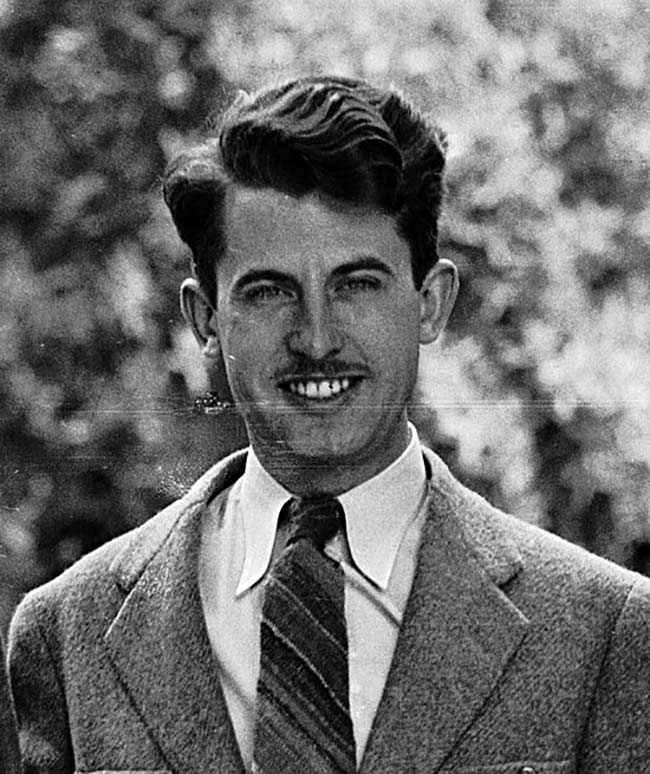
As weather modification became part of the national conversation in the early 1950s, Krick’s research on “rainmaking” caught the attention of lawmakers and water users in numerous states. The Intermountain West became a target for many of his experiments because of the high elevation and arid climate, which may have been a reason his business was based in Denver.
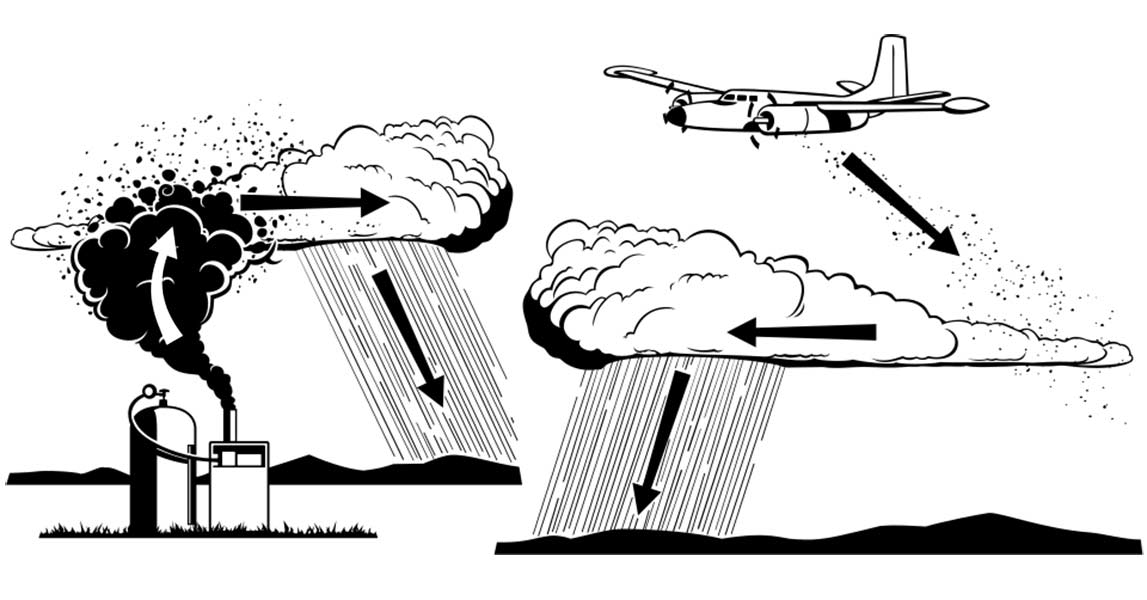
A 2012 article from The Denver Post notes that Krick had two basic plans for increasing rain and snow. One was through cloud-seeding, which involved dropping dry ice into the clouds from an airplane. The second method involved generators that released silver iodide into the atmosphere.
“He and his cohorts actually conducted some of the experiments at their own cost. His goal was to persuade local governments and farmers to put up the money to fund a permanent, ongoing program,” the newspaper wrote.
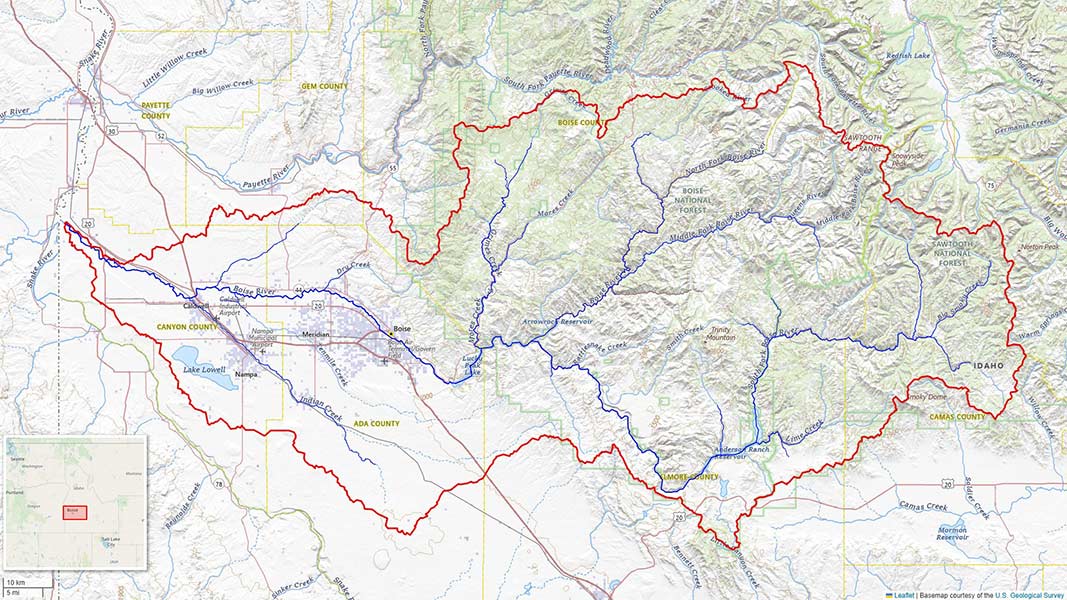
Idaho heavily relies on winter snowpack for its water supply. During a drought in 1950, farm groups and water users in the Boise River watershed area caught wind of Krick’s research and hired him to make it rain.

Whether the experiment was successful remains a topic of debate. Although Krick claimed his project increased precipitation from 10%-400% across multiple states, others claimed his forecasting methods were “more showmanship than science.”
U.S. leaders eventually got involved. Between 1953 and 1958, Krick’s operation was the focus of a Presidential Advisory Committee on Weather Control. During a hearing, Krick reportedly testified that his silver iodide generators could increase precipitation by 10% to 15%.
Although the committee certified the procedure as effective in 1957, according to the LA Times, doubts still swirled in the scientific community. During a House subcommittee hearing investigating whether the federal government should regulate weather modification programs, the U.S. Weather Bureau — predecessor to the National Weather Service — expressed skepticism about Krick’s efforts. Agency officials noted that storms often happened days later when it potentially would have rained anyway. They believed this made it impossible to prove the veracity of Krick’s cloud-seeding operation.
Despite the controversy, Irving P. Krick Associates was financially successful for many years. More than a year after Krick’s first commercial job, a 1951 Time magazine article reported that his company employed 120 people and had contracts to seed clouds over 330 million acres west of the Missouri River, as well as parts of Mexico and San Salvador.
Krick eventually sold his company to Strategic Weather Services in 1990, according to the Los Angeles Times. He died of heart failure at his Pasadena home six years later.
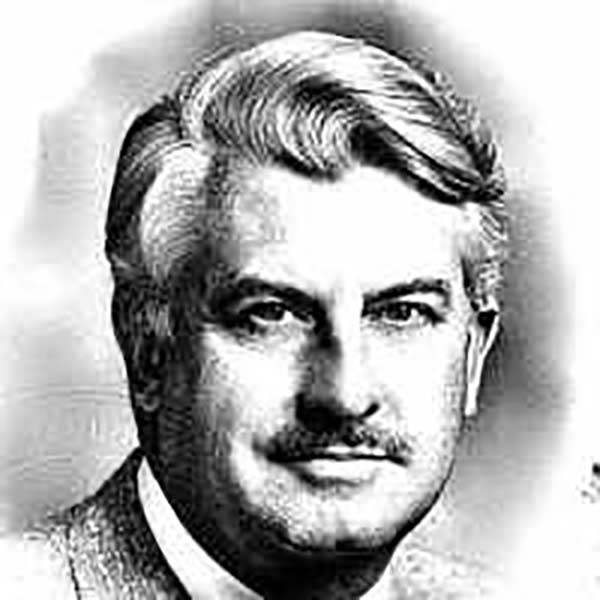
“Weather is my life,” Krick told The Times in 1985. “If I retired, I’d be dead the next day.”
‘The only way we can augment water’
Decades later, cloud-seeding has proven to be a viable method of weather modification and is still done in Idaho today. Idaho Power and the Idaho Water Resources Board use cutting-edge weather radars, atmospheric sensors, and computer modeling to seed only when exact conditions are met. Instead of focusing on increasing rainfall, it targets high-elevation winter snowpack to secure hydroelectric power.
“The goal of our cloud-seeding program is to provide additional water for Idaho Power’s hydropower projects, which provide reliable, affordable, clean, energy for our customers. Increased snowpack also benefits irrigators, winter recreationists, river users, and fish and wildlife,” the company says on its website.
RELATED | Idaho declares drought emergency for all 44 counties as snowpack hits record lows
Despite its controversial history in the Gem State, Sen. Van Burtenshaw, R-Terreton, supports it. Amid an emergency drought and ongoing shortage this year that restricts people’s water usage, Burtenshaw told EastIdahoNews.com in April that cloud-seeding “has a tremendous impact on the amount of water” in Idaho.
RELATED | Curtailment order targets 924 groundwater rights across eastern Idaho
“Last year, we produced 1.1 million-acre-feet more water from the Boise Valley to the upper Snake River than we had, on average, in all the years before,” Burtenshaw said. “That’s a million-acre-feet out of the sky — not pumping it out of the ground or keeping it in reservoirs — that either goes into the ground or into the river.”
“We have all these people who want to stop (cloud-seeding),” he added. “But it’s the only way we can augment water.”
This weather-related story is brought to you by Pony Express Car Wash, Idaho's premier express car wash destination, renowned for its commitment to exceptional service and quality. Voted the No. 1 car wash company in Idaho for five consecutive years, we pride ourselves on delivering an unparalleled experience for every vehicle and customer. Our state-of-the-art facility utilizes name-brand soaps and cutting-edge equipment to ensure your car receives the ultimate clean. Established in eastern Idaho in 2019, Pony Express is proud to be a locally owned and operated company that caters to the unique car washing needs of our Idaho Friends and neighbors. We invite you to experience the difference at Pony Express, where your satisfaction is our ultimate goal.