



Review: ‘Power Ballad’ is funny, heartfelt and surprisingly hard to shake
Published at
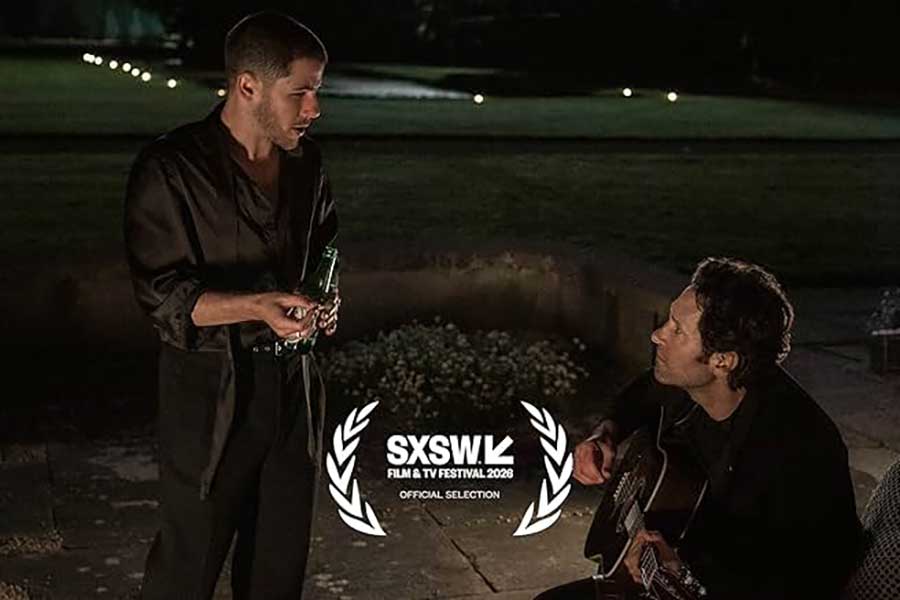
I’ve always had a somewhat complicated relationship with musicals.
Some absolutely work for me. Others leave me sitting in the theater wondering why everyone suddenly decided that the best way to solve their problems was to sing about them at full volume in the middle of the street.
It’s not that I dislike the genre — I’ve loved plenty of musicals over the years — but it’s definitely one where if the movie doesn’t hook me emotionally pretty quickly, it can lose me in a hurry.
Then there are movies like “Once,” “Yesterday,” and “Sing Street,” which people will debate whether they’re “traditional musicals,” but when you break them down you find they absolutely belong in the conversation. Music drives the story, shapes the emotional arcs, and becomes part of the DNA of the characters.
They also happen to be some of my favorite music-driven films.
Two of those favorites were directed by John Carney, and that meant I went into “Power Ballad” with some cautious optimism.
Spoiler alert: I really liked this one.
“Power Ballad” is funny, heartfelt, occasionally heartbreaking, and full of the kind of emotional honesty that Carney brings to his films. It also features terrific performances from Paul Rudd and Nick Jonas, sharp humor, incredibly catchy music, and a message that sneaks up on you in all the best ways.
And, fair warning: If you see this movie, there’s a very good chance the song “How to Write a Song” is going to set up permanent residence in your brain.
Mine has been paying rent for days.
A smart setup that avoids easy clichés
Without giving too much away, “Power Ballad” follows two musicians at very different stages of life and career. One is trying to hold onto relevance and rediscover creative purpose. The other is navigating success, pressure and the expectations that come with it.
Their paths collide in ways that are funny, awkward, emotionally messy and surprisingly insightful.
That’s really all you need to know going in.
Part of what makes “Power Ballad” work so well is that it doesn’t lean too heavily on predictable music-movie clichés. It would have been easy for this story to turn into some big, flashy redemption arc filled with dramatic concert speeches and conveniently timed applause.
Instead, it keeps things more grounded.
The stakes feel personal rather than manufactured, and the emotional tension comes from the characters themselves rather than overblown plot mechanics.
That restraint gives the story a lot more power — no pun intended. (Well, maybe a little intended.)
Paul Rudd proves once again that he can do just about anything
There’s something incredibly likable about Paul Rudd. Even when he’s playing flawed, frustrated or emotionally messy characters, he has this natural warmth that keeps audiences invested.
He brings all of that to “Power Ballad.”
This is one of his better dramatic-comedic performances in recent memory because it asks him to balance so many different emotional tones. He’s funny, he’s vulnerable, he’s chaotic, he’s occasionally heartbreakingm nd somehow he makes all of it feel believable.
What I appreciated most is that Rudd never overplays the emotional moments. There’s a naturalness to his performance that makes the character feel lived-in rather than performed.
You believe his regrets, you understand his insecurities, and you root for him even when he’s making questionable choices.
That’s not always easy to pull off.
Nick Jonas takes a genuinely interesting swing
I’ll admit I wasn’t entirely sure what to expect from Nick Jonas here. And honestly, that uncertainty may have made his performance even more impressive.
He takes on a role that could easily invite comparisons to his own real-life career, But, instead of leaning into obvious familiarity, he finds something more nuanced.
There’s a confidence to his performance, but also vulnerability. There’s swagger, but also self-doubt. And there’s enough emotional complexity to keep the character from feeling like a caricature of modern fame.
It actually feels like a pretty brave role choice.
The dynamic between Jonas and Rudd gives the film much of its emotional and comedic energy, and the two play off each other remarkably well. Their chemistry never feels forced; it just works.
The music absolutely delivers
If you’re making a movie called “Power Ballad,” the music better be good.
Thankfully, it is. Very good.
The songs are catchy without feeling disposable, emotional without becoming manipulative, and smartly woven into the story. And yes, “How to Write a Song” is an absolute earworm.
“How to Write a Song” is the kind of track that sneaks up on you. At first, you enjoy it. Then you find yourself humming it later. Then you wake up the next morning and realize your brain has apparently decided this is your personality now.
That’s usually the sign of strong songwriting.
The music here doesn’t just support the film; it becomes part of the storytelling. That’s something John Carney has always understood. The songs matter because they reveal character. They aren’t interruptions, but emotional extensions of what the characters are experiencing. That distinction makes all the difference.
Quiet humor that sneaks up on you
This isn’t a loud comedy. It’s not trying to hit you with punchlines every 30 seconds. Instead, “Power Ballad” leans into subtle, observational humor — the kind that catches you off guard.
There were multiple moments where I found myself laughing a second after the joke landed because it was delivered so casually.
That understated comedic rhythm fits the movie beautifully. It keeps things light without undermining the emotional stakes.
Some of the funniest moments come from the uncomfortable little truths about creativity, ambition and ego that the movie is willing to poke at.
If you’ve ever tried to create something — a song, a script, a business, anything — there are moments here that will probably make you laugh because they hit uncomfortably close to home.
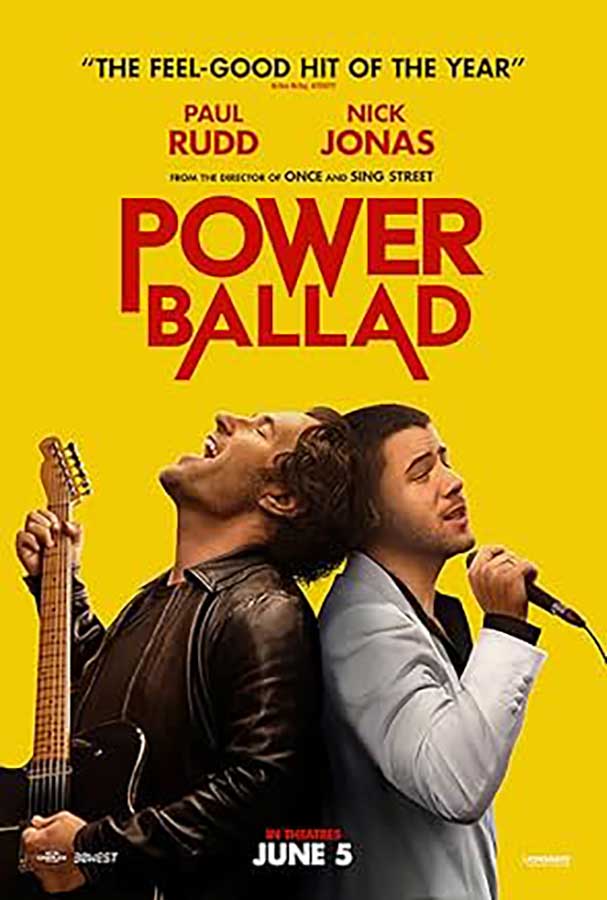
The message is what really sticks
Without spoiling anything, the movie’s biggest strength may be what it has to say.
At its core, “Power Ballad” is about relationships. But it’s also about identity, priorities, self-worth, creativity and figuring out what actually matters.
What could have turned into something preachy or overly sentimental just doesn’t. The message unfolds naturally through the characters and their choices. And by the time the credits were rolling, I found myself reflecting on some of the questions the movie raises about success and fulfillment.
That’s one of my favorite things a movie can do: entertain me in the moment, then quietly stick around afterward. “Power Ballad” does that.
Final thoughts
“Power Ballad” isn’t the kind of movie that arrives with massive blockbuster fanfare.
It’s quieter than that. Smaller. More personal.
Carney once again proves he has a remarkable ability to tell stories where music and emotion feel inseparable.
And if you’re anything like me, don’t be surprised if you leave the theater already humming “How to Write a Song” all the way to your car.