



Bird-watching in the grass: Poults and colts are now active
Published at | Updated at
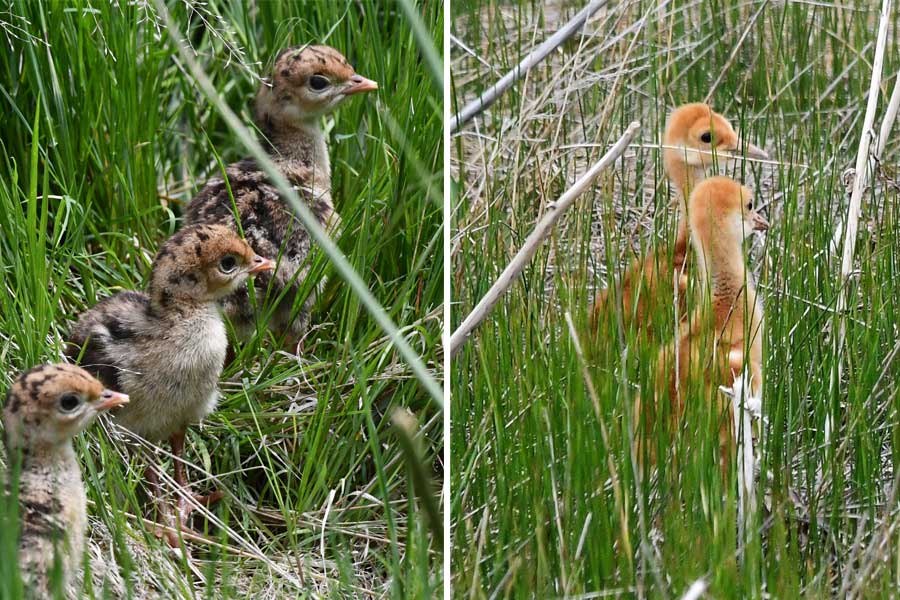
REXBURG — Last week, while working in my garden, I kept hearing a hen clucking in some willows at the back of my yard. I finally located her — a wild turkey hen — in some tall grass, and it wasn’t long before I saw the tall grass moving around her.
I ran into the house to get my camera and returned in time to snap a picture of three poults — young turkeys, about 3 days old — as they emerged from an opening in the grass.
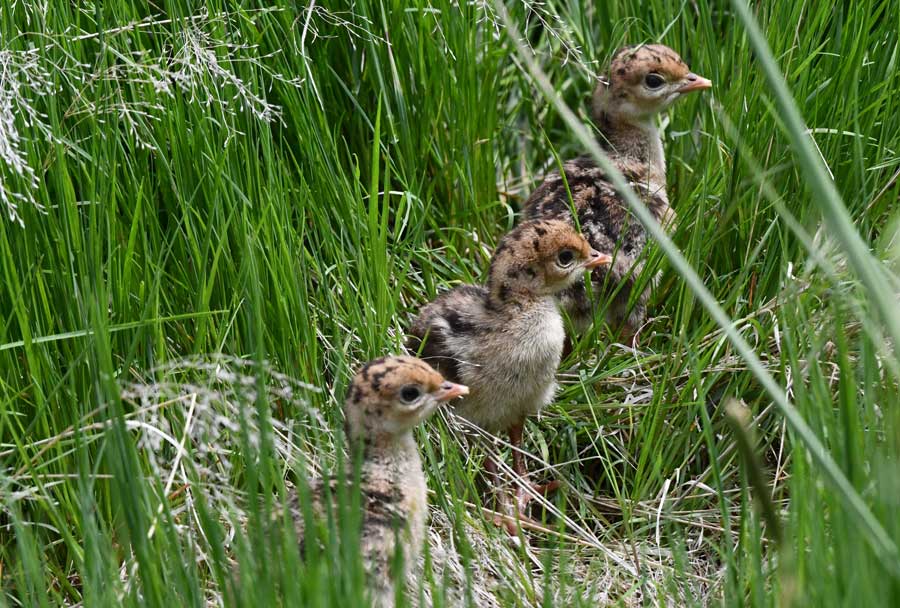
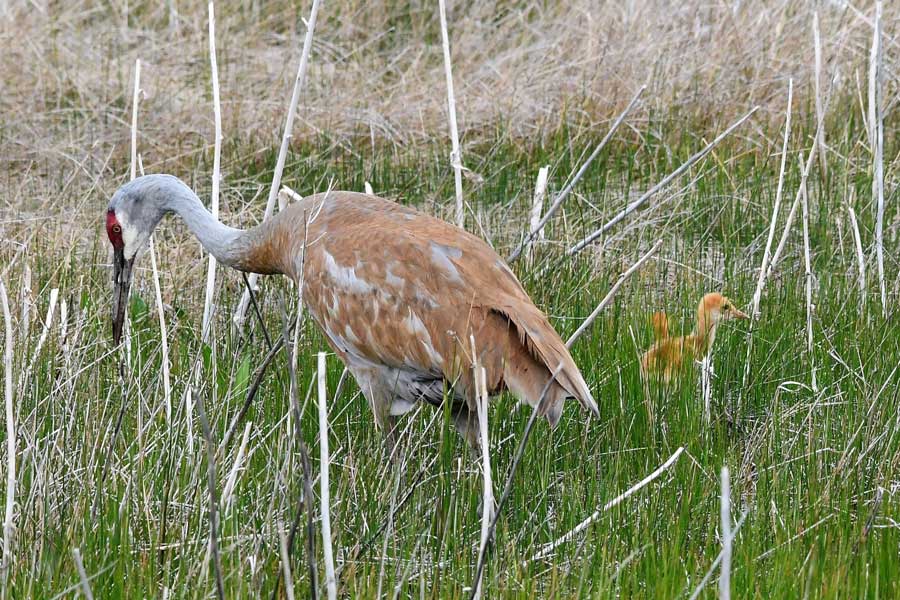
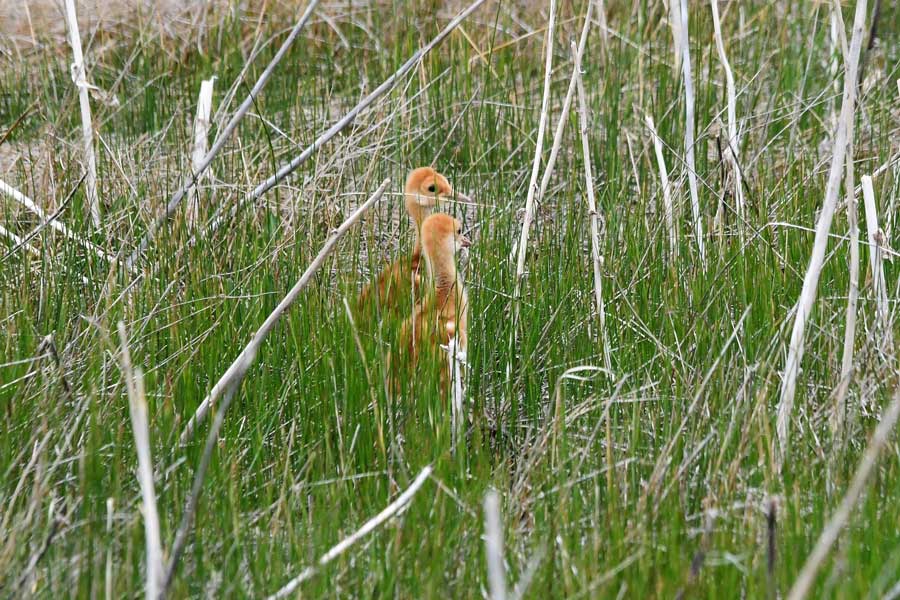
Later that day, I drove out to Mud Lake to look for other wildlife to photograph and found a pair of sandhill cranes with two colts, their newly hatched babes.
A few years ago, while walking through some tall grass at Market Lake, I felt something tugging at my pant leg and discovered a young crane pulling on my pants. Its parents were not happy and tried to attack me.
That experience recently came to mind when I saw a video of a male crane defending his family from a bear. Having been on the receiving end of angry geese and cranes, I try to give large birds plenty of distance when they are trying to protect their young.
Rearing poults
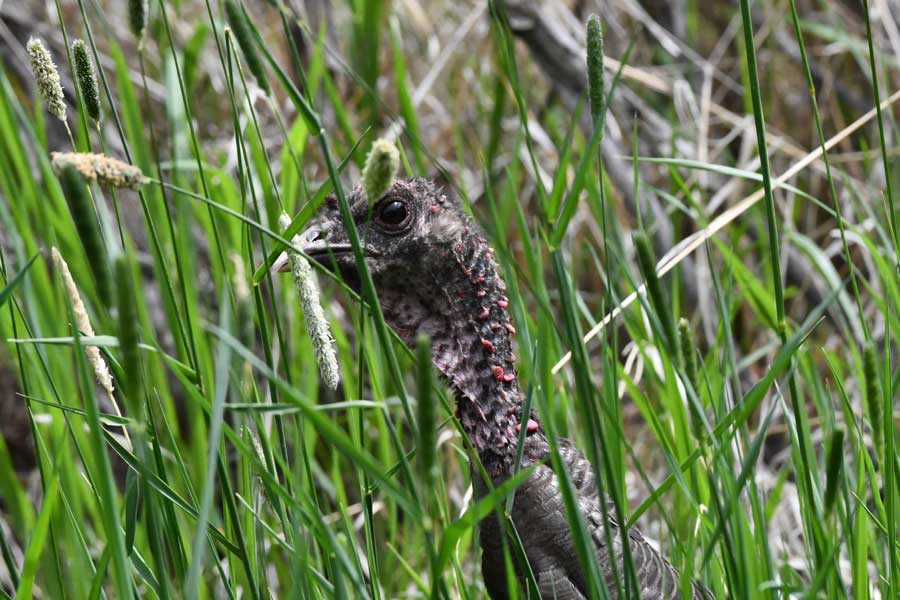
Male wild turkeys do not aid females in incubating their eggs or raising their poults; that is left up to the hens exclusively.
Mom will feed the young for a few days, but the poults quickly learn how to feed themselves. After a few weeks, the little family will join other hens with their broods, and that flock of hens and poults will spend the summer, fall and winter together.
Meanwhile, the male turkeys will get in a group, meet at their “turkey pub,” and probably spend the rest of the year telling stories and just loafing around. After all, their work for the year has been accomplished.
Rearing colts
In contrast, male sandhill cranes take a very active role in raising their little ones. They will incubate the eggs, help feed the colts, and protect their mates and families.
The dads will help brood their babies for about three weeks, and then the family will remain a family unit for the rest of the year — until the parents are ready to begin nesting again. Sandhill cranes may not mature for one to seven years.
I have thoroughly enjoyed watching both species raise their kids for years. As different as they are, they are fun to watch.
Time to put away the bird feeders
I thought it was about time to put the seed feeders away for the summer, but on Wednesday, while rock hunting in central Idaho, we had a blizzard roll in on us. I have put out some hummingbird feeders and will probably put the other feeders away soon.
Be careful in your outdoor activities this week, as wood ticks are plentiful and the rattlesnakes are very active.
Also, if you find what you think is an abandoned young animal or bird, back away from it and leave it alone — the parents probably know where their baby is and will take care of it.
Have a great week!
MORE LIVING THE WILD LIFE:

Living the Wildlife is brought to you by Yellowstone Teton Territory. Experience 7,500 square miles of untamed wilderness in Eastern Idaho's Yellowstone Teton Territory. Where majestic peaks meet endless adventure, your perfect outdoor escape is waiting. Start planning at YellowstoneTeton.com.