Mass surveillance or a quicker way to solve crime? Flock cameras cause controversy in east Idaho
Published at | Updated at
EDITOR’S NOTE: The following is the first in a two-part series examining Flock cameras in eastern Idaho. Read the second article here.
IDAHO FALLS — They’re at intersections, watching roundabouts, monitoring arterial roads — and watching you?
Over the past few weeks, social media and local city council discussions have been ablaze with debate over the installation and use of license plate readers — specifically Flock Safety cameras — in the cities of Pocatello and Idaho Falls.
While this tool has been praised by local law enforcement agencies for its ability to aid in solving crimes, privacy advocates view the cameras as an invasion of their rights.
“They’re currently violating Idaho law, period. And then secondly, it’s mass surveillance,” Brian McKellar, an organizer with Deflock Idaho, told EastIdahoNews.com. “It’s akin to going against our Fourth Amendment rights. That’s kind of the big picture of why we don’t like these systems.”
In other parts of Idaho, cities like Caldwell have seen tort claims filed over the city’s use of these cameras. The filings allege that doing so violates Idaho laws over data-sharing agreements, according to reporting from the Idaho Statesman.
RELATED | Why one Idaho man is threatening to sue these cities over Flock Safety cameras
Over in Post Falls, as reported by KREM, Mayor Randy Westlund made a statement that he is “firmly opposed to unconstitutional mass surveillance and the construction of large national databases which track the movement of citizens.” While Flock may never enter Post Falls under Westlund’s watch, the city does use Motorola license plate readers — but in a limited scope.
EastIdahoNews.com has been looking into concerns over these license plate reader cameras.
While this story will look at Idaho law and how it governs the use of these cameras, as well as how law enforcement uses them, we have also spoken with organizers of Deflock — a movement to get rid of these cameras — and city officials about their concerns.
We spoke with the Idaho Falls Police Department, which has been educating residents about its uses and why it sought to contract with Flock.
RELATED | Tort claim, vandalized cameras and eastern Idahoans in arms about Flock cameras
What is Flock?
Flock Safety is the company that develops Flock cameras used across the country, including in Idaho.
While the company is known for making license plate readers, it also makes video cameras, security trailers and drones. Its software also allows users to scan vehicles, share that information on a national license plate reader network, access a transparency portal, track audit trails, and receive National Crime Information Center alerts.
Flock itself isn’t the only company that makes license plate reader cameras used by law enforcement to track license plates of individuals involved in crimes. Motorola and Axon are other notable companies that sell a similar product. Flock doesn’t make cameras just for law enforcement, either, but also for other institutions like churches, residential areas and businesses.
In eastern Idaho, Flock cameras have been around for only about a year, with IFPD installing 13 cameras in the city in 2025.
During a work session in April, Idaho Falls Police Chief Bryce Johnson told the City Council that the department also purchased a security trailer from Flock that shows in their inventory. These cameras are not license plate readers, but cameras used during protests or large events to help officers ensure the safety of attendees.
Johnson told EastIdahoNews.com that Flock was the IFPD’s choice based on the company’s prices, with the department spending around $40,000 to lease the 13 cameras. The money spent came from the Edward Byrne Memorial Justice Assistance Grant (JAG) program.
Implementation of Flock cameras
Johnson said that IFPD began testing license plate readers in 2024. The first camera wasn’t from Flock but from Motorola, he said, which the department placed outside the IFPD Complex facing Northgate Mile.
Johnson said that with the implementation of the first camera, his officers were able to solve multiple cases within two days. This helped to cement the department’s decision to invest in these types of cameras.
“We are not early adopters to technology,” Johnson said. “We look for technology that’s been proven and tried.”
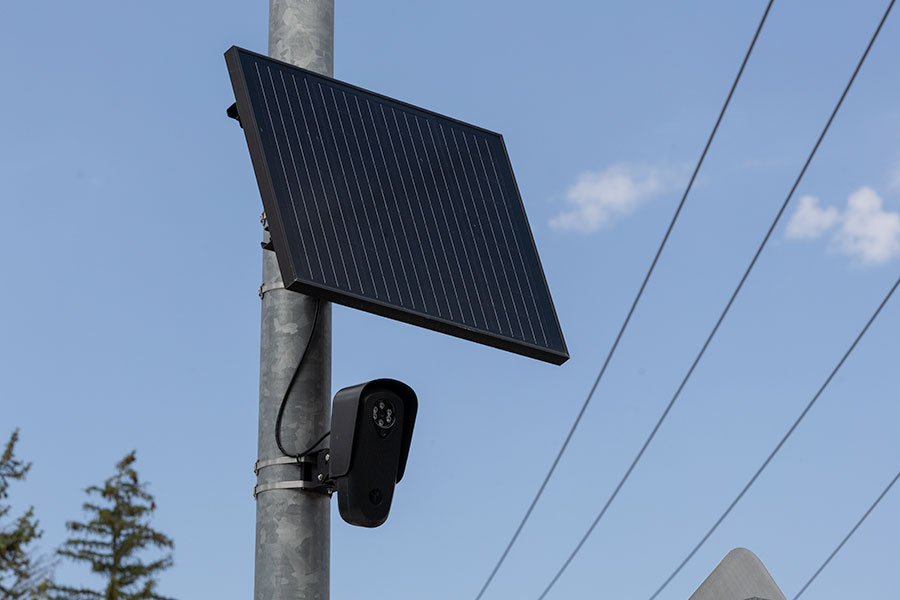
According to the Idaho Falls Police Department Manual, officers and emergency communications officers can access these cameras to identify suspects in felony or misdemeanor crimes, investigate traffic accidents, and locate missing or endangered persons.
The section of the manual that discusses Flock and the use of license plate readers is available at the bottom of this article.
“Once we have one of those crimes, then we can access the system and find out where a vehicle associated with that crime has been,” Johnson said.
At this point, either a license plate or the names associated with it are entered into a “hot list” and stored for 30 days in Flock’s system, he said. The “hot list” will notify officers when a vehicle crosses an intersection or street with one of these cameras.
Once this occurs, Johnson said it isn’t sufficient probable cause to make a traffic stop. Officers will need to do more to establish sufficient probable cause to conduct a traffic stop.
Another aspect that made Flock appealing to the IFPD was the collaboration with other agencies on that system. According to the IFPD transparency portal, Idaho Falls’ Flock cameras are also accessible by federal and out-of-state law enforcement through the software network. This allows for easy collaboration, Johnson said.
The police chief added that this is one of the many concerns he’s heard from the community about the IFPD sharing data with other agencies, including federal agencies.
“We don’t want active criminals from other jurisdictions being able to come here to Idaho Falls with us not knowing it,” Johnson said. “We don’t want our active criminals, whom we are actively seeking arrest warrants for, to be able to hide in other jurisdictions.”
Laws involving Flock cameras
Discussing the legality of what allows license plate readers near public roadways.
Standing on the sidewalk of Northgate Mile, Johnson pulled out his phone and began recording as traffic passed by.
“I can sit here out all day long and record that license plate number,” Johnson said. “There is no expectation of privacy on this public roadway. Anyone can come out here and take pictures.”
Johnson said that if an officer is out in a public roadway, any community member can record them. “It’s a public place, and we can all record each other because it’s in public,” the police chief said.
Privacy starts when it involves your home or your phone, and Johnson said he’d need a warrant to access either.
When it comes to the data obtained on Flock’s system, Idaho Code 49-1432 dictates how and when the data can be searched. The code prohibits personal use, political activity, or surveillance unrelated to those suspected of committing a misdemeanor or felony crime, involved in a traffic accident, or involved in a missing or endangered persons case.
Johnson said there must be a legitimate legal reason to search, as there will be a record of when the video was accessed. Idaho law also requires a semiannual audit of the data to identify any unauthorized or suspicious activity.
Those who are found abusing the system are liable to face disciplinary action, administrative penalties, and criminal prosecution.
This is where privacy advocates’ main concerns lie: the abuse the system has faced since its implementation.
Abuses and concerns
According to CNN, there have been dozens of instances in which officers have resigned or been arrested for abusing or misusing Flock cameras.
One instance involves five police officers in Albany, Georgia, who were arrested on allegations of misusing Flock.
The American Civil Liberties Union’s main concern over Flock and its systems stems from the lack of need for a warrant to access that data, how many vehicles are captured by the data, and data sharing between federal agencies, ACLU senior policy counsel Chad Marlow told CNN.
The belief is that sharing data with federal agencies could help create a nationwide surveillance system to track vehicles across the country.
Idaho has had its share of reported cases of abuse involving Flock.
One example Johnson discussed during an Idaho Falls City Council work session in April involved an incident in Jerome.
RELATED | Jerome County sheriff used Flock cameras to search for wife’s vehicle, documents show
According to KMVT, Jerome County Sheriff George Oppedyk used the Flock cameras to search for his wife’s vehicle 152 times to “test” the system. Although the Idaho Attorney General’s Office conducted an investigation, no criminal charges were filed against him.
Johnson said the audits of searches conducted on the Flock system help catch those who seek to abuse it. If violations are found, there will be an investigation, and depending on the severity of the violation, it may result in disciplinary action or termination.
“You can’t hide it,” Johnson said.
Flock CEO and co-founder Garrett Langley told CNN that the company launched an “audit assistance tool” last month that alerts auditors to “abnormal” uses of its system.
According to the IFPD Manual, Flock Safety has a standard 30-day retention policy, meaning that after that time, the data is deleted.
“When you record out there as a citizen, you could keep that recording for as long as you want,” Johnson said. “We can’t. We have to purge it every 30 days.”
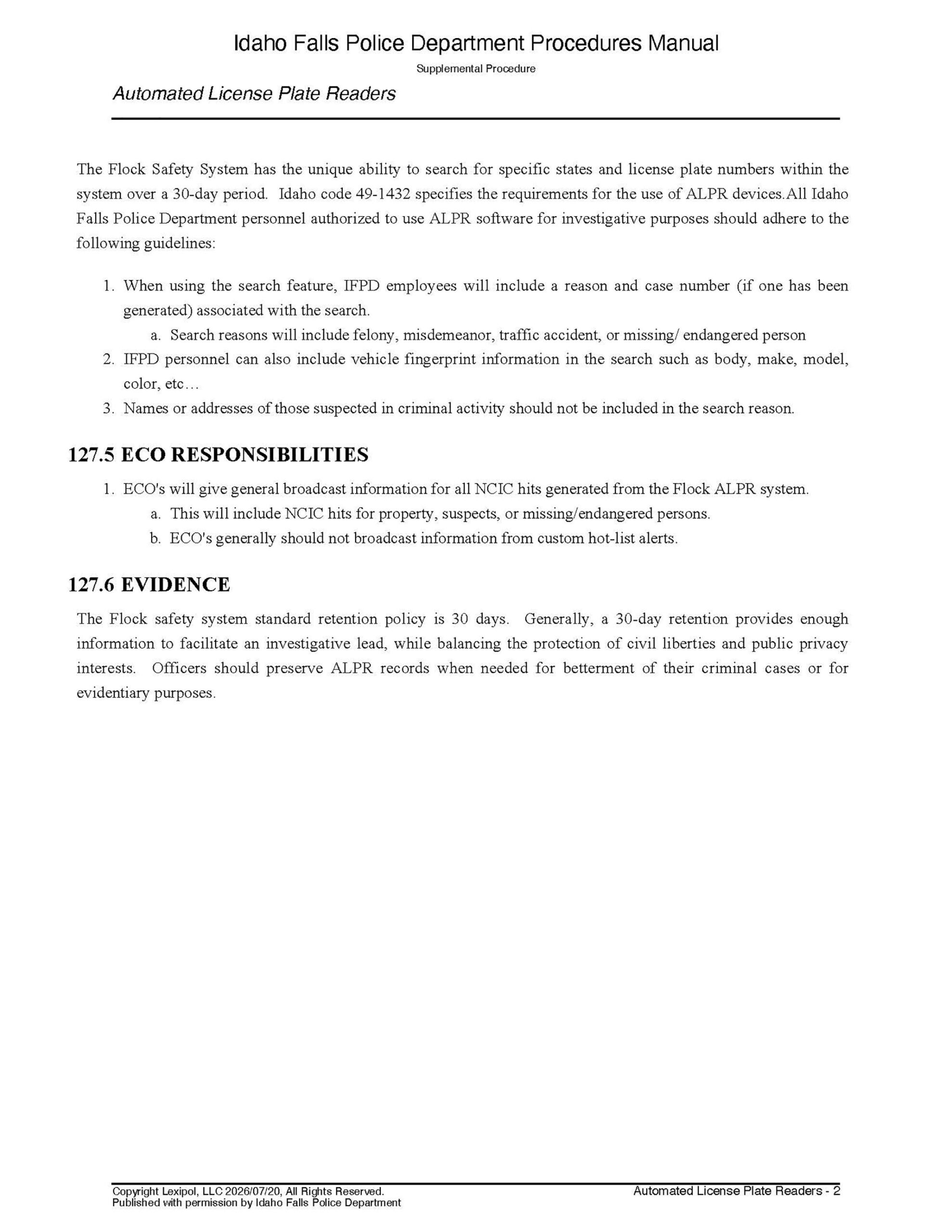
With the positioning of the Flock cameras, Johnson said they are set up to take a photo of the vehicle’s rear license plate. The cameras themselves can’t pan, tilt or zoom, and they’re set to take photos of the public roads.
“I’m really sympathetic to the conversation about privacy. I get it, and we’re doing everything we can to protect people’s privacy,” Johnson said.
Regarding access to the system itself, Idaho law requires that only authorized personnel within the agency may access this data.
When it comes to public data requests, Johnson said that it’s not possible under Idaho law.
“We cannot access that data; we can’t use it until we have a suspect of a crime,” Johnson said. “We are not creating files of citizens and tracking where they’re going – that’s not what is happening.”
An example of what the cameras capture was given to EastIdahoNews.com.
The photo shows an IFPD patrol vehicle heading south on South Boulevard, at the intersection of Elm Street, just past the roundabout.
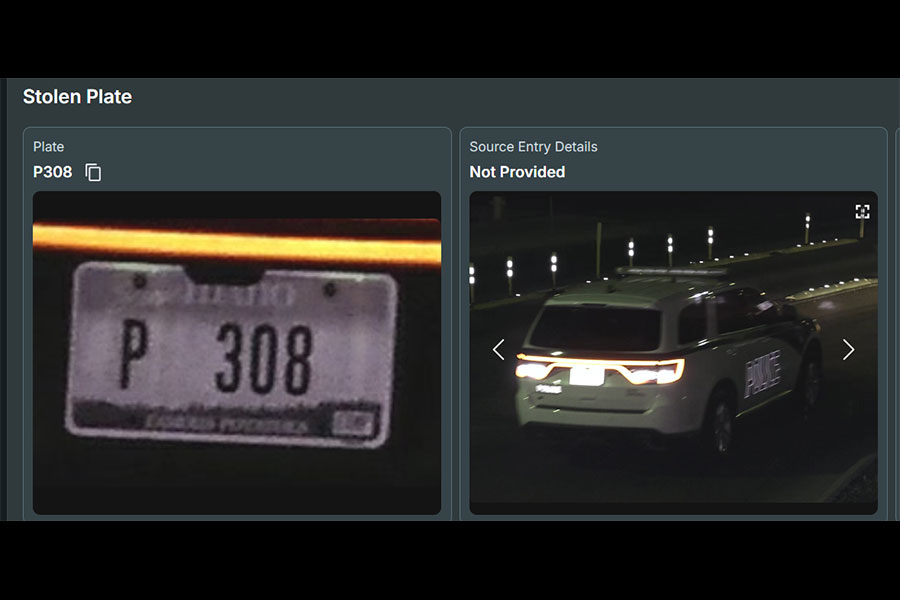
The patrol car involved had attempted to stop a driver who was fleeing from officers. During a pit maneuver, the police vehicle’s front license plate was ripped off. While attempting to recover the plate, it was discovered that a community member had already picked it up.
That plate was entered into the system as stolen, but no one thought to replace the back plate on the patrol vehicle. That caused the Flock cameras to flag the patrol vehicle as stolen every time it drove past one of them.
IFPD also has an online transparency portal where residents can view the prohibited uses, which include immigration and stalking, along with who the IFPD is sharing the data with and an audit of past searches. This audit is maintained by Flock itself, and not the police department.
Notable case involving Flock cameras
One notable case involving the use of these cameras was the search for a missing 12-year-old girl who was taken from Idaho Falls.
RELATED | AMBER ALERT CANCELED: 12-year-old Idaho Falls girl found safe in Colorado
Johnson said that when the case was initially reported, there was no description of the suspects. But a county sheriff’s deputy had stopped the vehicle, and a license plate number was obtained.
A dispatcher realized that the name obtained from the deputy matched that of the men suspected in a kidnapping.
Once that information was gathered, the plate was entered into the system, and a Motorola camera located the car in Colorado.
Working with law enforcement in Colorado, the vehicle was found and the girl involved was returned to her family in Idaho.
Other local cases have allowed officers to passively locate those suspected of a crime more quickly.
“They are taking active criminals off the street from the warrants they have; they’re making it safe for all motorists,” Johnson said.
Future discussions at City Council and AI?
Johnson said that in October, the IFPD will deliver a presentation to the City Council on other options for license plate readers, looking at their technologies and budgets.
Another notable future change the department will make is updating its contract with Flock regarding its use of artificial intelligence.
“Our new contract will prohibit Flock from using our data to do any machine learning or train their AI,” Johnson said. “Idaho Falls is a very small player in this big country, and they don’t need our data, and that was a very easy change to make to the contract.”
This change in the contract will go before the City Council on July 30.