



Understanding skin cancer
Published at
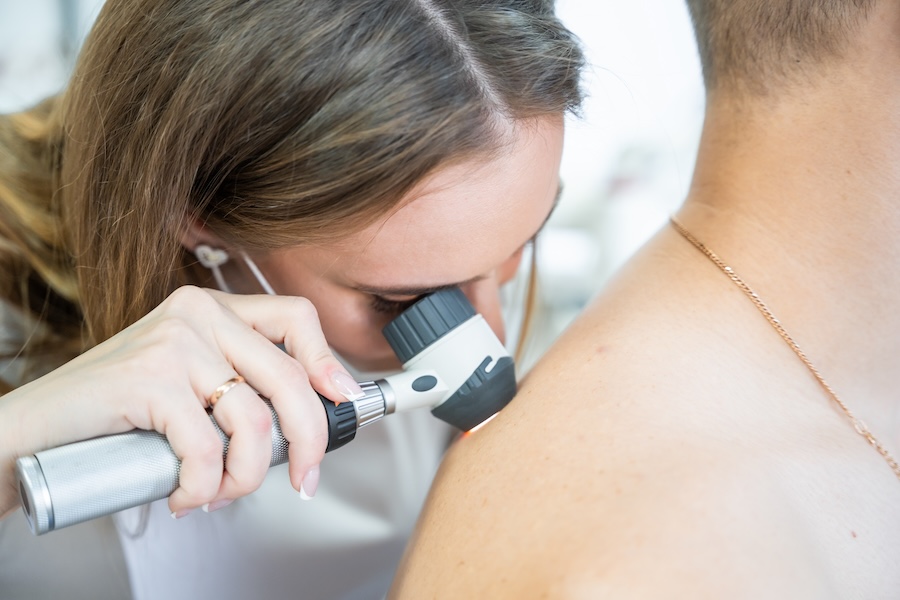
Have a medical-related question you've always wanted answered? The doctors at Mountain View Hospital and Idaho Falls Community Hospital are here to help! Email your "Ask the Doctor" questions to news@eastidahonews.com and they might end up in our weekly column.
Q: How do I know if I have skin cancer?
A: The best way to know is to monitor your skin regularly and look for changes. Any new growth, sore that doesn’t heal, or a change in a mole could be a warning sign. The ABCDEs of melanoma — Asymmetry, Border irregularity, Color variation, Diameter over 6mm, and Evolving. —are useful guidelines. If you notice anything suspicious, schedule an evaluation with a dermatologist.
Q: What does skin cancer look like?
A: Skin cancer can appear in several forms. Basal cell carcinoma often looks like a pearly or waxy bump. Squamous cell carcinoma might appear as a firm, red nodule or a flat lesion with a scaly crust. Melanoma, the most serious type, may look like a mole that changes shape, size, or color. Because appearances vary, any persistent skin change should be checked by a professional.
Q: How can skin cancer be prevented?
A: The most effective prevention is sun protection. Wear broad-spectrum sunscreen with at least SPF 30 every day, seek shade during peak sun hours (10 a.m. to 4 p.m.), wear protective clothing, and avoid tanning beds. Regular skin checks also play a critical role in prevention and early detection.
Q: What treatments are best for my skin cancer?
A: Treatment depends on the type, size, location, and stage of the skin cancer. Options include surgical removal, topical medications, radiation, and Mohs micrographic surgery, which is a highly effective technique for certain skin cancers. Your dermatologist will work with you to help determine which treatment is best for you.
Q: How often should I have a skin cancer screening?
A: Generally, adults should have a full-body skin exam once a year. However, if you have a history of skin cancer, numerous moles, fair skin, or a family history of melanoma, more frequent exams may be recommended. Monthly self-exams at home are also encouraged.
Q: Is there a specific time of year when skin cancer becomes more of a concern?
A: Yes, summer is a critical time to practice sun protection. Increased sun exposure during outdoor activities can raise the risk of UV damage, which contributes to skin cancer. However, sun protection is important year-round — even on cloudy days and during winter months.
Final Thoughts:
Skin cancer is highly treatable when caught early. Regular check-ups, self-awareness, and daily
sun protection are your best defenses. If you have concerns about your skin or notice changes,
don’t wait—consult with a dermatologist.
This column does not establish a provider/patient relationship and is for general informational purposes only. This column is not a substitute for consulting with a physician or other health care provider.

Ask the Doctor is brought to you by Mountain View Hospital and Idaho Falls Community Hospital. Mountain View Hospital is proud to offer the community compassionate surgical, labor and delivery, NICU, diagnostic and rehabilitative services. And when the seconds count, count on Idaho Falls Community Hospital for emergency care. With around-the-clock trauma services, state-of-the-art technology, and a highly-skilled team, Idaho Falls Community Hospital is always ready to provide patients with the best possible treatment.