



The snow has arrived, and so have all the woodpeckers
Published at | Updated at
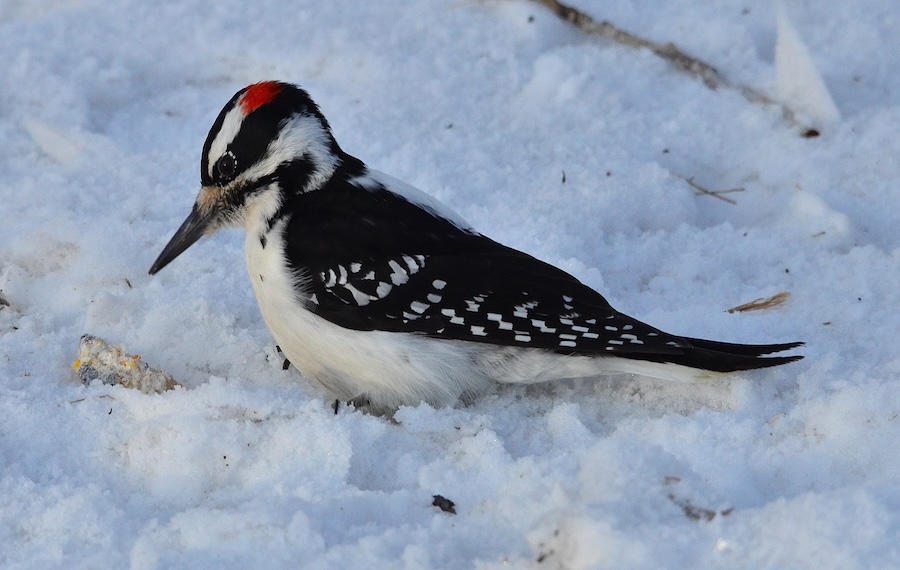
On Wednesday morning, I woke up to 8 inches of snow and a population of woodpeckers at my backyard feeders that had exploded.
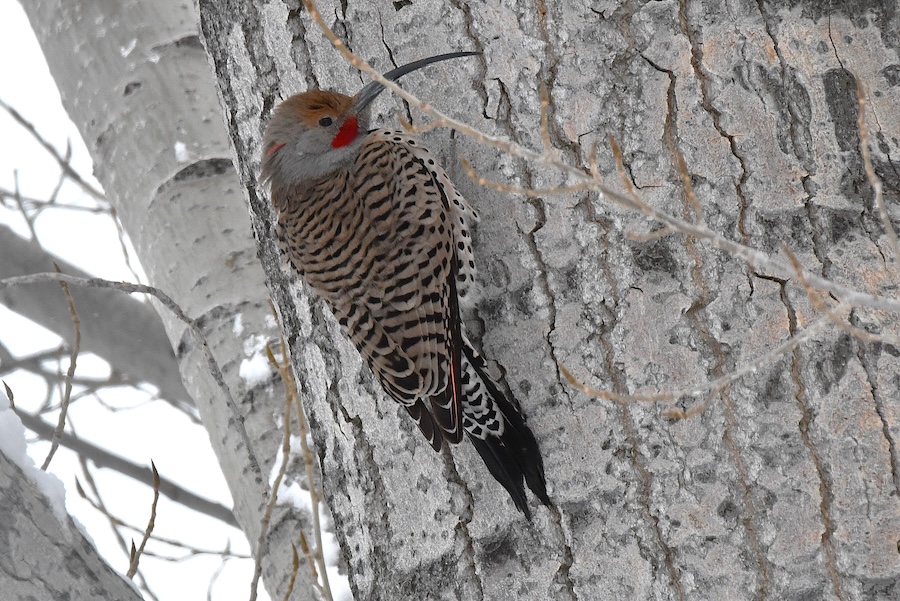
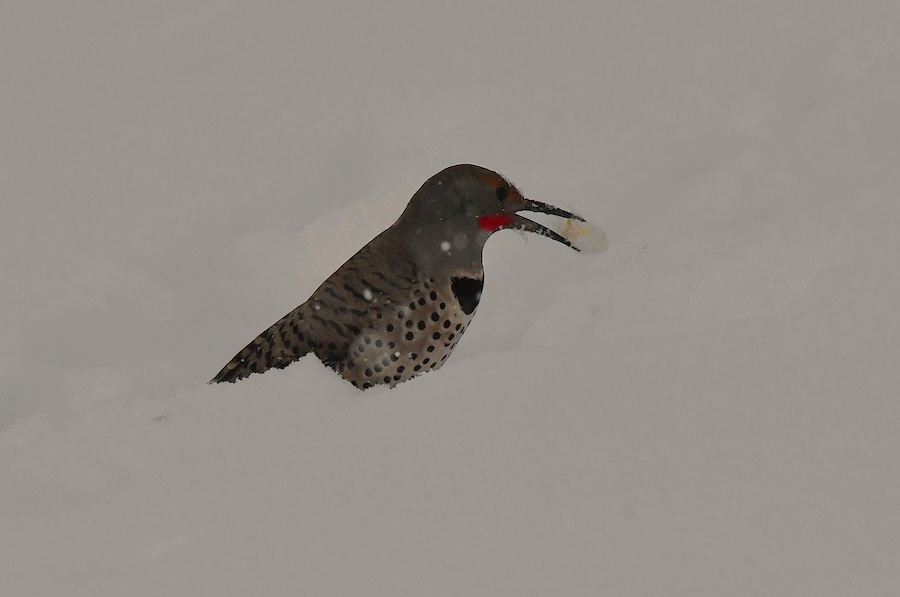
The number of northern flickers went from three to four each morning to 14, and they were joined by a pair of downy woodpeckers and a single male hairy woodpecker. Their world had changed from providing easy pickings for food to making them beggars overnight.
By Friday, the temperature dropped to a minus 2 degrees Fahrenheit, causing a few more woodpeckers and a host of smaller songbirds to arrive looking for a handout.
Another pair of downys also showed up along with another hairy, and I had 17 flickers visit me. It has been fun watching all these birds fighting over the seven feeders in my yard.
When a sharp-shinned hawk came along, all the birds except for a few of the flickers found hiding places. Those flickers just snuggled flat against a tree trunk and waited until the hawk left.
Flirting woodpeckers
For several weeks before the snow came, the original pair of downy woodpeckers had been flirting with each other. They chased each other and performed their dating rituals, and even drummed.
When you hear them pecking on trees, they are not usually searching for food; they communicate with each other by drumming. They find a dead tree or limb or even a piece of metal, and hit it forcefully with their bill, sending a message to others that they are available.
When they are looking for food or drilling a hole for a nest, they usually cannot be
heard. They do it as quietly as possible, trying not to alert others to these activities.
The only way that you can tell the difference between the genders of downy woodpeckers is that the males will have a red patch of feathers on their heads, while the females are all black and white.
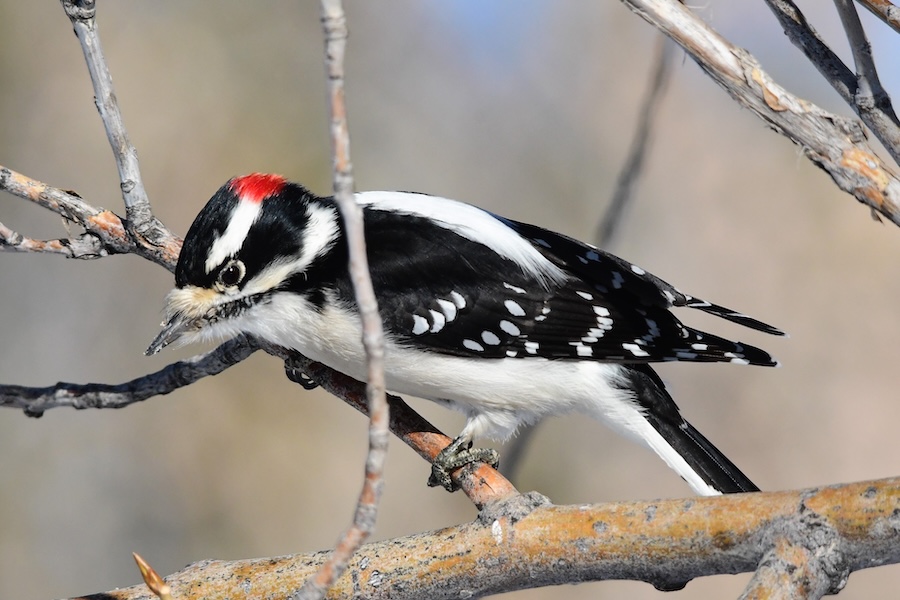
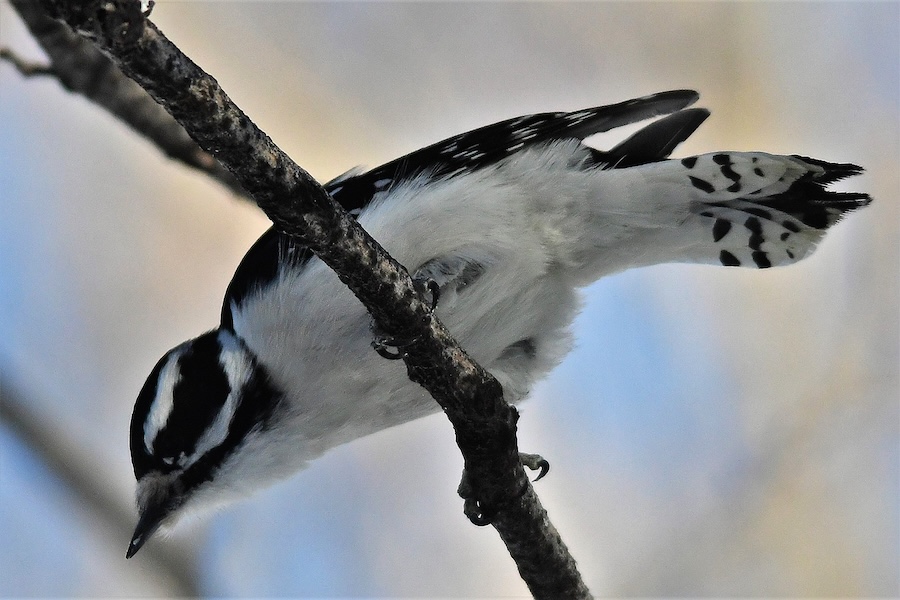
These small woodpeckers are also often mistaken for their larger cousin, the hairy woodpecker. The downy has a bill about one-third the length of its head, and it has black dots on its white tail feathers. The hairy is larger, has a bill almost as long as its head, and its white tail feathers don’t have any black dots.
It will be interesting to watch what happens to the downy and hairy woodpeckers’ activities while the snow remains on the ground.
Last year, I had a northern flicker with a long, narrow, curved bill stay during the
winter, and I did not see it this year until the snowstorm this week. For the last three days, it has been showing up in the afternoon when most of the other flickers have eaten and moved on.
Spring is coming
Traditionally, the sandhill cranes and the snow geese show up early to mid-March, so I will be looking for them if the predicted warm weather melts the snow in the next two weeks. Also, I will be watching for the sage grouse and sharp-tailed grouse to begin gathering on their lekking.
Stay warm, and I hope those who have been contacting me about the eagles at Camas have been able to enjoy them. Reports indicate that somewhere between 10 to 15 of them have been coming in to roost.
RELATED | Bird-watching is still top-notch at the Camas wildlife reserve

Living the Wildlife is brought to you by Yellowstone Teton Territory. Experience 7,500 square miles of untamed wilderness in Eastern Idaho's Yellowstone Teton Territory. Where majestic peaks meet endless adventure, your perfect outdoor escape is waiting. Start planning at YellowstoneTeton.com.