



‘These students feel betrayed’ says ISU professor at town hall on cuts to higher education
Published at | Updated at
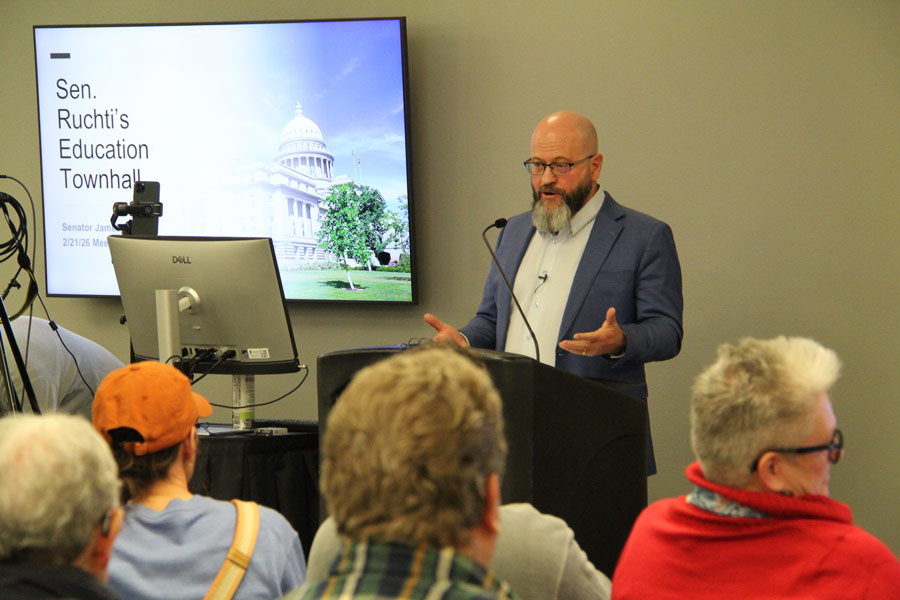
POCATELLO – A group of concerned citizens gathered on a weekend evening last week to hear from one of their elected representatives about state budget cuts and to share their perspectives with him.
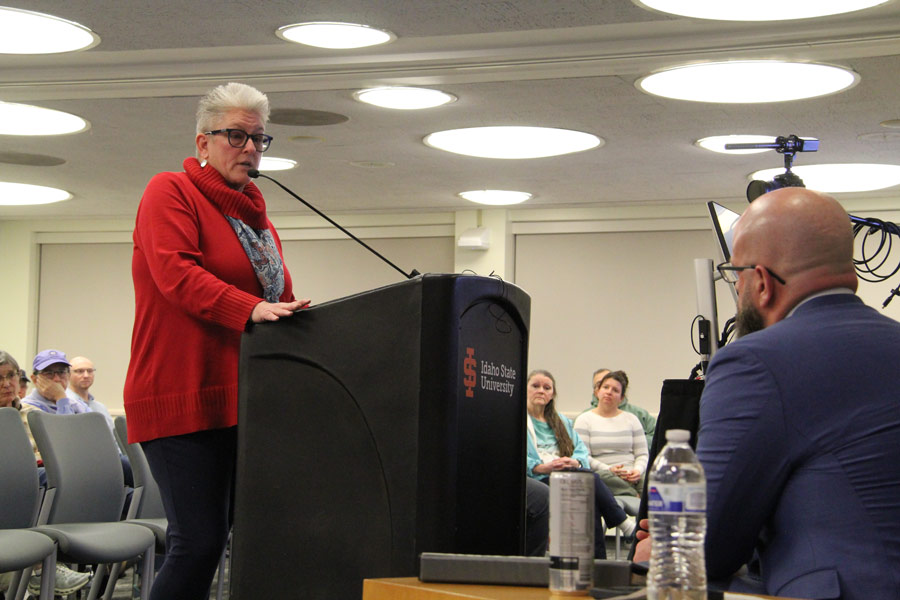
On Saturday, a crowd of 60 to 70 people gathered for a town hall on the Idaho State University campus, where they heard from about 13 people about how the cuts are affecting Idaho’s higher education system.
“We have got to change the attitude in this state towards public education. … It’s for our future. It’s for our students. It is the thing that democracy depends on. We depend on education, and we depend on educators to continue to have a democracy in this state and in this country,” said Mary Anne McGrory, president of the Pocatello Teachers’ Association.
At the start of this year’s legislative session, Idaho’s projected budget deficit was estimated to be $40 million for the current fiscal year. But the state’s budget woes are not limited to the current year; state budget officials projected a $555.2 million deficit for fiscal year 2027, the Idaho Capital Sun reported.
To address this deficit, both Gov. Brad Little and the Joint Finance Appropriations Committee have issued budget cuts to most state agencies, amounting to a permanent, ongoing 5% cut at the beginning of Fiscal Year 2027.
These cuts have forced ISU to undergo a significant reorganization, combining multiple colleges, consolidating departments, and laying off 44 employees.
RELATED | ‘A difficult moment’: ISU announces sweeping changes amid budget constraints
Mary Shea and former representative Nate Roberts, both candidates to represent District 29, addressed the crowd at the opening of the meeting. Shea and Roberts also attended Ruchti’s last town hall and have joined him in calling for using some of the $1.6 billion in various rainy-day funding accounts, rather than making any more budget cuts.
EastIdahoNews.com requested comment from Representatives Dustin Manwaring and Tanya Burgoyne, the incumbent representatives of District 29, but did not receive a response.
RELATED | Over a hundred people show up for town hall on ‘catastrophic’ cuts to Medicaid
This is the second town hall Ruchti has held regarding state budget cuts, the first being on Feb. 7. Ruchti has two more scheduled, one on Saturday and another on March 21, both at the Pocatello City Council Chambers.
Who are the “winners” of Idaho’s tax cuts?
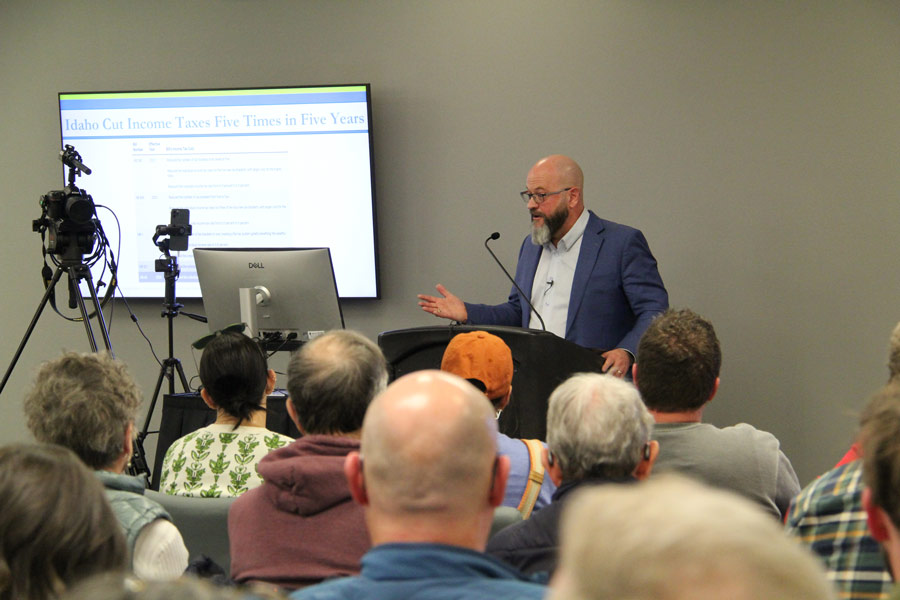
The way Ruchti put it, the primary factor fueling the state’s budget crisis has been tax cuts passed by the Idaho legislature over the last five years.
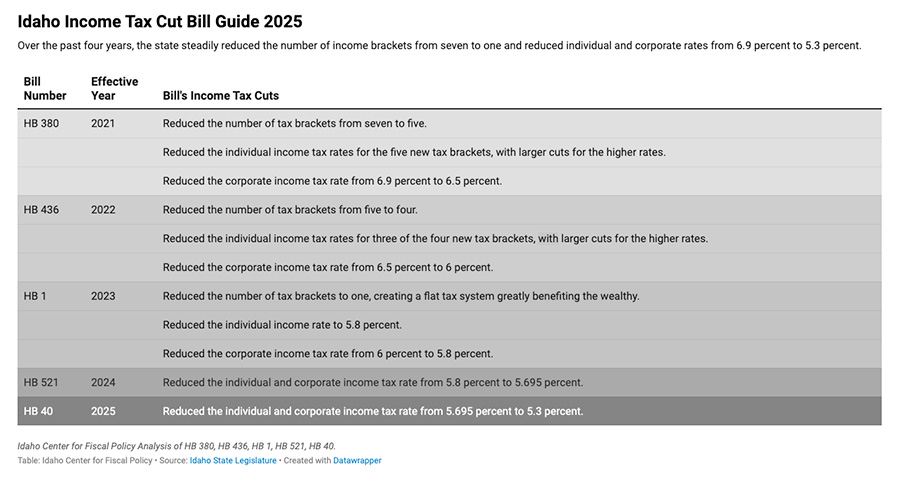
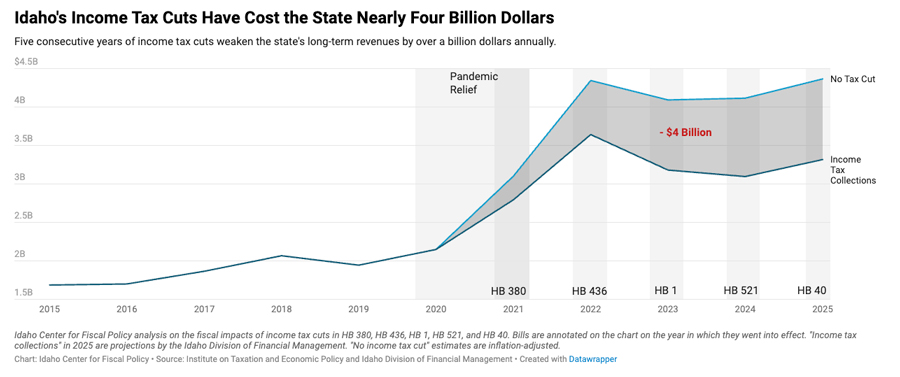
During the presentation, Ruchti displayed a list from the Idaho Center for Fiscal Policy, which shows five different bills that cut taxes and lowered revenue from 2021 to 2025. And according to the center, these cuts have cost the state $4 billion over the last five years and have reduced tax revenue by over a billion dollars annually.
“That’s four billion less dollars that we have to put towards … schools, bridges, roads, state parks, Medicaid programs, and the list goes on and on,” Ruchti said.
And Ruchti said the “winners” of these cuts have been “big corporations and households making $500,000 or more.”
“I would dare to say that most of the people in this room…probably got anywhere from 50 bucks to maybe 500 bucks (in tax cuts),” Ruchti said.
Ruchti also spoke on the Idaho Parental Choice Tax Credit, which he refers to as the “voucher program,” as another factor driving the deficit, arguing that had the legislature set the official revenue estimate at the beginning of the session, it would have been “obvious right away to everybody. We (didn’t) have the money.”
The Idaho Parental Choice Tax Credit was passed in 2025 and directs $50 million to be distributed as refundable tax credits of $5,000 per student and up to $7,500 for students with a qualifying disability for private school tuition.
Axel Ballard, the son of a teacher and a city council member of Fairfield, the county seat of Camas County, said that he “benefited a lot from the role of education and public funding.”
“This voucher program is infuriating to me, knowing that there are schools out there who have it way worse off than I did, who could use that money more,” Ballard said.
The way Ruchti sees it, this is “bad fiscal management.”
“History is going to look back at the way we handle these budgets in utter disbelief,” Ruchti said.
Professor says educators and students feel “betrayed”
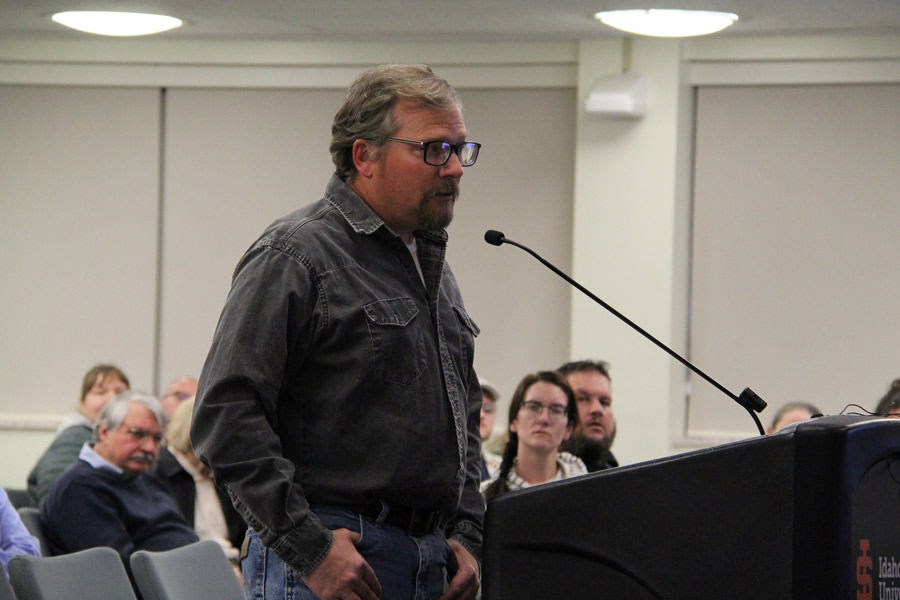
When Colden Baxter, Ph.D., a professor in the ISU Biology Department, spoke, he said, “The faculty of ISU, broadly speaking, feel betrayed by the Idaho State Legislature’s financial fiscal mismanagement.”
Baxter also spoke about how his students currently feel.
“These students feel betrayed by the current circumstances. I know because I hear them express it to me in my classrooms and my laboratory. They’re worried,” Baxter said.
These cuts are coming at a time when enrollment at ISU is up and continues to increase. According to a 2025 release from the university, spring enrollment has increased for the last three years in a row.
RELATED | Idaho State University sees continued enrollment growth
“We’re serving more students than ever. Not only are we getting more students in, but we’re also retaining them. A lot of people at Idaho State faculty and staff do a lot of hard work to … (make sure) that students have a good experience here, and that they choose to stay here and finish their degree with us,” said Tate Christensen, an alumnus of ISU who currently works as an academic advisor.
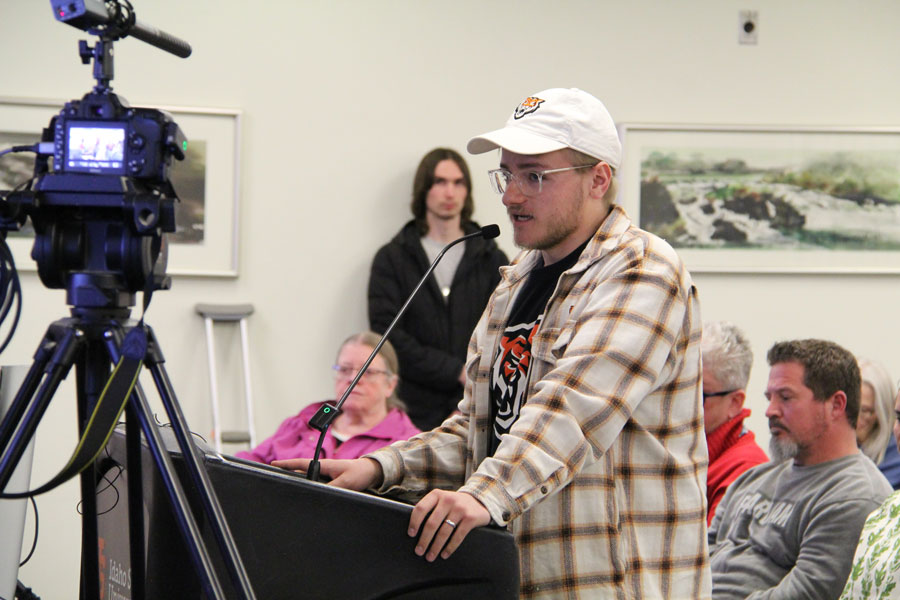
Matthew VanWinkle, an Associate Professor of English, said that the decrease in faculty members at ISU will lead to larger class sizes.
“Larger class sizes means that students will likely have reduced opportunities for sustained individual instructional attention. It is not that faculty will be any less willing to provide such attention. Rather, faculty will struggle to be as available to students seeking these opportunities due to an increased aggregate workload,” VanWinkle said.
And another faculty member who spoke, without sharing his name, offered his response to people who look at college professors as “elites.”
“We’re not the elites as some people like to characterize us, and ISU is probably the most blue collar school on planet Earth,” the faculty member said.
And even with K-12 public schooling not being included in the direct, across-the-board cuts issued at the state level, McGrory said teachers are, “working at our bare bones.” McGrory said that in the upcoming school year, she’ll be the only teacher at her middle school for the entire seventh and eighth grade class.
“Our classes are filled. We don’t have the staff we need to support our students because we can’t pay them, because we don’t get the money from the legislature,” McGrory said.
After the meeting, Roberts remarked on who he sees as benefiting from tax cuts in Idaho.
“These tax cuts are being paid for on the backs of the people at the bottom of our economic ladder. In the meantime, those that benefit from the tax cuts are not being asked to help out in our state,” Roberts said.
And Shea, as Ruchti and Roberts have as well, questioned why the state hasn’t used funding from its rainy day accounts.
“When we know we are not meeting our staffing needs for public education, why can’t we dip into those rainy day funds and follow the Idaho constitution and fully fund our public schools?” Shea said.
When Baxter spoke, he called on the legislature to take actions to mitigate the budget deficit without making further cuts.
“Having all of this hit and impact at once is unacceptable, so dip into the rainy day fund(s), repeal the voucher program and help us out,” Baxter said.