



Local attorney resigns from Idaho State Bar, accused of repeatedly mishandling client funds
Published at | Updated at
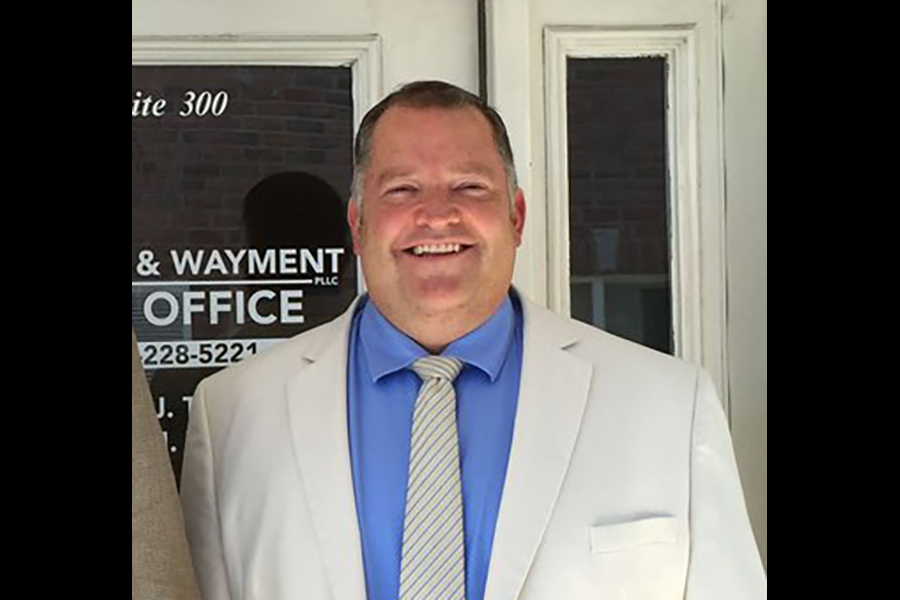
IDAHO FALLS — A local attorney has resigned from the Idaho State Bar after being disciplined for wrongfully withholding money from clients and continuing to practice bankruptcy law when he was barred from doing so.
Aaron Tolson, a bankruptcy attorney in Idaho Falls, violated several Idaho Rules of Professional Conduct (IRPC), according to the paperwork filed upon his resignation on March 9. The violations include:
- Failure to abide by client objectives.
- Failure to reasonably communicate with a client about any relevant limitation on the lawyer’s conduct.
- Knowingly falsifying a statement of fact to a tribunal.
- Knowingly disobeying an obligation under the rules of a tribunal.
- Depositing legal fees and expenses in a client trust account that have been paid in advance to be withdrawn by the lawyer only as fees are earned or expenses incurred.
- Practicing law in a jurisdiction where doing so violates the regulations of the legal profession in that jurisdiction.
The Idaho Supreme Court has accepted Aaron Tolson’s resignation, and he will not be able to reapply for admission to the Idaho State Bar for at least five years from the date of his resignation.
According to the filing, if Tolson does apply after five years, he will be required to comply with all the bar admission requirements and shall “have the burden of overcoming the rebuttable presumption of the unfitness to practice law.”
Money problems
The Idaho State Bar and IRPC rule 1.15(c) state that lawyers are required to “certify annually under penalty of perjury that he or she maintains a separate client trust account in the state of Idaho for client funds or that he or she handles no client funds because of the nature of his or her practice.”
Tolson has been accused multiple times of mishandling client funds that are supposed to be held in trust.
Romriell v. Tolson
Currently, Tolson is being sued by a former client, Mark Romriell, who claims that Tolson told him he owed more in a bankruptcy case than he actually did, and that he wrongfully withdrew funds from the trust account.
Now, Romriell says those funds are still missing.
The lawsuit says Tolson filed a Chapter 11 bankruptcy on behalf of his client, Romriell, in June 2022. It was later changed to a Chapter 13 case.
In the lawsuit, Romriell claims Tolson told him that $340,000 would “resolve all payments required by the bankruptcy trustee in the bankruptcy case, and would satisfy the entire outstanding amount owed on (Romriell’s) mortgage.”
Romriell claims Tolson also told him that the bankruptcy trustee had approved the payment. Because of this, Romriell says he gave Tolson a cashier’s check, made out to Tolson & Wayment Trust, for $340,000, believing it would be held in a trust managed by the Idaho State Bar.
Unbeknownst to Romriell, court documents state that the judge in the bankruptcy case had entered an order approving a payment of only $206,000 for all of his allowed claims. Romriell said Tolson also did not inform him that he was expected to resume paying on his mortgage at this time.
“Based on (Tolson’s) affirmative representations to him, (Romriell) believed his mortgage had been paid off and never made any mortgage payments,” the lawsuit states. Then, when Romriell started receiving delinquency notices stating that his mortgage was in default, he brought it to Tolson, confused. Court documents say Tolson told Romriell the notices were “merely an oversight from the bank.”
Tolson told his client to disregard the notes, Romriell says, and so he did.
In 2025, Romriell received a notice that his house was scheduled for a foreclosure sale because he hadn’t been paying the mortgage. When he asked Tolson about this, Tolson admitted “that they had never made any payment toward his mortgage, let alone (paid) it off,” the lawsuit states.
Romriell said he alerted the bankruptcy trustee about the issues and learned that “Tolson has misrepresented the terms of the bankruptcy.” The bankruptcy case was reopened in April 2025, “due in large part to (Tolson’s) misconduct and misrepresentations,” the lawsuit states.
Romriell claims that when he confronted Tolson about his missing money, Tolson told him it had been used in a different financial case where he was representing Romriell.
Romriell also claims in the lawsuit that Tolson never provided an accounting of the money Romriell gave him, and that he has still not been repaid. Romriell said Tolson gave him $20,000 to reinstate his mortgage, even though it would’ve cost $30,000.
“Tolson further represented to me that he would ‘make it right if I have to sell my house to do it,'” Romriell claims in the lawsuit. He said Tolson later told him he planned to sell his house to repay his client, but it’s unclear whether he ever did so.
According to the lawsuit, the total amount owed to Romriell is unknown because it is unclear what Tolson actually did with the $340,000, or what the full extent of the financial damage is.
In a response to the lawsuit, Tolson said Romriell’s “claims are barred by (Romriell’s) own unclean hands.”
In September 2025, the Bankruptcy Court found that Tolson had violated multiple ethical rules and recommended to the district court that Tolson’s law license be revoked.
Another allegation
In relation to a different Chapter 13 bankruptcy case in June 2024, Tolson was asked to appear for a show-cause hearing to “address issues concerning (Tolson’s) representation” of his client. The bankruptcy trustee in the case claimed that “inconsistencies in the filings make it unclear what (Tolson) is to be paid in this case,” court documents state.
Tolson reportedly filed a compensation disclosure stating he was paid $5,000, but a separate court filing claims he was paid $7,500.
In Dec. 2024, the trustee filed a motion claiming “Tolson has a long history of filing some cases under chapters for which the debtors were facially ineligible, failing to promptly file some petitions after they were signed, failing to accurately disclose income and expenses in some debtors’ scheduled, filing some facially unconfirmable Chapter 11 and Chapter 13 plans, and failing to accurately disclose his compensation in some cases.”
In 2011, Tolson received a professionalism award from the Bankruptcy Section of the Idaho State Bar, according to the trustee’s filing. When he won that award, the trustee claimed there were four pending motions to review his fees.
Skirting sanctions
In October 2024, between the two previously mentioned bankruptcy cases, Tolson was sanctioned — or ordered by the court — to stop practicing bankruptcy law for Chapters 11, 12, 13 or 15 of the U.S. Bankruptcy Code, until October 2027.
He was also ordered not to take on any new bankruptcy clients who need representation for any of those codes, but he was allowed to continue representing his current clients in pending bankruptcy cases.
However, court documents show that Tolson did not comply with this court order and continued to practice bankruptcy law with new clients.
On July 17, 2025, the bankruptcy court held a hearing after discovering that Tolson had allegedly violated the sanctions. Between April 11 and July 16, Tolson filed cases for 32 new bankruptcy clients, according to court documents.
In August 2025, court records show Tolson was sanctioned again, this time from practicing any new Chapter 7 bankruptcy cases under the U.S. Bankruptcy Code. Then, between Oct. 1, 2025, and Dec. 3, 2025, records show Tolson – under the firm name “Legal Logic” – filed cases for 34 new bankruptcy clients in chapters for which he was not legally allowed to practice.
Response to the allegations
Over the years, as Tolson has faced various allegations of misconduct, the name of the firm he started in 2015 with then-partner Andrew Wayment has changed from Tolson & Wayment PLCC to “Tolson & Wayment Freedom Law” to “Legal Logic” to “Legal Logic Chartered.” It should be noted that Wayment is not connected to any disciplinary action or allegations against Tolson.
According to the Idaho Secretary of State, Tolson opened a new business in February named “Pulse Free LLC.” It is not clear what service the business provides, but its website states it is “not a law firm, a therapist, a doctor, or an accountant — but it uses AI (artificial intelligence) to coach your best future through four foundational areas.”
EastIdahoNews.com reached out to Tolson’s current office for comment, and we were provided with the following written statement:
“To my community, I want to share something difficult and important. For the past 25 years, my office, partners, and I have done our best to serve those who needed help the most — people who often could not afford legal help, but deserved justice all the same. It has been an honor to stand beside so many of you, and I am deeply grateful for the trust you placed in me. But also to be honest, the system we all rely on does not function well without resources.
“Practicing law in a way that consistently serves the poor, without the financial support that kind of work requires, has proven unsustainable and subject to sustained attacks from government officials who seem not to understand how difficult it is for the poor in America, and clients who want to blame their attorney at times for their problems.
“This is not a reflection of the worthiness of the clients or the importance of the mission — it is a limitation of the system itself at this time, and of my own capacity. Because of these conditions, I have made the difficult decision to step away and resign. I am truly sorry. I wish I could have found a way to continue to serve people as an attorney, and I carry that disappointment with me.
“At the same time, I remain hopeful. We are entering a new era where emerging technologies — especially AI — have the potential to make legal services more accessible, more efficient, and more humane for both attorneys and the people they serve. I believe these tools may help bridge the gap that has long made this kind of work so difficult to sustain.
“Thank you for allowing me to serve you. It has meant more than I can fully express.”
Questions about this matter can be directed to the Idaho State Bar Council at (208) 334-4500.