



Idaho schools on Native American reservations face funding lapse from federal shutdown
Published at | Updated at
Sean Dolan, IdahoEdNews.org
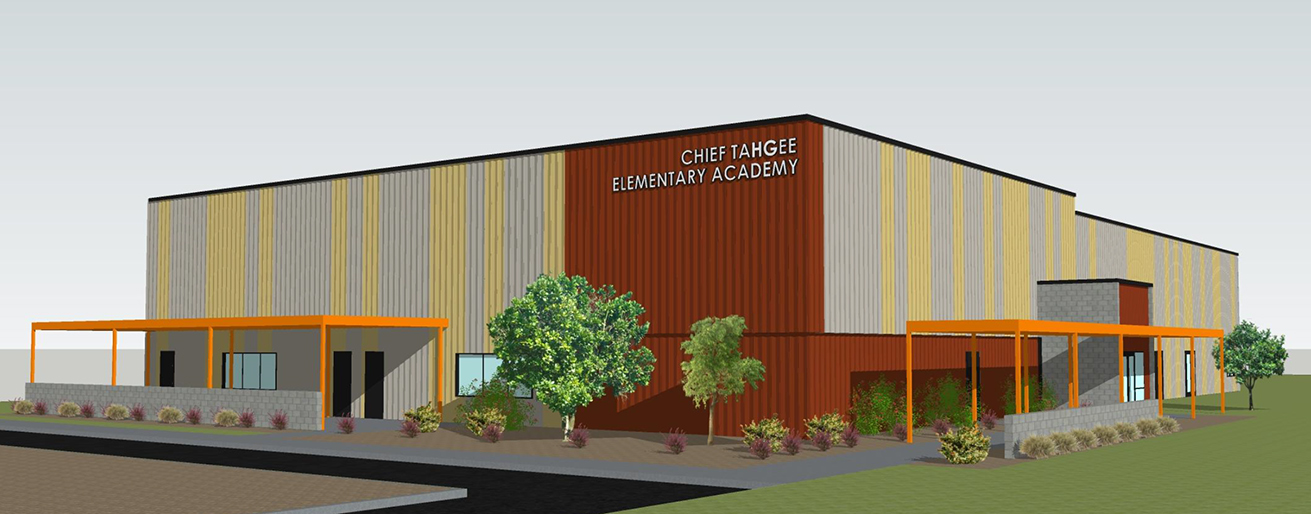
FORT HALL (IdahoEdNews.org) — Idaho school districts and charters on Native American reservations may be the first to experience the effects of the federal government shutdown that began Oct. 1.
Chief Tahgee Elementary Academy on the Fort Hall reservation did not receive a payment it expected this month from a federal Impact Aid construction grant, director of school programs Jessica Wilson said Friday. The charter school north of Pocatello broke ground in May for a new building funded by the $4.5 million grant.
The Impact Aid program provides funding for schools on nontaxable federal land, such as reservations and military bases. Chief Tahgee Elementary Academy receives between $800,000 to $900,000 in annual basic payments from the program to make up for the lack of property tax revenue, but also received the construction grant to pay for the new building. Schools on reservations can’t run bonds.
“It has a pretty significant impact for us,” Wilson said. “Being able to function both having high academic standards, but also being able to teach the Shoshone language and culture requires funding outside of the box and Impact Aid helps us with that.”
Most federal money is still flowing into the state. The Idaho Department of Education has not had any issues drawing federal funds and is still able to access grants, spokesperson Andrea Dearden wrote in a Friday email to EdNews. Impact Aid is one of the few federal programs the U.S. Department of Education pays directly to Idaho schools.
Nine Idaho school districts and charters in fiscal year 2024 received about $9 million in Impact Aid basic support payments, according to the National Association of Federally Impacted Schools.
Impact Aid staff at the U.S. Department of Education are furloughed and unable to respond to messages from school leaders like Wilson.
“There will be no processing of Impact Aid payments,” according to an Oct. 1 post on the Impact Aid website.
Usually, Wilson receives a response from her Impact Aid contact within a few days. But she said her last email was met with an automated response saying the employee is on furlough and will respond when the federal government reopens.
“The response, I think, speaks for itself,” Wilson told EdNews. “On not really giving us somebody else to contact if we had any concerns.”
Without this month’s payment, Wilson said the construction company overseeing the project is working with the school district, but she’s not sure what will happen if the shutdown continues.
David Aiken shares that concern.
Aiken is superintendent of Lapwai School District, on the Nez Perce Reservation, and serves as Idaho state chair for the National Association of Federally Impacted Schools. He said he met with Idaho’s congressional delegation in D.C. this year to “remind them about the promises they’ve made.”
“When I encourage Congress to do what’s best for Idaho students, it’s not just on behalf of the Lapwai School District,” Aiken told EdNews on Friday. “I represent over 14,000 students and 12 Idaho school districts who rely on Impact Aid.”
The federal program covers about one third of Lapwai’s annual budget, Aiken said. The district expects to receive an Impact Aid payment around this time of year and it hasn’t come yet — but the payment schedule is often unpredictable. Other changes at the federal government, however, may present a bigger problem for folks like Aiken.
“What I’m really concerned about more than the government shutdown is the layoffs,” Aiken said. “The threatening of the layoffs at the U.S. Department of Education.”
He said the week started off with an email saying a significant portion of Impact Aid staff were let go, but a judge reversed that decision.
“It worries me tremendously that 31% of our budget that’s been well managed by the U.S. Department of Education will be piecemealed or sent to the state of Idaho for implementation,” Aiken said. “That really, really worries me.”
If the Impact Aid funding goes away entirely, he said Lapwai would face a significant reduction in force or may have to shut its doors.
“We can’t operate without it,” Aiken said. “We’re not able to rely on levies and bonds, as other Idaho school districts do to make up for the shortfall.”
On the Coeur d’Alene Reservation, Plummer-Worley School District business manager Sara Allen said the Impact Aid program sends about $1.4 million annually to the district, with a payment around mid-October or early November. She said she heard from the U.S. Department of Education a week ago.
“They’re just saying we won’t get any payments until after they open back up,” Allen said. “And this was just last Friday. But we’re going to get them eventually.”
The district should be OK financially if the payment is delayed by a month, she said, especially since the Coeur d’Alene Tribe recently donated $200,000 to the district.
At Chief Tahgee Elementary Academy, the uncertainty of the shutdown is prompting hard decisions.
Staff members are balancing whether to buy equipment for the new building or save that money to cover daily operations, Wilson said. The goal is to minimize the shutdown’s impact on students.
“What happens in the long term if the government shutdown lasts longer?” Wilson said.
This article was originally posted on IdahoEdNews.org on Oct. 17, 2025