



‘Perfectly legal’: Discovery of decapitated cougar stirs questions in north Idaho
Published at
Elena Perry, Spokesman-Review
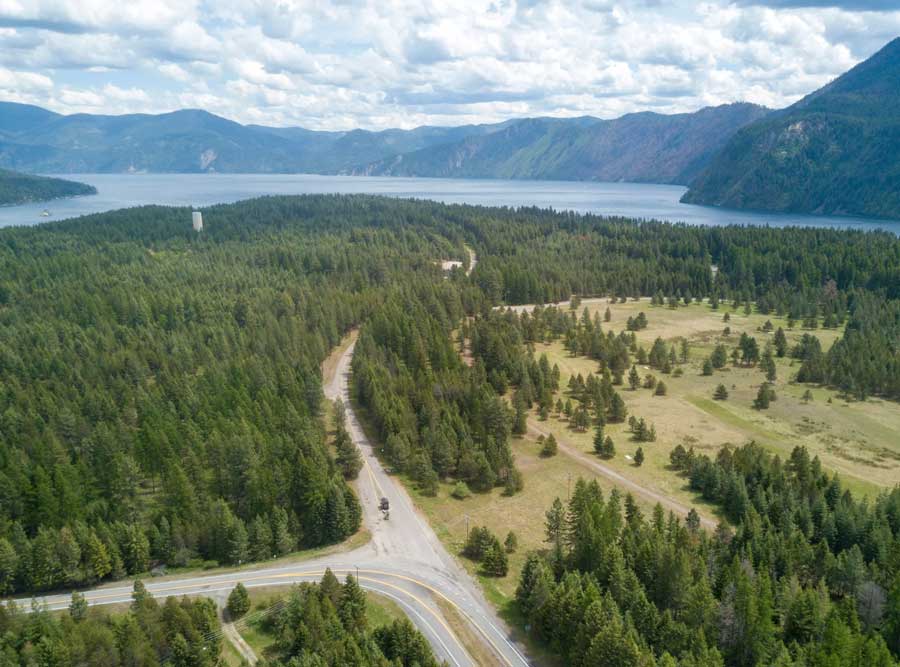
Farragut State Park is located near Lake Pend Oreille in north Idaho. | Jesse Tinsley, The Spokesman-Review
ATHOL (The Spokesman-Review) — Peering over a cliff at Farragut State Park, Carol Mendoza was stunned at what she saw below her, partially submerged in Lake Pend Oreille.
At the lakeshore visible from Macdonald Viewpoint was the unmistakable body of a mountain lion.
The carcass of the notoriously shy creature would have been a rare enough sight, but Mendoza was further alarmed when she took in the state of the waterlogged body.
It was headless. Not sloppily detached from animal scavengers or from a losing fight with another predator, but cleanly severed.
“It wasn’t a messy cut,” Mendoza said. “It looked pretty clean cut; it was, for sure, a human did it.”
Other parkgoers on the busy, sunny weekend reported the carcass to Farragut rangers and the Idaho Department of Fish and Game, suspecting the animal had been poached.
“It’s sad,” Mendoza said of the slain beast, questioning whether something illegal happened.
That wasn’t the case.
After getting a slew of reports, Idaho Fish and Game spokesperson TJ Ross said the circumstances of the cat’s death are unclear. But there was no evidence humans were involved beyond the postmortem decapitation.
“Everything we saw leads us to believe it died of natural causes,” Ross said. “There was no added investigation; there was no foul play involved.”
Fish and Game officers began getting reports of the carcass last week – only then the animal’s head was attached. By the weekend, more and more calls came in to report the cougar, sans head.
Officers went out to inspect the carcass to find no bullet holes or evidence to point to a human-caused death, Ross said, only its missing head, which is “perfectly legal” under Idaho salvage laws.
“That is legal in Idaho; if you come across a dead animal, you can take the antlers, take the head,” Ross said.
Had the animal been found with bullet wounds, “that changes things pretty quickly,” Ross said.
Hunting mountain lions is legal year-round in Idaho, provided the hunter has the proper tags and licensing. After a kill, hunters are required to report to Fish and Game with at least the cat’s head and genitalia to prove its sex, according to Fish and Game regulations.
In the Farragut cougar’s case, only the head was removed.
Washington has stricter rules around harvesting animal carcasses. The state allows people to salvage parts from deer and elk roadkill, requiring the harvester to apply for a permit within 24 hours.
All other wildlife salvage is unlawful in Washington; a person can’t just cut the head from a cougar and keep it like they did in Farragut, according to state law.
It’s the first time in at least 50 years a mountain lion carcass has turned up at Farragut, said park manager Liz Palfini.
Exactly when, where and how the Farragut mountain lion died is unclear, Ross said. Its carcass could have been floating around Lake Pend Oreille for any length of time, the frigid waters slowing the decomposition process and keeping animal scavengers away.
Situated around the southern end of Lake Pend Oreille, the fifth-deepest lake in the U.S., Farragut State Park is enveloped by natural areas a mountain lion may call home. Bordering the park and circling the lake are the sweeping 2.5-million-acre expanse of the Idaho Panhandle National Forests.
“We don’t make any assumptions about where the animal died or anything like that; it could’ve been in the lake for a very long time,” Palfini said, adding that the currents of the massive lake likely moved the carcass around.
While the sight of a headless big cat may have alarmed parkgoers, Ross said it’s not surprising someone wanted a trophy. Mounted cat skulls are popular, he said, as are displays of its massive claws. Its waterlogged meat wasn’t fit to eat, Ross said.
“Oftentimes with lion hunters, sometimes they have the whole thing made into a rug, which is obviously expensive,” Ross said. “Oftentimes what they do is take the head, clean all the meat and fur off it and take it to a taxidermist … it becomes a nice white skull you can put on a shelf, and it displays the teeth.”
By the time officers inspected the carcass, Ross said there were some signs of decomposition, indicating it had been washed ashore “for some time.” The death of the cougar isn’t unusual, Ross said, but the fact that it washed up in such a public venue is odd for the species, known to be reclusive.
“Seeing a dead deer is commonplace. A mountain lion, on the other hand, they’re very secretive; they don’t like to be seen by humans,” Ross said. “They die of natural causes all the time, but it usually happens where a human can’t see it.”
Ross appreciated the influx of calls to report the carcass, many coming in on the department’s Citizens Against Poaching hotline as people suspected foul play. If there had been bullet holes on the body or other evidence of a human-spurred death, the carcass would be sent for a necropsy at the department’s forensics lab in Boise, he said.
“It at least gives us the opportunity to investigate and determine if we need to look deeper into it,” Ross said of the poaching hotline.
As for the lifeless cat body, removal wasn’t an option, Ross said, given the steep incline of the cliff. Officers moved the body to a less visible area of the park.
Already starting to decompose, he expects the headless animal to be reduced to bones within weeks as the cycle of life turns.
“There will be all kinds of mice and ravens and magpies and things that take advantage of that pretty quickly,” he said. “All energy is borrowed.”