



‘Hooting’ and dancing: Sharp-tailed grouse gather on east Idaho’s traditional leks
Published at
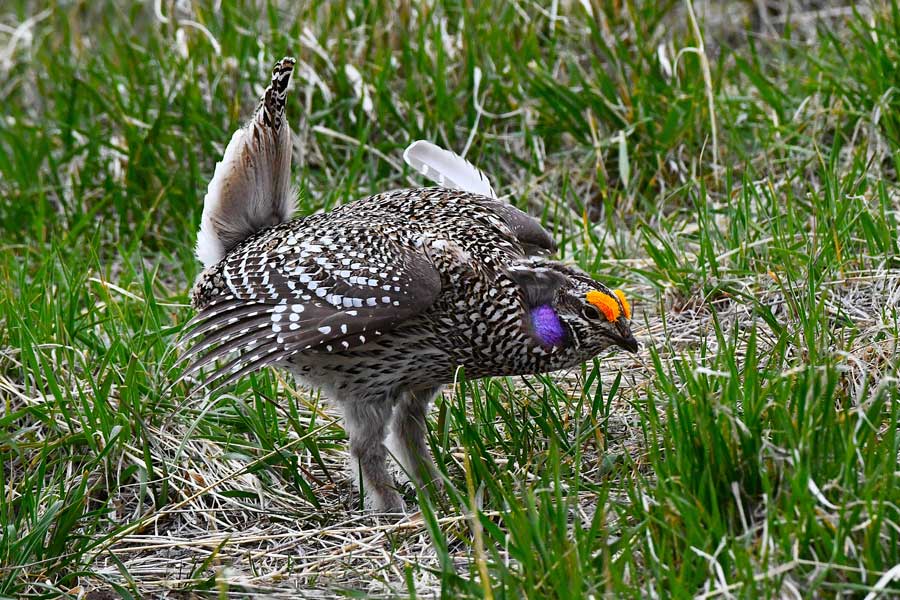
Even with the wind blowing in a storm, on Wednesday I headed up to a sharp-tailed grouse lek — breeding ground — where I had watched 31 males the week before.
After I got to my chosen spot, well before the grouse began arriving, I wondered if I was wasting my time. Then a cow elk and her yearling calf walked within 20 yards of my truck. Fifteen minutes later, I started hearing some hooting and cackling coming from some male sharpies that had walked onto the lek.
I had parked near the center of the lek, where the most dominant males gather to argue with each other and make some fake attacks. The most dominant male this day appeared to have a broken feather on his left wing, while his main challenger made no serious challenges at him.
But everything changed quickly.
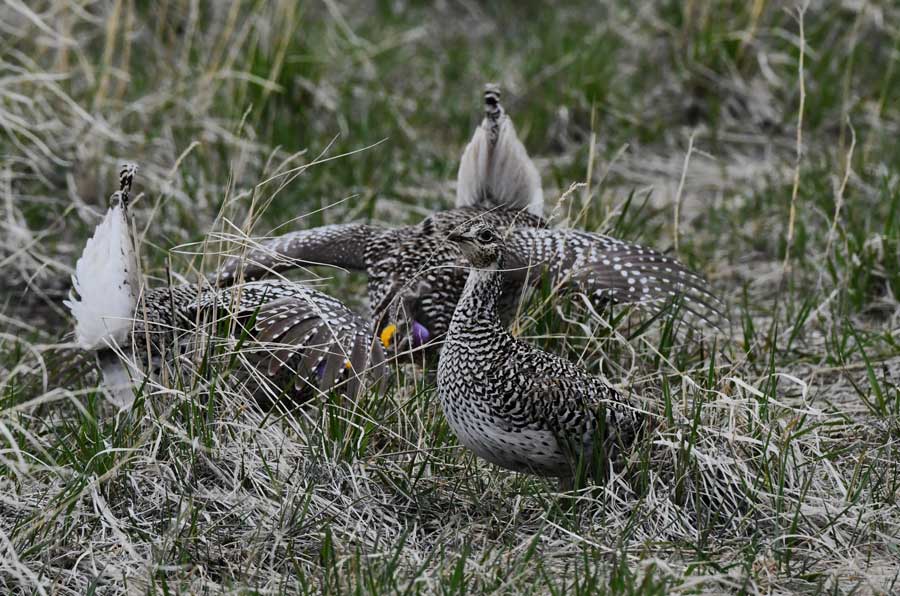
Two hen sharpies flew in from a little grove of aspen trees, landing near me at the center of the lek. The males at the edges started running in, while the males near the center attacked them. Mr. Broken Feather and his challenger faced each other but decided to dance for the females instead of fighting — which would come later.
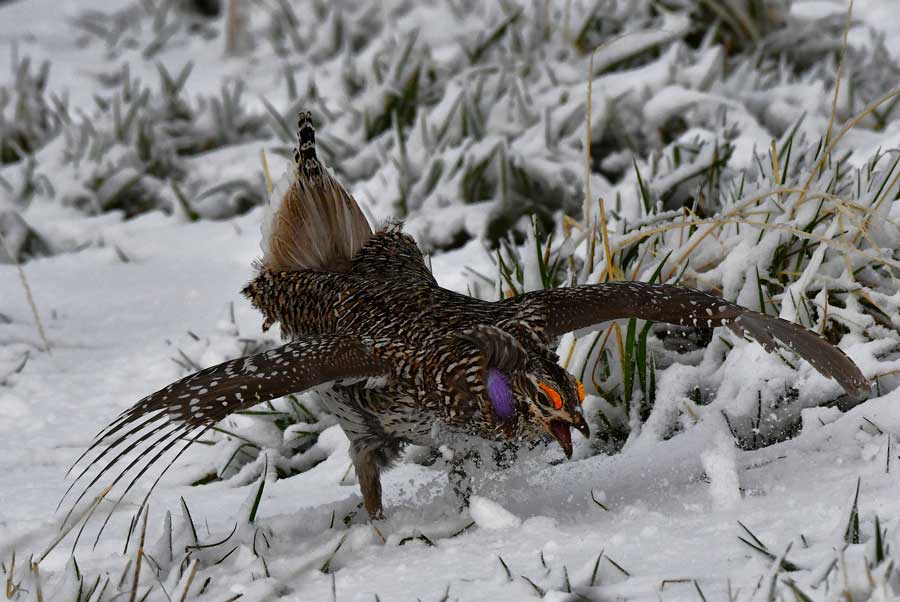
The hens stayed for about half an hour as the boys displayed their yellow eye combs and their purple air sacs, stomping their feet and spreading their wings to try to attract the hens. The males would hold their tail high and rub the two main tail feathers together to make a rasping sound while clucking.
Occasionally, the hens would pause to watch — and when they did, all the males would stop dancing immediately, which is called a “freeze.” Sometimes the male freeze is comical. Once the hens started moving again, the boys would leap into the air and maybe fly a short distance before resuming their dancing.
Most western Native American tribes have a “grouse” dance that imitates the male sharp-tailed grouse’s dance. Most of those tribes still teach these dances.
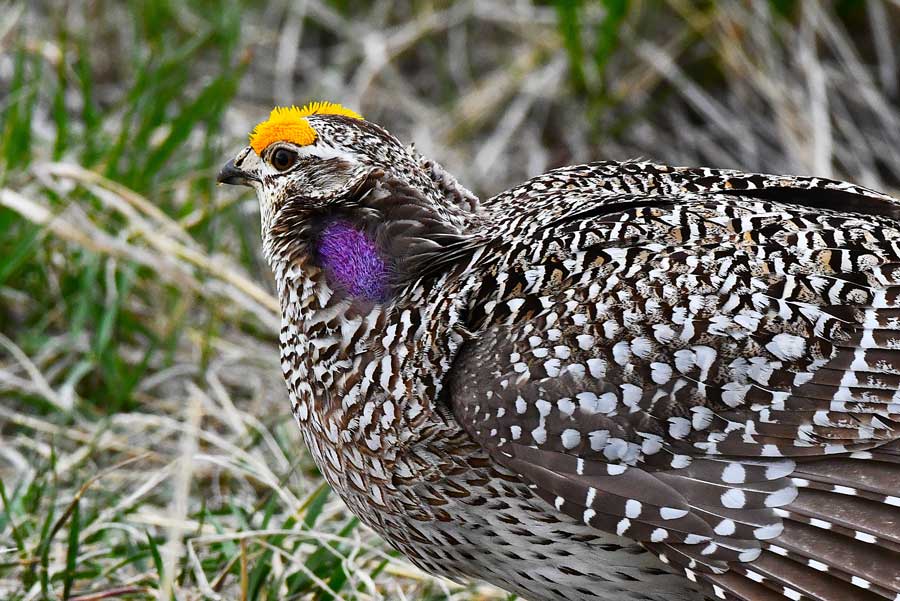
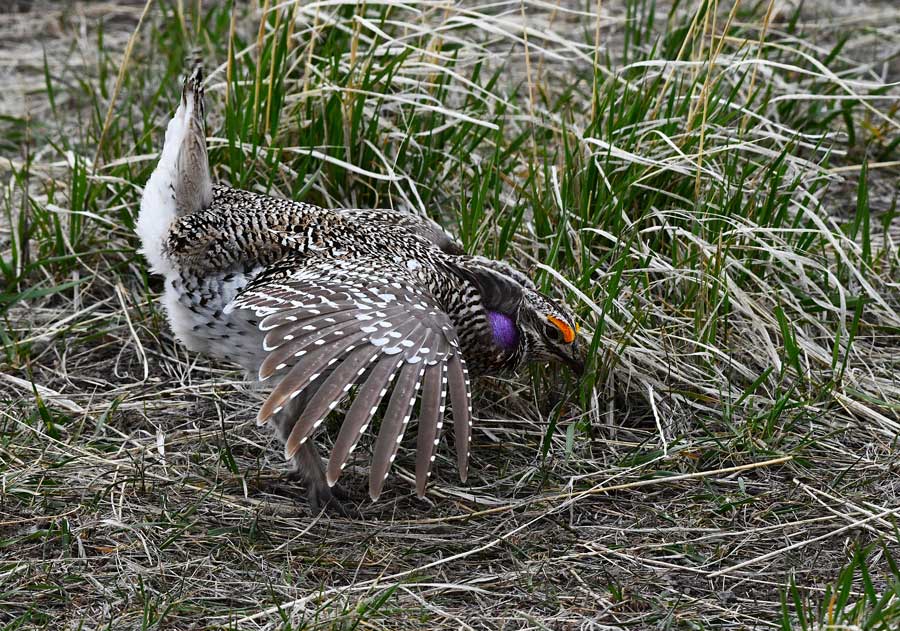
The two hens only had eyes for Mr. Broken Feather, but he probably knew it was a little too early for the hens to start nesting. The ladies were kept busy running from the other males whenever they approached.
Like the greater sage grouse, the sharpie hens choose who they mate with — and that is usually the top three or four dominant males on each lek.
In the spring of 2014, I volunteered with the Idaho Department of Fish and Game and was assigned to check 34 traditional leks in the areas east and north of Rexburg. I was given the GPS coordinates for the leks, which had from two to 15 cocks, and was to count each twice.
I was also given data that showed 80% of the leks in southern Idaho were on private land: 659 of 796 total. Of my 34 assigned leks, six were on land managed by the Bureau of Land Management, four were on U.S. Forest Service land, three were on Idaho Department of Lands properties, and 21 were on Conservation Reserve Program private lands.
I found out how important the Conservation Reserve Program is to the sharpies: I found only 16 of my assigned leks were still active, and 12 of them were on private ground. All of these sharp-tailed grouse are of the Columbian subspecies, and Idaho is home to about 65% of all of them.
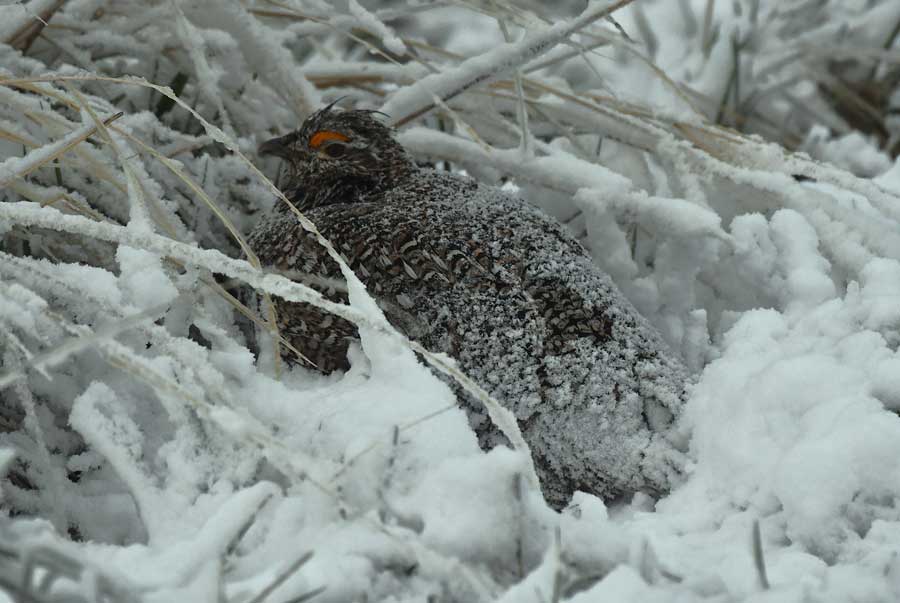
When I woke up on Thursday morning, it was snowing. So, I decided to go to the eastern foothills above Rexburg to check out some leks and see if I could get some pictures. The second one I checked was near a road and contained about 15 males and two females. During a break in the blowing snow, I was able to capture some photos.
Many of east Idaho’s leks have been destroyed by the lands taken out of the conservation program for different reasons; others are now displaced by elk farms or summer homes. But a few still remain, if you look hard enough. Some public lands are still closed to human travel, but I will probably check those leks out when the lands reopen around the first of May.
The male grouse will stay active on the leks until the end of May. If you start to search for them at daylight in old grasslands near aspens or chokecherry bushes, you may find them. Please respect private property and get permission before entering.

Living the Wildlife is brought to you by Yellowstone Teton Territory. Experience 7,500 square miles of untamed wilderness in Eastern Idaho's Yellowstone Teton Territory. Where majestic peaks meet endless adventure, your perfect outdoor escape is waiting. Start planning at YellowstoneTeton.com.