




Incumbent running against US Army Sergeant Major and UPS delivery driver for the District 2 seat on the Fremont County Commission
Published at
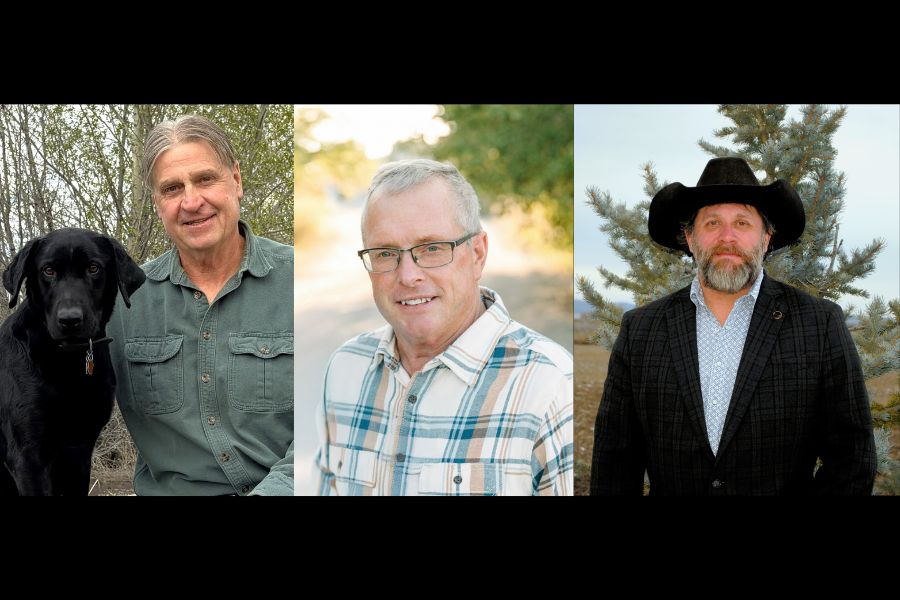
ST. ANTHONY — What do a current Fremont County commissioner, a U.S. Army Sergeant Major and a UPS delivery driver all have in common? They all want to be on the Fremont County Commission for District 2.
Mark Chandler, the incumbent, is running against Josh Thomas and Glade Mason.
EastIdahoNews.com sent a questionnaire to each candidate. Their responses were required to be 250 words or fewer. Chandler, Thomas and Glade’s unedited responses are included below.
The candidate who wins the primary will be on the general election ballot on Nov. 3. The primary election will be held on May 19.
For more candidate questionnaires and further information on this year’s primary election, check out East Idaho Elects.
Tell us about yourself — include information about your family, career, education, volunteer work, and any prior experience in public office.
Chandler: I’m a fourth generation Southeastern Idahoan and Fremont County has always been home. My wife of 45 years and I have lived in Ashton and Saint Anthony. My wife taught early childhood special education for 28 years for the Fremont County School District. We have two children and eight grandchildren who also live in the area.
I worked for the Idaho Stud mill for 10 years until the Forest Service went to wildfires to manage the forest rather than lumbermills.
I then operated hydroelectric plants on all major rivers in Fremont County for 29 years, keeping them running and on budget. I spent time and collaborated with major utilities & seven different Government agencies and kept the hydros in compliance with Federal regulations and licenses. I’ve participated in Henry’s Fork Foundation meetings beginning in 1993 until I retired from Fall River Rural Electric Coop in 2022.
I was part of the working group committee with Henry’s Fork Foundation on the study of the Henry’s Fork Basin water storage options and Teton Dam Revitalization. I was a committee member, cochaired, and chaired the Ashton Urban Renewal committee.
My parents and siblings were active in community and civic affairs and taught me the importance of civic duty. My father, Grant Chandler, served as County commissioner for 12 years. He helped to start a local Rocky Mountain Elk Foundation Chapter, of which I was a committee member. I helped start St. Anthony’s Mule Deer Foundation chapter. The 2026 MDF banquet was my 33rd fundraiser.
Mason: I was born in St. Anthony and raised in Egin. I have been a resident of Fremont County for nearly my whole life.
I attended schools in Parker and graduated from South Fremont HS in 1984. I also have a 2 year associate of applied science degree that was earned at what is now CEI.
I married my high school sweetheart in 1987. Audra and I have raised our family in the Salem area of Fremont County since 1989. We have 6 children and 5 grandchildren.
My work history includes working 6 years at the former Louisiana-Pacific sawmill location where I was a WWPA certified lumber grader. For 7 years I was a concrete mixer truck driver for Walters Ready Mix in Rexburg and Burns Concrete in Idaho Falls. I have been an employee of UPS for the last 25 years and have been the route delivery driver for communities in southwestern Fremont County for the last 12 years.
While with UPS I have been a member of the Comprehensive Health and Safety Process committee and was safety co-chair in that program for 10 years. I worked closely with UPS management to identify and resolve potential safety issues. It taught me critical thinking skills.
I was also a union steward for the UPS work group. It was my responsibility to be a voice of reason and resolve issues that were brought to my attention by the work group and mediate a viable solution.
Thomas: I’m a lifelong resident of Fremont County, born and raised here. My parents, both dedicated public servants, instilled in me a deep sense of responsibility to our community. After graduating locally, I served 25 years in the United States Army, with the majority of my time in Special Operations Command, conducting strategic missions to defend our nation. I completed countless deployments to Afghanistan, Iraq, Syria, and other regions across the globe, earning both the Purple Heart and the Bronze Stars. I retired as a Sergeant Major just a year and a half ago. Now, I give back as a volunteer firefighter, a board member of our county Search and Rescue, and Chamber of Commerce.
My family and I have deep roots here my kids and grandkids also call this county home. I’m proud of the legacy of service in my family, and I’m driven to bring that same dedication to Fremont County ensuring it stays a safe, thriving place for generations to come.
Why are you seeking political office within your community? Briefly explain your political platform.
Mason: Today, citizens depend on the county government more than ever before, which makes it more important than ever that qualified, dedicated people run for the office of county commissioner.
One individual can have a good impact on the county but their ability to be able to work with others is critical. I will not make promises that I cannot keep in saying that I will change this policy or provide that service. I can only tell you that I will work diligently for the citizens in influencing others to have the best outcome for our future. Only through respectful discourse can we find solutions to the ever evolving issues that could potentially impact the future of Fremont County. I will listen and I will ponder and together we will work to make changes if they are for the better good of the county and its residents. This is my solemn promise.
I put forth my best effort in everything that I do. I conduct myself with honesty and integrity. My desire is for each and every resident of this county to get their voice back and be heard. I want the county to know I am committed to ensuring a transparent, accountable government focused on strengthening infrastructure, improving public safety both in the valley and in Island Park, and managing the budget responsibly.
Thomas: I’m seeking political office because I have a deep, personal investment in Fremont County’s future. Throughout my military career , I saw firsthand the impact of strong leadership and strategic planning. My platform is built on three pillars: first, responsible growth ensuring we balance development with preserving our rural character; second, public safety ensuring our emergency services have the resources they need; and third, transparent, accountable government so every decision is made with the people in mind. I believe Fremont County is at a critical crossroad. I’m committed to ensuring we thrive by planning for tomorrow while serving today.
Chandler: On April 14th, 2025 I was sworn in as District 2 County Commissioner after being appointed by Governor Brad Little to take over for the late Scott Kamachi’s seat. It was a great honor to continue where Scott left off because he and I shared many of the same political views. Since being appointed by the Governor, I’ve gained one year experience and training from the State, and I am one year into numerous County issues that I would like to see through.
My platform is about protecting taxpayers, preserving personal freedoms, and keeping Fremont County strong without raising taxes or adding unnecessary regulations. I support responsible budgeting, property rights guided by the Comprehensive Plan, and practical solutions for our biggest challenges—from water storage and invasive species to Road and Bridge funding, technology needs, and retaining experienced staff. My focus is to protect what makes Fremont County special while planning responsibly for the future.
The County is consulting with a firm that has helped with other Idaho County development codes to update the Comprehensive plan.
What are the greatest challenges facing people in your county? What is your plan to meet and overcome those challenges?
Thomas: The greatest challenges facing our county right now is our comprehensive plan and development code are severely outdated. Without a modern framework, we’re vulnerable to large developers with well-funded legal teams who can exploit loopholes and push through projects that don’t align with our community values. My plan is to bring in outside experts who specialize in development code to help us rewrite and strengthen these policies, ensuring they’re airtight and protect our community’s interests. At the same time, I will focus on strengthening our emergency services, as rising tourism is stretching our police, EMS, and fire departments thin. By updating these policies and ensuring we have the right safeguards, we will maintain the character and safety of Fremont County for years to come.
Chandler: The current water year and the need for increased water storage. The County needs gravel for roads, which is increasingly difficult to find. Technology updates and iCloud storage prices required to run the county are rising astronomically. The loss of the County Detention and Youth Rehabilitation Center and how to now rehabilitate juvenile offenders without the 5C programs.
There is a need to re-start invasive species early detection methods and bring back preventative measures to keep Henry’s Fork headwaters infestation free.
There is technology that will sound an alarm when our waterways are infested and I’m working to bring back check and wash stations for prevention. It’s imperative that we do better defending our water.
Mason: Overcoming challenges in Fremont County—particularly regarding rapid growth, land use, and infrastructure strain—requires a combination of proactive, community-driven planning, and active civic engagement. Key strategies involve updating local development codes, strengthening community infrastructure, and engaging in regional planning efforts.
Update the Comprehensive Plan and Development Code:
We cannot make changes to the Development Code without altering the intent of the Comprehensive Plan. They must be aligned in purpose. The plan is the vision and the code enables the plan to happen. Let’s make sure that the voices of the people are recognized and that the unique character of Fremont County endures into the future. An updated Comprehensive Plan developed through extensive public input is the only way to ensure that the vision of the people is realized..
Only then should amendments to the Development Code be discussed. It’s up to us as Fremont County residents to stand up and demand that our voices are heard.
Implement “Smart Growth” Policies: Concerns regarding developers and high-density projects can be mitigated by ensuring development is sustainable, infrastructure capacity is considered, and that developers, rather than taxpayers, pay for new road construction and infrastructure costs. Growth pays for growth.
Protect Visually Sensitive Areas: Expanding protections for natural, scenic areas (like those in Island Park) across the entire county is a key concern for maintaining community and county character. We must protect our scenic views and our agricultural properties. We must protect our “Charm”.
How will you best represent the views of your constituents – even those with differing political views? How do partisan politics play into your role as an elected leader?
Chandler: All my decisions are Fremont County first. I want what is best for the County and all its citizens regardless of their party.
Mason: Representing my constituents in Fremont County, Idaho, is best achieved by maintaining open, honest communication, fostering respectful dialogue to bridge differing views, and utilizing data-driven decision-making. Effective representatives prioritize transparency, support local community leaders, and engage directly with residents to understand their concerns, ensuring decisions reflect the community’s needs. The needs of the people are of the utmost importance and they will have a voice with me in all regards.
Thomas: I believe the role of a county commissioner is to serve all residents, regardless of their political views. I commit to being accessible, listening actively, and holding regular town halls so everyone has a voice. Even when we disagree, I will ensure that every decision is transparent, evidence-based, and guided by what’s best for the county as a whole. While I have my own values, I don’t believe in letting partisan politics dictate local issues. My job is to build consensus, foster collaboration, and ensure that every voice no matter their political stance feels heard and valued in the decisions we make.
What parts of the county budget could use more funding? Where are places in the budget where cuts could be made?
Mason: The inefficient distribution of county resources is the biggest issue that I would like to address here. I have become aware of issues recently from discussions with county residents. They have concerns.
There is a failure to efficiently align county resources with the actual needs of the people and the county. One method to solve this issue involves strengthening financial oversight. Are the funds actually spent where they are allocated?
Implementing transparent auditing and financial responsibility of department heads would be a necessity. Also, aligning spending with community priorities which include maintenance, repair and development of infrastructure.
One place we could use some more funding is in law enforcement. We have a large county to cover and we must be competitive to provide the best people to do the best job.
Thomas: The part of the budget that needs more funding is our emergency services EMS, fire, and police because growing tourism is straining them beyond capacity. At the same time, we need to do the hard work of reviewing every budget line, department by department, asking whether each request is truly essential. We can also have other departments step in to assist sharing resources, cross-training staff, and streamlining administrative tasks so we avoid duplication and waste. By fostering collaboration between departments and being meticulous about each dollar, we can reallocate funds to where they’re truly needed, keeping the county safe and financially responsible.
Chandler: The County lost 1.5 million in funding this year for Road and Bridge. They always need more funding.
I’ll continue working to keep the budget balanced, which is required by law, with less funding. Providing better benefits and retirement for our county employees so we can retain those with valuable experience. Public service takes much sacrifice, and employees should be compensated for that.
What specific changes can be made in this office to increase public transparency and access to public information? How will you communicate directly with your constituents?
Thomas: he county commissioners are elected by the people, and we work for the people. To increase transparency, I’ll ensure all meeting agendas, minutes, and budgets are posted online in a dedicated portal. I’ll also set up a system to record our commission meetings on YouTube and archive them, so residents who can’t attend during work hours can still watch at their convenience. Additionally, I’ll hold regular office hours and post consistent updates on social media so people know where to find information. My goal is to make sure everyone has realistic, flexible access to the information they need, even if they can’t always be there in person.
Chandler: The county has meeting minutes available to the public. The meetings are streamed and anyone can watch or attend. I can be contacted by email or phone. I read all my email, and I respond unless I have already addressed the issue. Fremont County has a web page with meeting information and contact information and stays in compliance with open meeting laws. I’m open to hearing any suggestions from the community about how we can be more transparent.
Mason: In accordance with the policy and the guidelines set forth by the State of Idaho that require that any gathering of a governing body with a quorum present that will discuss, deliberate, or act on public business shall be open to the public.
There are notification time limits for setting the agenda of each regular meeting of the Board of County Commissioners. There are only a certain set of circumstances that will allow an executive session; however no final decisions, binding actions, or final voting can take place during an executive session.
I was always taught to avoid the very appearance of impropriety. To the public, the BOCC must conduct themselves in a manner that maintains high standards of integrity, transparency, and impartiality. Public oversight should never be disallowed and that information should be readily available. Afterall, the BOCC should always pursue what is in the best interest of the public and act accordingly.
I stand for transparency in all government.
Having regular meetings with the members of the communities will go a long way to developing an understanding of the needs of the people. Don’t be a disembodied voice behind an email or text. Be present and in the moment with them and respect is earned. The door will always be open.
Can you give a concrete example of a policy or budget decision you would support to improve a county service within your first year in office?
Chandler: User fees on Fremont County’s lakes and river launches and takeouts are needed. Use has increased dramatically by recreationalists from other states as well as local population growth and we all need to pay to play.
Mason: A bear resistant container program for Island Park and other affected areas is necessary.
It is all about being a responsible steward of the land and all the creatures within. Other areas are able to co-exist with bears without all the problems of food rewards that have cost so many bears their lives. Bears associate humans with food. It’s a solvable problem. The most important point I want to make is that we are well aware that the bear proof cans, and other storage options for securing attractants come with a cost. But it is more than that. It is about educating the people. Not just the locals but the vacationers need to be made aware of just how serious it is being in bear country.
I do support such an ordinance. It is the best avenue to ensure the safety of all and the county is charged with keeping the public safe.
Thomas: I want to look into several policies. Both Search and Rescue and EMS are under strain from out-of-county visitors. Search and Rescue is one of the busiest in all of Idaho, sometimes doubling or tripling the state average, and it’s most taxed in the winter with lost snowmobilers in Island Park; however, they do not currently charge for rescues, so we need to address that cost burden. EMS sees most of their calls in the summer at the St. Anthony Sand Dunes, where they do charge a specialized extraction fee but it’s only $400, which does not fully cover the cost of the off-road vehicles required, which is currently being funded by a levy passed by taxpayers of Fremont County. I will push to raise that fee. In addition, I want to pursue an ordinance for bear-proof containers in Fremont County, especially where grizzly bears are more common.
If you go into any state or federal park in the county, it’s mandated. Fremont County, which encompasses part of Yellowstone National Park and numerous state parks, already have a bear ordinance that falls within our county land in areas with bears. This should help reduce bear-human encounters and keep both residents and wildlife safe.
What experience do you bring that prepares you to manage county finances, and how will you ensure fiscal responsibility?
Mason: Ensuring fiscal responsibility for a county budget requires a structurally balanced approach. By monitoring and matching recurring revenues with ongoing expenditures the budget can be maintained. The county must build and sustain robust reserves of funds for future use by utilizing multiyear financial planning.
Key strategies that I would employ would include monitoring spending each month while prioritizing essential services, forecasting long-term economic trends, and improving transparency with public engagement.
However, the role of county commissioner carries significant fiscal and fiducial responsibility, and to be successful it takes strategic planning when managing department heads and negotiating labor costs of employees of the county.
Above all I will be ethical when making decisions and promise to ensure budget transparency because I will be responsible for millions in taxpayer funds.
Thomas: I bring 25 years of military experience at a senior level, where managing budgets was central to my role. Each year, we received budgets from the Department of War, and I spent my entire career prioritizing spending, making strategic cuts, and finding efficiencies. Even within budgets of multiple millions, those same principles apply to county finances. I have put in the man hours to create these budgets; I understand the sleepless nights they bring. I know it’s not an overnight job; it takes multiple meetings and careful coordination. I also understand that crises arise mid-year, requiring reallocation of funds. I’ll put in the hard work and the critical thinking needed to make those choices, knowing the third and fourth-order effects. This disciplined approach, combined with my leadership, ensures we keep county finances balanced, accountable, and always aligned with real-world needs.
Chandler: The last seven years that I operated hydros, I was supervisor over 5 hydroelectric plants worth over $50 million, which were fairly complex to keep in compliance and massively expensive to operate. I assisted with the budget for these facilities each year. I now have one year experience with the Fremont County budget completed for 2025.