



Family reflects on the life of the Idaho Lorax following his death
Published at | Updated at
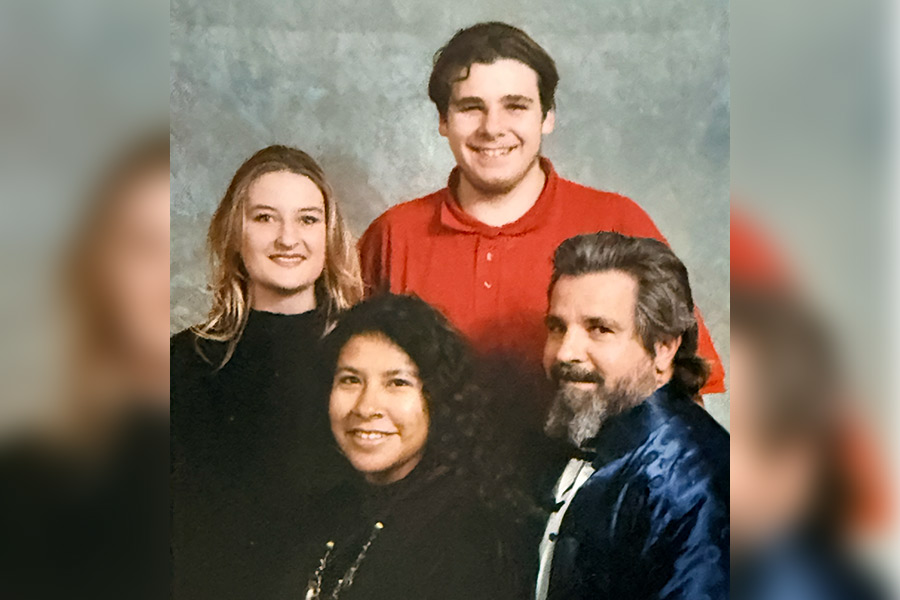
POCATELLO – A Pocatello man, who became a local celebrity through his advocacy for the environment, has died.
On June 9, Carta Reale Sierra, who was better known as ‘the Idaho Lorax’ and ‘Idaho Law,’ died due to terminal liver cancer. His obituary described him as, “one of Idaho’s most unforgettable educators, entertainers, passionately eccentric public activists, and fiercely independent politicians.”
“He cared an awful lot about saving lives and protecting the world we live in,” his obituary reads.
An informal gathering will be held at Lookout Point on Saturday, from 2 p.m. to 5 p.m. where there will an, “open sharing of memories will take place in accordance with his uniquely independent spirit.”
“If you are unable to attend, the community is encouraged to honor his legacy by planting a tree, speaking out at a local meeting, or advocating for a cleaner, healthier environment—protecting our families and our shared home in whatever way feels right,” his obituary reads.
If you are unable to attend, the community is encouraged to honor his legacy by planting a tree, speaking out at a local meeting, or advocating for a cleaner, healthier environment—protecting our families and our shared home in whatever way feels right.
To learn more about the life of the Idaho Lorax, EastIdahoNews.com sat down with his children, Kynoch Reale-Munroe and Wendell Jenks.
The man who would one day become known as the Idaho Lorax began his life in Connecticut, in 1951, as Carta Reale.
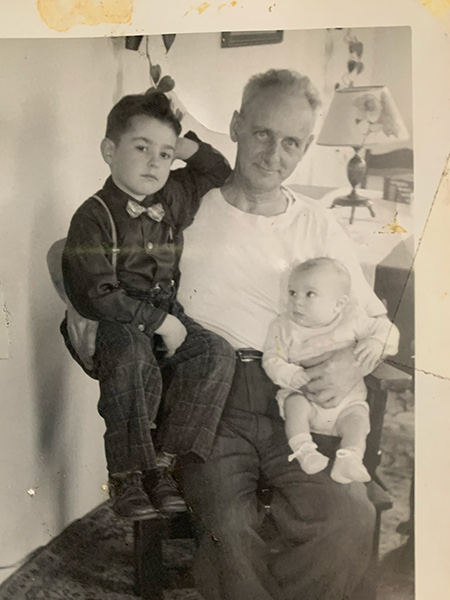
The way it was described to Kynoch and Wendell is that growing up, their father was a “very high-energy kid.”
“Very outgoing, very energetic,” Wendell started to say.
“And super smart,” Kynoch added.
Kynoch talked about Carta’s pursuit of knowledge and experimentation from a young age, saying, “He used to tell me of all the stories of his chemistry labs – and explosions in the house.”
“(He was) probably what we would consider ADHD, but also very intelligent. So he navigated the world with kind of a high-energy enjoyment of knowledge and creativity,” Wendell said, adding that he was often the leader of the neighborhood kids and would rally them towards “creative problem solving” when faced with obstacles.
But as Carta entered young adulthood, tragedy struck his family. His mother was diagnosed with Multiple Sclerosis, and died while he was still a teenager.
Carta, who helped to take care of his mother as her disease progressed, is the one who found her deceased.
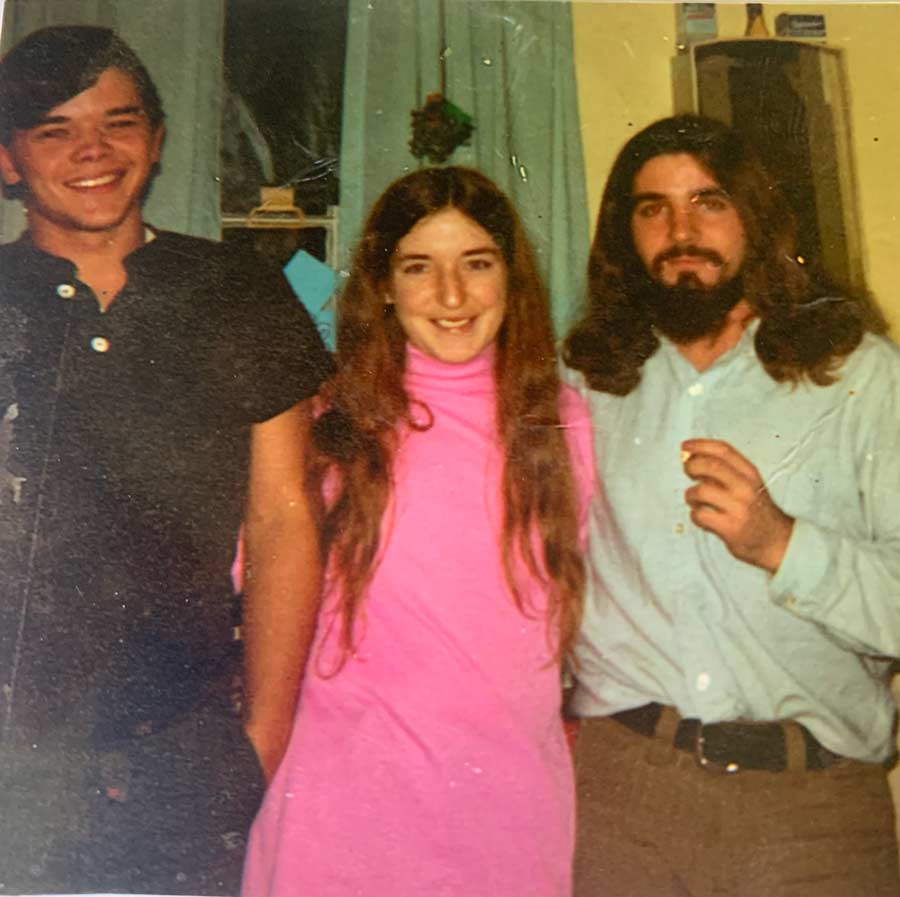
Not long after, as a 17-year-old, Carta left Connecticut and moved out to California. Around a year or two after he moved, he began to attend UC Berkeley.
Carta’s high-energy spirit had not dissipated as he entered early adulthood. While he was taking classes, he also travelled around the country on his motorcycle.
And then he left the country to go on a backpacking trip through Europe, which is how he and Kynoch’s mother, Colleen Munroe, became a couple. Colleen was a childhood friend of Carta’s sister, who had also moved to California.
Originally, Carta planned the trip as a group outing.
“My mother was the only one that actually showed up, so they went together to Europe,” Kynoch said.
While Carta travelled to many places around the country, and the world, he found a home in Pocatello.
Carta and Colleen moved to Idaho in the early 1980s to be closer to family as his brother’s family had moved to Jerome. But Jerome was “too small” for the couple, Kynoch said, so they instead moved to Pocatello.
“And they went to college at ISU, and then had me, and then split,” Kynoch said.
At this time, Carta was already someone who utilized theatrics to make a point while protesting.
It was during one of these theatrics, an anti-war protest, that he met Wendell’s mother, Vyonne Jenks.
“(My mother) met (him while he was) going around campus with a (hand-cranked) bomb siren, … (He got) a whole crowd around him, and everybody noticed him; so did my mom. And she was interested and fascinated,” Wendell said.
While Carta and Vyonne’s romantic relationship didn’t last very long, their friendship did.
“My mom’s also high energy and kind of very outspoken, and they clashed too, so it didn’t last real long, (but) their friendship lasted a long time, because they’re also both very political. She’s punk rock political and he’s hippie political. … They evolved afterwards, still being both political people who want to make change,” Wendell said.
After Carta graduated with his Bachelor’s degree from ISU, he began a career in teaching. Carta taught at several schools in his life, including Pocatello High School and Shoshone-Bannock Jr./Sr. High School.

And it was during his time that Carta met Laurie Sierra, whom they described as his longest-lasting relationship.
“Together, they really explored music and art and culture,” Kynoch said.
And when they got married, Carta and Laurie, “switched last names, so that’s where the Sierra came from,” Kynoch explained.
During his time teaching, he also taught at schools in different states, like in Nevada, Washington, as well as the D.C. area.
Kynoch and Wendell both attribute their father moving around to different schools so much in one part to his nature as a travelor, as well as to, “how strong of a personality he was.”
“He didn’t like bureaucracy and the education system when they started doing ‘teach to the test’ and all the things,” Kynoch said.
“They kind of tried to reign him in and control him … and he would push back. And eventually it would end either by them firing him or giving him a reason to leave,” Wendell continued.
But Carta brought his passion to the schools he taught at.
To get an idea of Carta’s teaching style, Kynoch explained that, “He has a theater and performing arts background as well, (and) he’s always been an educator, so you put all that together.”
Over the years, Carta’s protests had earned him a reputation that he didn’t want to blowback on his family. But he also didn’t believe he should retreat from the public eye.
In fact, he wanted to run for political office. But not with the ultimate goal of winning; Rather, his main goal was to platform his message.
“His campaigns spanned a wide political range, including bids for Pocatello City Council, Mayor, the U.S. Senate, and the U.S. House of Representatives. Known for slogans like “saving lives” and for calling Pocatello the “radioactive city,” he stood against the machine, demanding full cleanup of uranium contamination and toxic industrial waste,” reads Carta’s obituary.
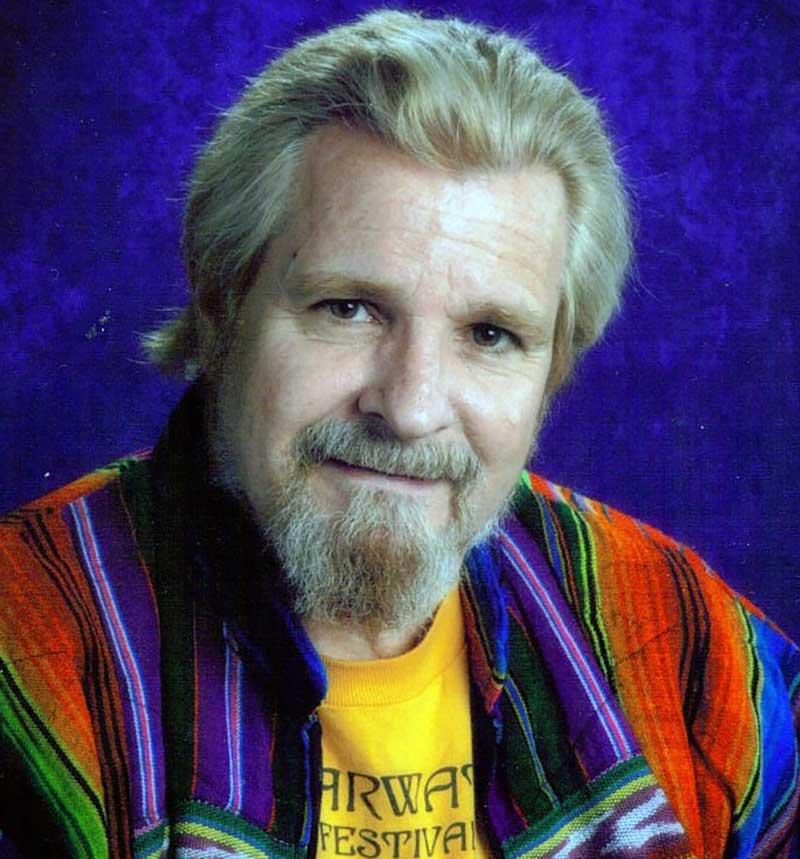
After multiple instances of Carta being arrested in connection with his protesting, he worried that authorities may retaliate against the people close to him.
“So he started changing his name to try and protect us,” Wendell said.
One moniker he used was Idaho Law, which was a reference to the Magna Carta and his first name. But his most famous nickname came from his desire to advocate, “for what cannot defend itself,” reads his obituary.
While Kynoch and Wendell were growing up, ‘The Lorax,’ by Dr. Seuss, was one of Carta’s favorite books to read to them. In 2012, when a feature film adaption of the book was released, Carta began to think more and more that the Lorax embodied what he wanted to symbolize.
“When that movie came out, it was like a trigger. ‘I can be the Lorax of Idaho,’” Wendell said.
And as the Idaho Lorax, Carta continued to do what he did best.
“In his later years, to the Pocatello City Council he was a relentless disruptor; to history, a legend. He didn’t just attend meetings—he transformed them into performance art. To expose uranium byproducts, radioactive fertilizers, and their risks to human and environmental health, he famously entered chambers in full hazmat gear, later revealing “Mothers Against Death” shirts—turning bureaucracy into a stage for environmental justice,” his obituary reads.
At the end of Carta’s life, Kynoch and Wendell said he accepted what was coming.
“He kind of accepted his death better than we did,” Wendell said.
Rather than being worried about fighting the cancer, Carta was more concerned with whether or not his message would continue.
“There was no fight, really. It was ‘get my messages out.’ Like, ‘hear me, what I need to say,” Kynoch recounted.
“He wants his goal, to save life, continued,” Wendell said.
If people were to take anything from Carta’s life, Kynoch and Wendell believe he would want them to speak up when they know the truth, and to work together to make the world a better place.
“Because one person can’t make all those changes. Lots of people have to get together,” Wendell said.
In Carta’s obituary, it says, “He leaves behind a legacy of bold, disruptive advocacy that challenged his family, friends and community to look more closely at the world around them.”
And it points to a Dr. Seuss quote as being, “words that inspired his work.”
“Unless someone like you cares a whole awful lot, nothing is going to get better. It’s not,” the book reads.