



Idaho farmers abandon fields as worst water crisis in decades deepens
Published at | Updated at
IDAHO FALLS – Farmers are dealing with the most challenging water year in nearly 50 years, and it’s forcing irrigators — whose allocations are already stretched thin — to make additional cutbacks.
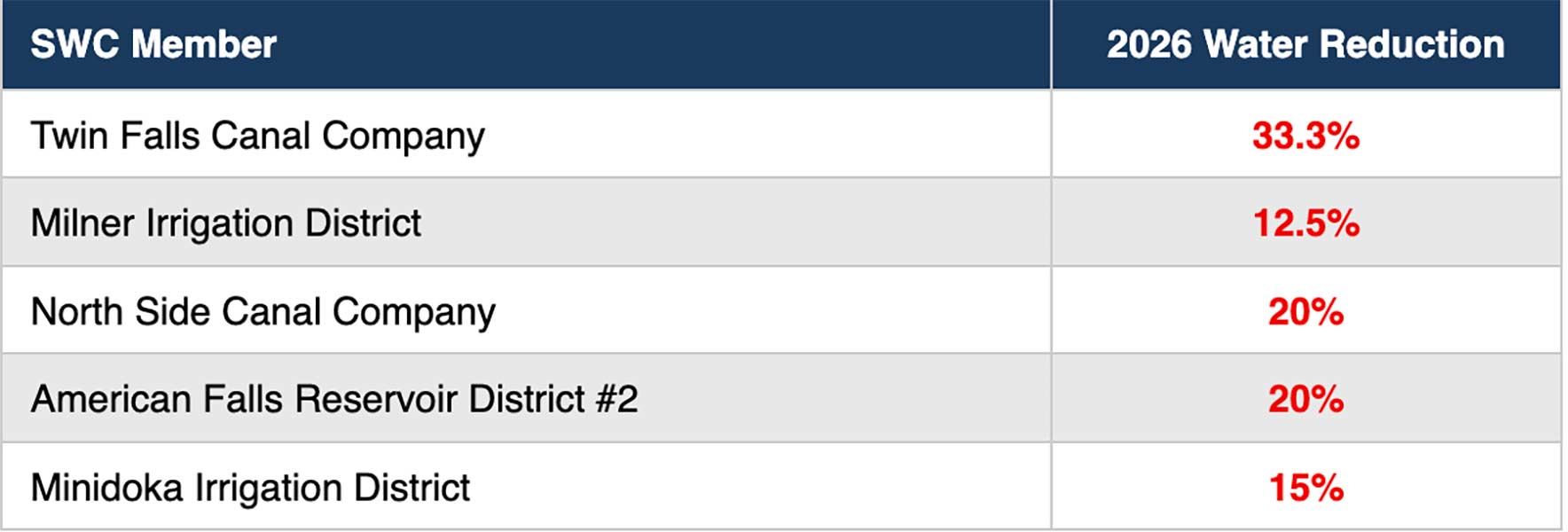
In a news release Thursday afternoon, the Idaho Surface Water Coalition said that water users served by the Twin Falls Canal company have reduced their normal allocation by 33.3% as a result of historically low snowpack, a statewide drought emergency, and declining reach gains across the Snake River system. The SWC is responsible for delivering water from the Snake River to about 550,000 acres of farmland and the new reductions are forcing major changes in communities across southern Idaho.
“Idaho is in a bad situation. The snow never fell this past winter, so now we are dealing with one of the most challenging water years in generations, with the consequences already stacking up,” Surface Water Coalition chairman Alan Hansten says in a news release. “Our members are facing deep cuts to each of their water supplies, which in turn is leaving everyone who relies on our water working hard to stretch their supply. Farmers are already having to decide what fields to abandon to make it through the summer. The impacts of this very real drought already equate to lost crops and lost income, and will be felt in our towns, our businesses, our grocery stores, and around kitchen tables across Idaho and our nation.”
RELATED | Curtailment order targets 924 groundwater rights across eastern Idaho
Under Idaho law, surface water users in Magic Valley have senior water rights, and groundwater users in eastern Idaho are required to have a plan for recharging the aquifer during times of shortages.
In April, the Idaho Dept. of Water Resources issued a drought declaration in response to the water shortage. Although groundwater users are required to conserve a minimum of 205,000-acre-feet of water annually, the water shortage in 2026 means there are no opportunities for recharge.
Earlier this year, IDWR Director Mathew Weaver found that surface water users may face a shortfall of 181,600 acre-feet of water in the 2026 irrigation season. The latest projection from Water District 1, the Idaho agency responsible for distributing surface water in priority and in accordance with Idaho water laws, shows a bleak outlook. Snowpack levels are less than 40% of the typical year for this time of year and the reservoirs are only holding about 2.47 million acre-feet of water. Last year at this time, they held 3.6 million acre-feet.
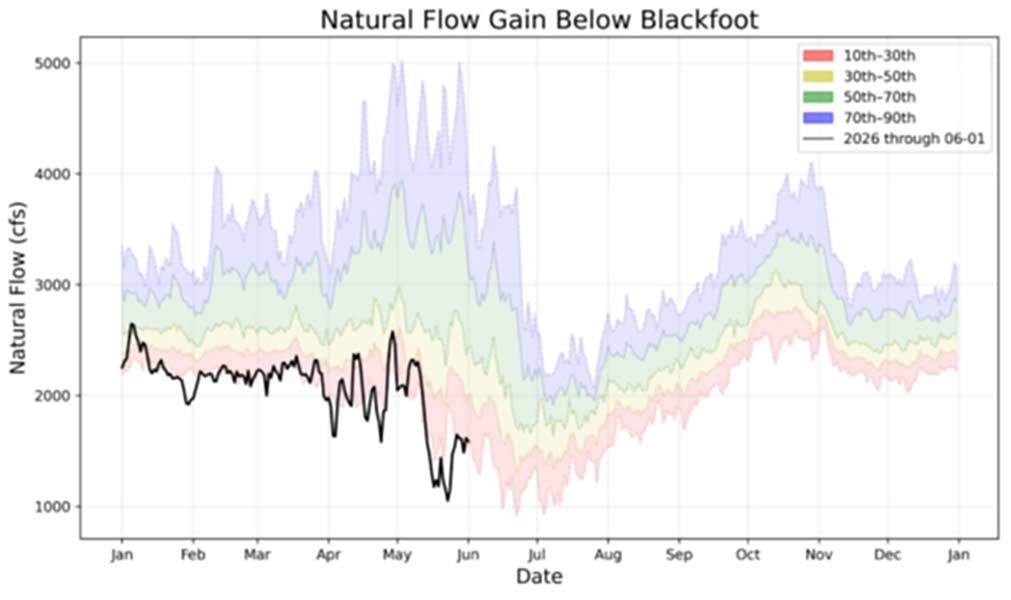
“A normal year sits around 3.25 million acre-feet. That means the system is roughly 1.2 million acre-feet short of where it should be, or about one-third. That’s enough water to fill more than 45,000 football fields all the way up to the top of the goalposts,” the SWC says in the news release.
Canal companies and irrigation districts across the state are feeling the effects. Twin Falls Canal Company is seeing the largest reduction at 33.3%. North Side Canal Company in Jerome and American Falls Reservoir District #2 are tied for second with reductions of 20%.
Twin Falls Canal Company general manager Jay Barlogi tells EastIdahoNews.com “it’s a tough year” and he hopes the reductions get them through the water season.
“That’s one-third less water than our users have got to get through this year,” Barlogi says. “We made the cuts on May 28. We generally have the opportunity to hold off until July or August … but this year, water supply conditions dictate that we make the cut early.”
State officials look at 1977 as a benchmark year for “the worst single year on record” for water in Idaho. But as far as Barlogi is concerned, 1992 was the worst year for surface water users. Similar circumstances impacted the water supply then and Barlogi says the water allotment was cut in half on May 18 — ten days earlier than the cuts were made in 2026.
“That year, we didn’t make it through the end of the season. We ran out of water before the crop demand dropped,” says Barlogi. “We had to alternate canals … and that did not work.”
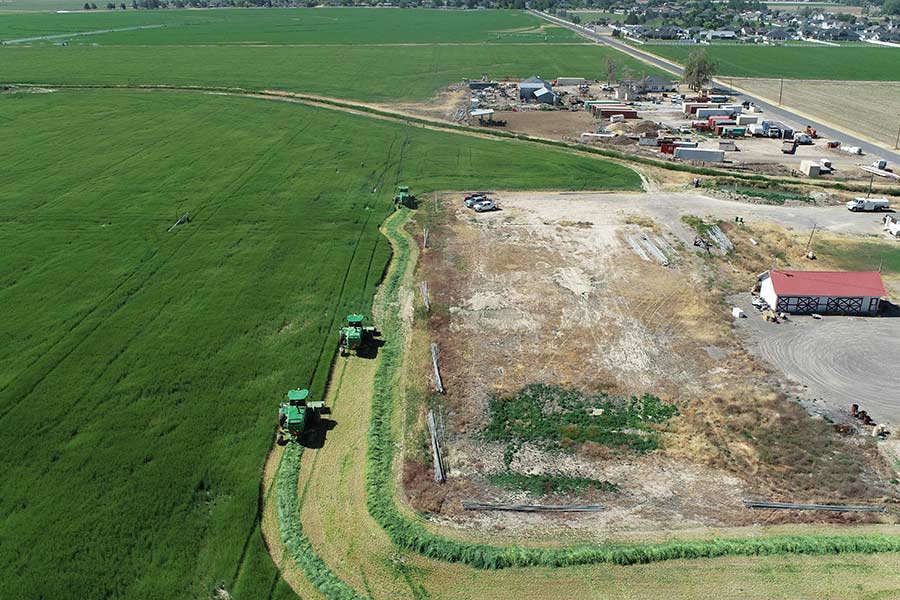
So far this year, one farmer within the canal company’s jurisdiction has had to sacrifice his grain crop entirely. The coalition reports he chopped it early to sell as cattle feed to conserve the remaining water for higher-value crops.
Barlogi declined to identify the farmer by name, but he’s hoping 2026 isn’t a repeat of 1992 for the population as a whole.
“All the surface water users are struggling. There are several entities up and down the river that are going to shut off early this year because they just don’t have (enough water),” he says.
Surface water users aren’t the only ones who are struggling. Lara Herway, executive director for Idaho Ground Water Appropriators — the umbrella organization for 12 groundwater districts in eastern Idaho — says they face pumping limits every year and the exceptionally tight restrictions in 2026 have resulted in some difficult decisions on this side of the state as well.
“In a year like this, every drop of water matters,” farmer, North Snake Ground Water District chairman and IGWA vice chairman Lynn Carquist says in a news release. “Surface water users are feeling the effects of low snowpack right away, and everyone is working to adapt. Groundwater users are doing what Idaho farmers always do — tightening operations, making careful decisions and working together to use what water we have as efficiently as possible.”
RELATED | Idaho braces for hot, dry stretch as fire risk, water woes grow
Adam Young, a board member with Bingham Groundwater District, has water rights for about 2,800 acres outside of Blackfoot. He’s eliminated about 200 acres to help conserve water. About 22 acres is being used for the U.S. Department of Agriculture’s Conservation Reserve Enhance Program.
CREP, according to its website, requires a 10-year commitment to idle the farmland and voluntarily pause water rights for the contract term. In exchange, participants receive annual rental payments, cost-share assistance, and other financial incentives.
Earlier this year, the IDWR reported a significant uptick in the number of CREP enrollments.
Despite the financial incentives, Young says 90% of the land he removed from the crop rotation is not enrolled in the program and he’s not being compensated for it.
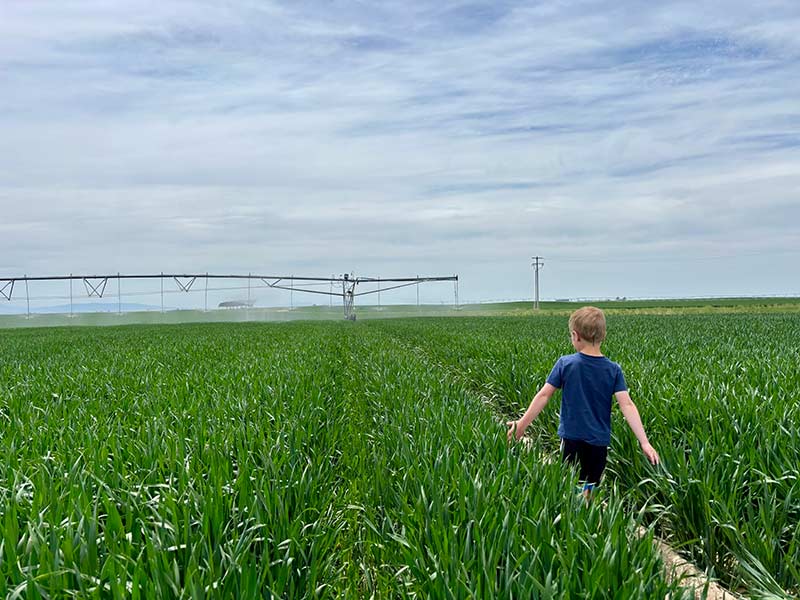
Young says these decisions were made in advance of the irrigation season, so he isn’t hurting as bad as other farmers in the area.
In a typical year, his water allotment is around 5,000-acre-feet. Over the last decade, he says he’s had to cut back his usage about 12% every year, on average.
RELATED | Butte County water dispute ends as groundwater users join state mitigation plan
Young says the collective cutbacks amid a drought, combined with the obligation in the 2024 Stipulated Mitigation Plan to provide 75,000-acre-feet of water to surface water users, jeopardizes groundwater users’ ability to irrigate and puts them in a precarious situation.
“In a year like this, water is more expensive and it’s harder to find ways to lease it. Until a couple weeks ago, we were really worried that we might not be able to find the full amount. If we don’t find that 75,000-acre-feet of water collectively, we don’t have safe harbor (and our pumps will be shut off),” says Young. “That’s a real concern I have going into next year.”
Hansten emphasizes the seriousness of the situation in the news release and adds that every water user in Idaho is responding with amazing resilience as they’re being asked “to do more with less.”
“The path forward is uncertain, but we will continue to work together to do what is best for the state of Idaho,” says Hansten.
This weather-related story is brought to you by Pony Express Car Wash, Idaho's premier express car wash destination, renowned for its commitment to exceptional service and quality. Voted the No. 1 car wash company in Idaho for five consecutive years, we pride ourselves on delivering an unparalleled experience for every vehicle and customer. Our state-of-the-art facility utilizes name-brand soaps and cutting-edge equipment to ensure your car receives the ultimate clean. Established in eastern Idaho in 2019, Pony Express is proud to be a locally owned and operated company that caters to the unique car washing needs of our Idaho Friends and neighbors. We invite you to experience the difference at Pony Express, where your satisfaction is our ultimate goal.