



He survived the Teton Dam Disaster. Now he’s bringing memories back to life through music
Published at | Updated at
EDITOR’S NOTE: This is the seventh in a series of stories highlighting the 50th anniversary of the Teton Dam Disaster.
REXBURG – When the wall of water hit Rexburg on June 5, 1976, it destroyed Trent Walker’s childhood home and the restaurant his parents owned on Main Street.
Walker, who recently collaborated with local musicians and others on an album commemorating the 50th anniversary of the Teton Dam disaster, was among the thousands who lived through the tragedy and was affected by it.
Walker’s parents, Doyle and Lola, owned Walker’s Cafe, a now-defunct eating establishment that sat kitty-cornered from the Madison County Courthouse. His parents opened a Rigby location more than a decade earlier — which later became Me ‘N Stans — and the Rexburg store opened around 1968. Trent grew up waiting tables and serving customers in Rexburg and lived in a small home around the block on North 1st East.
RELATED | Longtime business in downtown Rigby being demolished this week
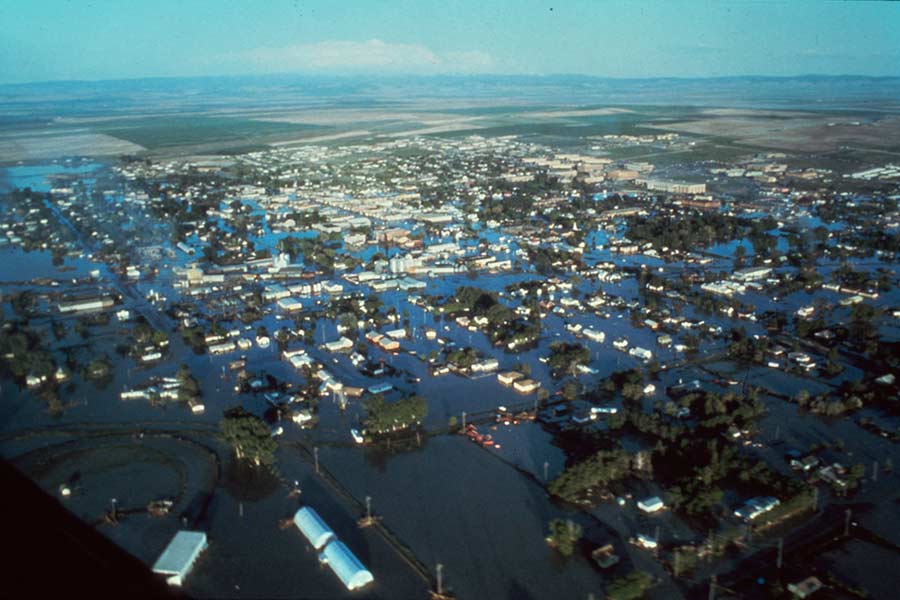
On the day of the flood, Rexburg was buried under 5 feet of water, and the Walkers’ home and livelihood were completely gone.
“It wiped us out!” Trent recalls in a conversation with EastIdahoNews.com.
The failure of the flood mitigation dam spilled 80 billion gallons of water into eastern Idaho. Communities from Sugar City to Blackfoot were affected. Eleven people died, along with about 13,000 head of livestock. Beyond that, about 3,000 homes and tens of thousands of acres of land were destroyed or heavily damaged.
Cleanup took months and cost over $2 billion — more than $11 billion in today’s dollars. The U.S. Bureau of Reclamation, the agency that built the dam, spent the next 11 years compensating those who were affected.
Weeks after the flood, Trent says the restaurant’s cash register was found lying in a farmer’s field in Burton, a rural community five miles southwest of Rexburg.
When the water subsided, Trent says the mud left behind in homes and businesses was an unforgettable sight. His family’s home and restaurant were covered in seven feet of silt.
“People came with buckets and shovels. For days, we did nothing but shovel mud out of the basements of homes and businesses to try and clean it up,” says Trent. “The smell was toxic, and we would’ve had to tear down the building and rebuild to put food back in there.”
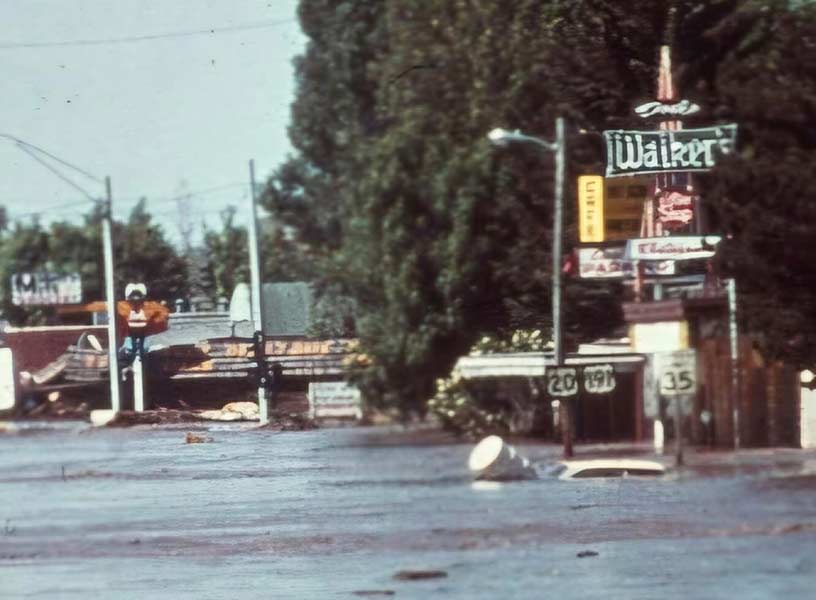
The Walkers eventually did rebuild. Walker’s Cafe never returned, but Doyle went on to open The Raintree Restaurant — later Frontier Pies under a different owner — at 460 West 4th South.
RELATED | The night Rexburg didn’t have a bottle of wine for Gene Hackman
RELATED | New business opening in Rexburg’s old Frontier Pies building
Trent’s mother, Lola, shared her memories of the flood in a 1977 interview, which became the inspiration for an album project.
They’d just finished remodeling their basement when they heard the news on the radio. She said that she and her husband got in the car to see for themselves what was happening and how they could help. The couple had a CB radio in their vehicle and could hear the emergency chatter.
Later that day, a law enforcement officer saw the radio and said to Lola, “Come with me. I need you!”
Authorities had set up a roadblock on the north end of town to prevent anyone from driving into the path of the floodwaters. Lola was deputized to help direct traffic.
Lola described seeing “a huge cloud of dust” roll through town as the water hit Rexburg, and it “consumed everything in its path.”
“It was just horrible. There wasn’t anything you could do except stand there and watch,” Lola said.
Her uncle, who she described as a non-religious man who rarely showed emotion, had tears streaming down his face as he watched the destruction in real-time.
“My, what small creatures we are in the mighty power of God,” he said, according to Lola.
Transforming tragedy into a Teton Dam soundtrack
Fifty years after the disaster, Trent is one of the people behind a new album commemorating what happened. The 17-track project, released without fanfare in May, is called Teton Letters. Each song is inspired by a firsthand account of the flood, including Lola’s story. The year after the flood, she was one of numerous people who took part in an oral history project conducted by Ricks College, the Idaho State Historical Society and Utah State University.
The idea for the album started with Richard Robison.
He and Trent have a long history dating back to childhood. They attended Madison High School together and Richard says his uncle Robert’s family were close friends with the Walkers.
RELATED | Former Rexburg man remembers uncle, who oversaw construction of the Teton Dam
Robert worked for the Bureau of Reclamation and managed the construction of the Teton Dam near Newdale. Richard, a retired engineer who has studied the Teton Dam extensively for more than 40 years, came across Lola Walker’s interview in 2024 while conducting research.
“Lola has a very poignant, brief encounter with my uncle in her oral history,” Richard says. “While helping block traffic on the north end of Rexburg that day, my uncle arrived from the collapsed dam and stopped to talk to Lola.”
Richard sent Trent a copy of the transcript, which he says was “awe-inspiring.” He later discovered his aunt and uncle in Roberts were among dozens of other interviewees.
RELATED | Forgotten by the headlines: How Roberts became the Teton flood’s overlooked tragedy
Trent has an extensive background in audio engineering and recently retired from a 20-year career as an audio engineer for the Tabernacle Choir.
Richard and Trent’s memories of the flood, combined with their individual backgrounds, prompted them to team up for the album project.
From the beginning, the pair says they were never looking to make a profit from this project. The goal of Teton Letters, which is available to stream for free, is to preserve the history and stories in music form.
One of the tracks, a song called “Waist Deep in June,” tells the story of Leslie and Ethellynn Shirley, who were trapped in their Rexburg home as the Teton flood came through the back door. The water that filled the house was waist-deep and washed away family records, pictures, and history that was lost forever.
In his written synopsis of the song, Richard says his uncle’s experience plays a role in the Shirley’s story and adds some “emotional tension.”
“It superimposes the construction-side perspective of engineer Robert Robison into the same moment,” Richard writes. “It is not only about what the water did to the people below, but it is also about the man on the engineering side who believed in the project, trusted the work, and then had to live with the collapse of everything it was meant to protect.”
LISTEN TO THE SONG BELOW:
One song listeners will not find among the published recordings is Lola’s story. “Small Creatures” was recorded early on in the project, but Richard says it’s not “production-ready” and needs tweaking. EastIdahoNews.com is releasing it for the first time in the player below.
After months of work, Trent says he’s pleased with the final product. He hopes people enjoy the music and share it with their friends and family.
“I think people will be blown away by what they hear,” Trent says.
Listen to Teton Letters part 1 here and part 2 here. EastIdahoNews.com featured some of the songs in a recent episode of “It’s Worth Mentioning” here or in the YouTube video above. Downloadable versions of each song are coming soon.
WATCH OUR INTERVIEW WITH TRENT IN THE VIDEO ABOVE.