



Utah county attorney says prosecutor’s daughter had no influence on decision to seek death penalty
Published at | Updated at
Pat Reavy, KSL
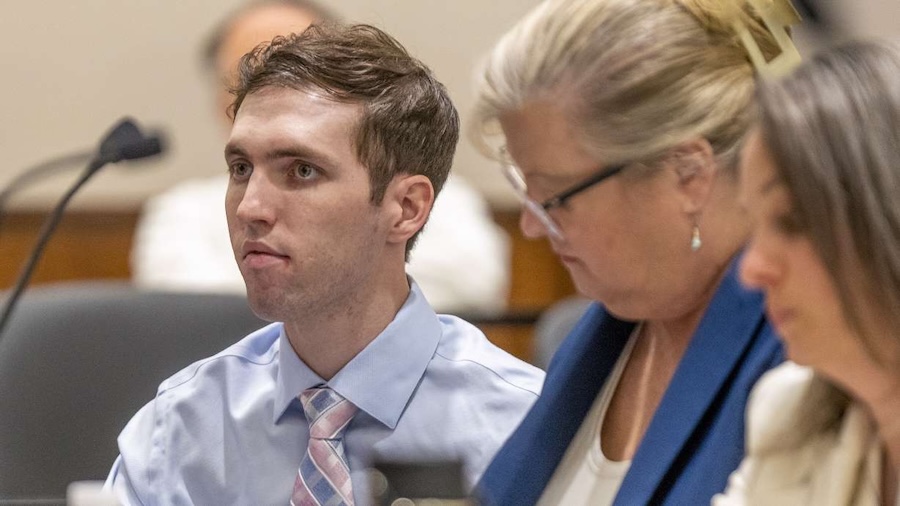
PROVO, Utah (KSL) — Utah County Attorney Jeff Gray says his decisions about how to proceed in the case against Tyler Robinson — including announcing on the day charges were filed his intent to seek the death penalty — were in no way influenced by the daughter of one of his senior prosecutors who was at the Turning Point USA rally when Charlie Kirk was shot and killed.
“This is somebody who happened to be there. What (my office is) concerned about is the evidence supporting the charges,” Gray testified Tuesday, while adding that the daughter being at the rally is “quite frankly … irrelevant to anything that matters in the case.”
“I do not believe that there is any conflict whatsoever,” Gray said. “I stand by that.”
But defense attorney Richard Novak argued that Gray approached the issue — that a key prosecutor had a family member at the rally where Kirk was killed — in “an incredibly casual way.”
“Mr. Gray should have implemented a firewall and he didn’t. And that has created this problem,” Novak said Tuesday. “The issue here is that the most experienced and most senior prosecutor in the office, other than the elected county attorney, should have been walled off from this prosecution until this court had an opportunity to consider whether disqualification is necessary … but now it’s too late.”
Fourth District Judge Tony Graf heard arguments Tuesday from both sides about whether the Utah County Attorney’s Office should be disqualified from prosecuting Robinson on his capital murder charge because a daughter of Chad Grunander — the chief deputy in the Utah County Attorney’s Office — was at the event where Kirk was assassinated. Graf says he will issue his decision on Feb. 24.
Chief deputy and daughter testify
Gray on Tuesday completed his testimony before Grunander and his adult daughter — a student at UVU — were called to the stand. The judge declined requests from the defense and prosecution to close the hearing for the two witnesses, except for a short portion where the woman identified herself. But Graf ordered a media camera and microphone to be turned off during the daughter’s testimony and instructed that all laptops being used by members of the media be closed.
Much of Tuesday’s four-hour hearing centered around the question of whether any of the decisions made by prosecutors since Robinson was arrested were based on emotional reactions because Grunander’s daughter had attended Kirk’s rally.
RELATED | WATCH: Court hearing for Tyler Robinson, man accused of killing Charlie Kirk
The woman testified she had watched videos of Kirk’s debates and was a fan. She was about 85 feet away from Kirk, near the back of the amphitheater, when he was shot and did not see him get injured or carried away. She said she didn’t even know it was Kirk who was shot until she was told by someone else.
The student said she sent a text message in a family group chat that “someone” had been shot at UVU almost immediately. Grunander called his daughter to make sure she was OK, but after learning that she was safe and out of danger, he said his attention shifted to the murder investigation.
While the daughter said she was “kind of in shock” right after the shooting and “feeling really sad” after learning of Kirk’s death, she wasn’t traumatically affected and has continued going to school, work and her regular activities.
Prosecutors argued Tuesday that there were so many witnesses to Kirk’s shooting and so many videos collected following the assassination — many of which provide stronger evidence than what the daughter would be able to give — that she had “zero” influence when the state put together its case against Robinson.
“When we learned what her experience was and what it wasn’t … (we) felt confident there’s simply no conflict here,” Grunander testified, adding that the only reason he informed Robinson’s attorneys about his daughter being at the rally “was to just act with professionalism and integrity.”
“My practice is if there’s an argument, disclose. We’re not in the business of hiding anything,” he said. But Grunander added that he doesn’t want his disclosure, which he says he made out of an abundance of caution, mistaken as giving “merit to this conflict.”
“The reality is … she did not see Charlie Kirk get shot. She’s just not a witness,” prosecutor Ryan McBride said. “As a result, there’s really no conflict here.”
Novak, however, argued that the court doesn’t have to find a conflict of interest but must disqualify the county attorney’s office if there’s a hint of emotional response from the public because of any implication of impropriety regarding how the office is handling a capital murder case.
As for announcing his intent to seek the death penalty when charges were filed, Gray said that was his decision.
“I thought that … if we had the evidence, yeah, we’d be seeking the death penalty,” he said. “I made my final decision by the time we filed charges.”
Gray was asked whether his decision was influenced by Gov. Spencer Cox, who made mention during press conferences of Utah being a death penalty state.
“At some point, I told the governor I intended to seek the death penalty,” Gray said. But he maintains that the decision was his, that he had committed to voters when he ran for office that he would “seek the death penalty in all appropriate cases.”
“In a highly publicized case, the longer you delay that decision … it just creates all this unnecessary public speculation,” Gray said. “It creates unnecessary angst for the families of victims.”
Gray said he filed his notice of intent to seek the death penalty early so “Erika Kirk didn’t have to deal with that.”
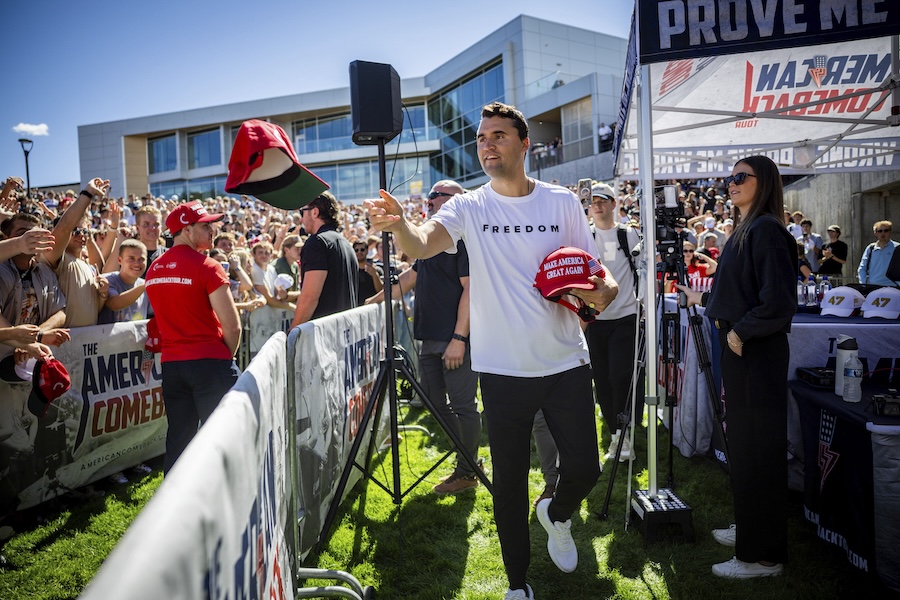
Erika Kirk: ‘no adequate substitute for open proceedings’
Erika Kirk, the widow of Charlie Kirk, filed a motion Monday asking Graf to keep the ongoing legal proceedings open to the public.
“As this court is aware, this matter has received significant public attention. This public attention cannot be ignored. And although it is critical that this court balance the defendant’s right to a fair trial with the public’s First Amendment right of access to judicial proceedings, any request, by either party, to essentially close these court proceedings from the public eye should be denied,” Kirk and her attorney, Jeffrey Neiman, said.
“The public assassination of Mr. Kirk has profoundly affected many. Without meaningful access to these proceedings, the public will be unable to directly observe and evaluate the evidence presented, leaving a critical gap in understanding the circumstances surrounding his death. In the absence of transparency, speculation, misinformation, and conspiracy theories are likely to proliferate, eroding public confidence in the judicial process. Such an outcome serves neither the interests of justice nor those of Ms. Kirk. There is no adequate substitute for open proceedings,” Erika Kirk stated.
Erika Kirk’s notice to the court comes on the heels of another motion Robinson has filed that Graf has not yet ruled on — whether cameras and microphones should be banned from the courtroom. Graf said Tuesday that once his decision is announced regarding disqualification, he will address the electronic media issue.
Robinson, 22, is charged with capital murder and faces a possible death sentence if convicted of assassinating Kirk, 31, on Sept. 10 at UVU.
In December, Graf agreed to schedule a three-day preliminary hearing for May 18, 19 and 21, despite the objections of Robinson’s defense team, which wants to have rulings on their motions first, as well as enough time to sort through the mountain of evidence that’s expected.