



Troubleshooting tomato problems
Published at

Tomatoes are one of the most rewarding—and sometimes most frustrating—plants to grow in the garden. Just as the fruit begins to ripen, gardeners often face problems like cracked skins, blackened bottoms, or curled leaves. These issues—fruit splitting, blossom-end rot, and tomato leaf curl—are common signs of stress or nutrient imbalance. Fortunately, with a few simple steps based on university Extension research, these problems can be reduced or avoided altogether.
Tomato Cracking or Splitting
Fruit splitting is a common issue in Idaho gardens, especially during midsummer. There are two kinds of cracks that develop. Radial cracks run from the stem down the sides of the tomato, while concentric cracks form circular rings around the stem end. Radial cracks tend to be more serious and can expose the fruit to rot and insects. Splitting happens when a tomato takes in water too quickly after a dry period, often following heavy rain or sudden irrigation. The inside of the tomato expands faster than the skin can stretch, causing the fruit to split. This is often made worse by inconsistent watering, rapid fruit growth, high temperatures, or thin-skinned varieties.
To prevent splitting, try to keep soil moisture consistent throughout the growing season. Tomatoes do best with deep, regular watering, ideally about one inch per week. Soaker hoses or drip irrigation systems help to deliver moisture evenly. Applying a mulch layer of straw, shredded leaves, or grass clippings helps conserve moisture and reduce swings in soil temperature. During extreme heat, providing some afternoon shade can reduce plant stress and slow fruit expansion. Harvesting tomatoes as soon as they begin to change color—known as the breaker stage—can also prevent cracks, especially if rain is in the forecast.
Blossom-End Rot
Blossom-end rot (BER) shows up as a sunken, leathery black or brown spot on the bottom end of the tomato. Although it may look like a disease, BER is actually caused by a calcium imbalance in the plant. The problem often begins when plants can’t take up calcium properly due to stress. Even when there’s enough calcium in the soil, factors like drought, overwatering, root injury, or excessive nitrogen fertilization can interfere with calcium transport and lead to rot.
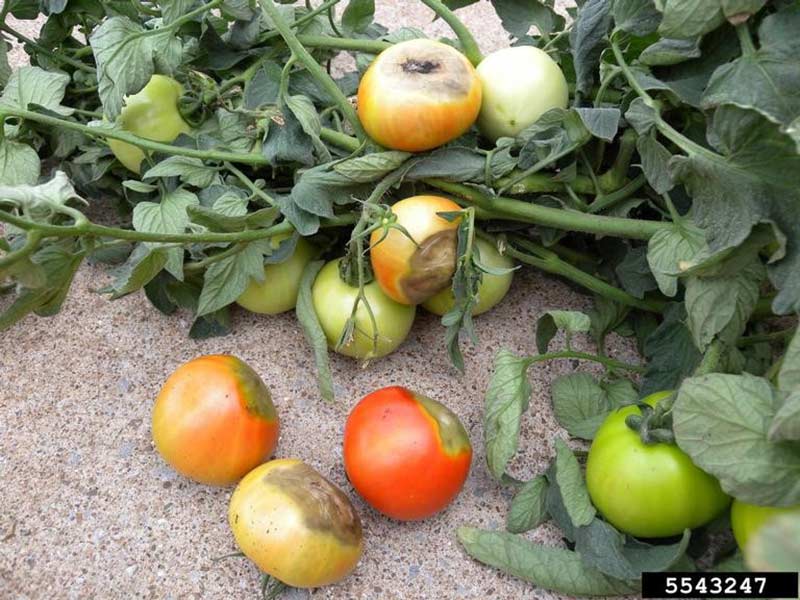
The best way to prevent blossom-end rot is to water deeply and consistently, about one inch per week, and to use mulch to hold moisture in the soil and keep root zones cool. Avoid overusing high-nitrogen fertilizers, as they can push too much leafy growth at the expense of fruit development and calcium uptake. If a soil test shows low calcium or a pH below 6.0, applying lime or gypsum may be helpful. It’s also important to avoid disturbing the roots by digging too close to the base of the plant. If BER appears, remove the affected fruits so the plant can focus energy on developing healthy ones. While BER tomatoes are safe to eat, their quality is usually poor, and they should not be used for canning or preserving. Thankfully, once growing conditions improve, the plant typically resumes producing healthy fruit.
Tomato Leaf Curl
Tomato leaf curl can occur for several reasons, and the cause determines how serious it is. The most common form is physiological leaf curl, which is a harmless response to stress. This type of curl usually affects older leaves, which roll upward or inward but remain green and healthy. Stress from high temperatures, dry soil, transplant shock, or over-pruning can all contribute to leaf curl.
In other cases, leaf curl is caused by herbicide drift, particularly from broadleaf weed killers like 2,4-D. This results in leaves curling downward and becoming puckered, distorted, or discolored. A more serious cause is viral infection, such as Tomato Yellow Leaf Curl Virus (TYLCV). This virus causes leaves to thicken and curl upward, while the plant becomes stunted and shows signs of yellowing. Viral leaf curl is spread by whiteflies and can severely impact yields if left unmanaged.
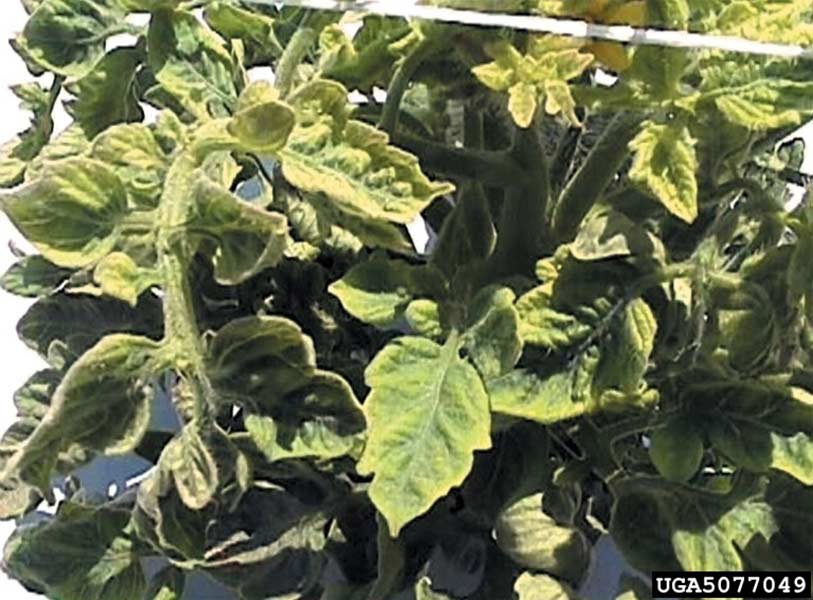
For physiological leaf curl, no treatment is needed. Simply reduce stress on the plant by watering consistently, using mulch to regulate soil temperature, and avoiding over-fertilization or aggressive pruning. To avoid herbicide damage, don’t spray broadleaf herbicides near your garden, and avoid using grass clippings or compost that may contain herbicide residue. Viral leaf curl is harder to control, but you can reduce your risk by planting disease-resistant varieties, managing whiteflies with sticky traps or insecticidal soap, and removing infected plants promptly. Good sanitation and crop rotation will also help limit future infections.
One Approach, Many Benefits
Although splitting, blossom-end rot, and leaf curl have different causes, many of the same garden practices can help prevent them. Keeping soil moisture steady through deep, regular watering is one of the most effective strategies. Mulching not only conserves moisture but also protects roots and reduces heat stress. Limiting nitrogen helps prevent rapid, uneven growth that weakens plants. Providing shade during extreme heat and avoiding root disturbance through careful cultivation will further reduce stress. Choosing disease-resistant varieties, practicing good garden hygiene, and keeping a close eye on plant health all contribute to a more successful tomato crop.
With just a little attention to watering, nutrition, and plant care, you can enjoy a healthier harvest and fewer tomato troubles in your Idaho garden.