Longtime Rexburg attorney shares memories of dad’s legal, political career 6 years after his passing
Published at | Updated at
REXBURG – Convicting Tommy Brophy for killing his mother was one of Ray Rigby’s most significant accomplishments as Madison County prosecutor.
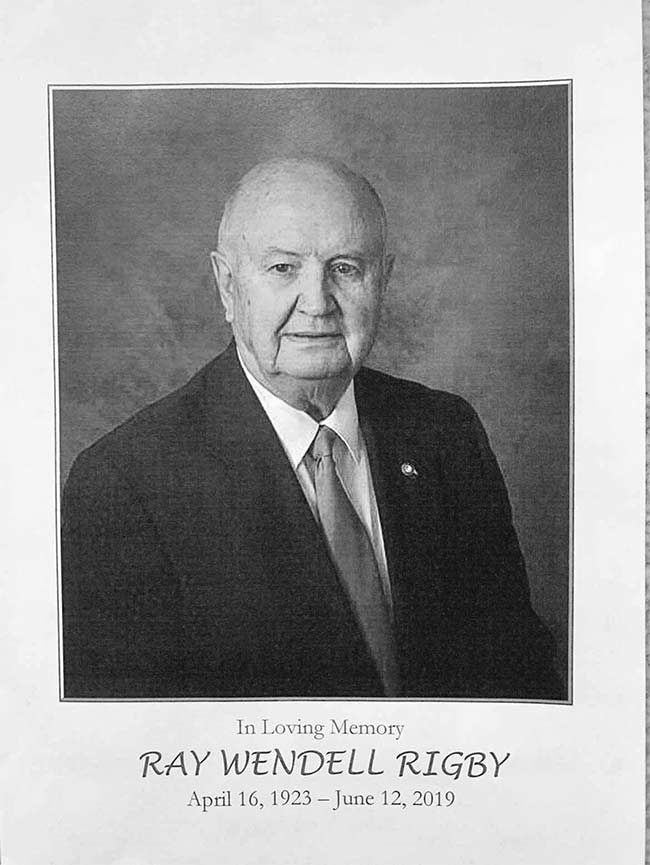
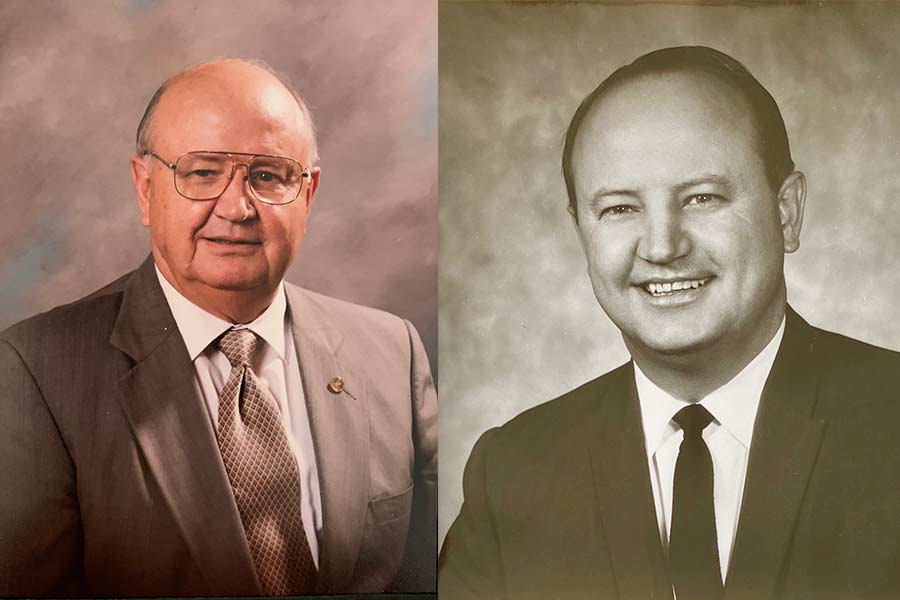
That’s the verdict from Rigby’s son, Jerry, who is a partner at the same law firm his father established in 1951 at 25 North 2nd East in Rexburg. Ray — who later served in the state legislature and helped resolve one of the most contentious water rights battles in state history — passed away in 2019 at age 96. Jerry shared memories and family stories about his dad during a recent conversation with EastIdahoNews.com.
The 74-year-old Rexburg attorney says his dad didn’t yet have a law degree when he was asked to run for prosecutor in the 1950s.
“He hadn’t even passed the bar or got his license yet,” Jerry says.
Despite his inexperience, Jerry says it was the Rigby name that made Ray an appealing candidate. Ray’s parents, Lester and Hattie, owned a farm in the area and had a good reputation in the community.
Ray won the election on the Democratic ticket, which Jerry says was the dominant political party in Madison County at the time. It’s a position he held for the next 14 years.
RELATED | Family members reflect on judge’s 36-year law career on anniversary of his death
Although Ray was well-known for his involvement in legislative and water rights cases throughout his long legal career, Jerry says his dad’s involvement in a murder case as prosecutor was particularly memorable.
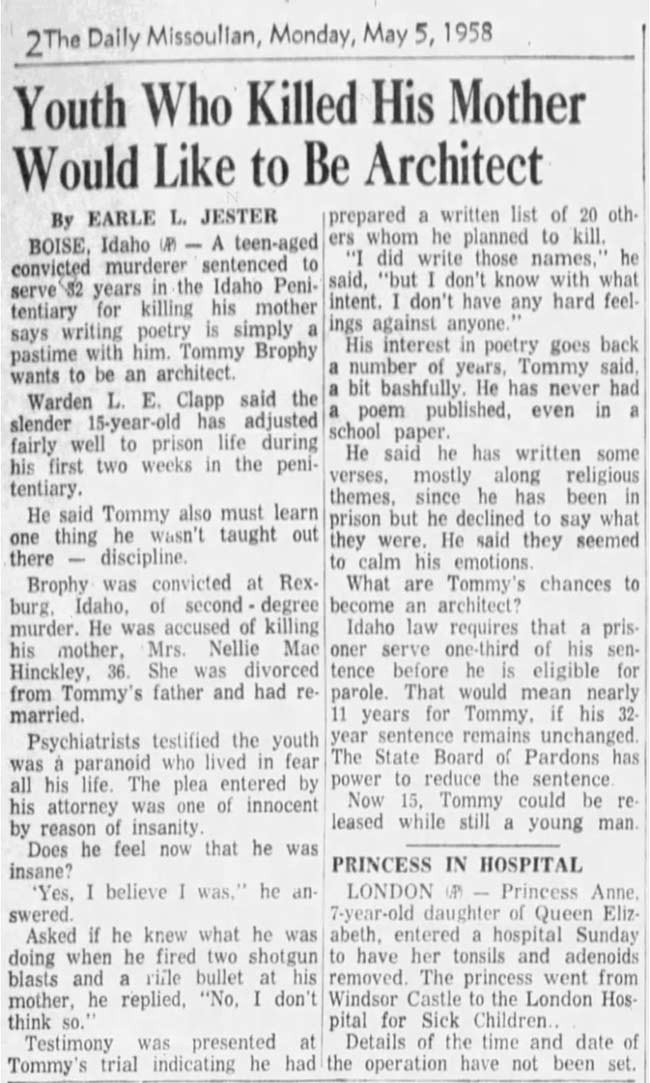
A 1958 news report about the case says 15-year-old Tommy Brophy was sentenced to 32 years in the Idaho State Penitentiary for killing his mother.
“He was accused of killing his mother, Nellie Mae Hinckley, 36. She was divorced from Tommy’s father and had remarried,” the report says. “He fired two shotgun blasts and a rifle bullet.”
The boy apparently was “a paranoid who lived in fear all his life.” Testimony presented at his trial revealed he had a list of 20 others he’d planned to kill.
“I did write those names,” Tommy is reported to have said. “But I don’t know with what intent. I don’t have any hard feelings against anyone.”
Although Tommy’s attorney ultimately entered a plea of innocence by reason of insanity, Jerry says one of the witnesses his dad needed to testify against Tommy refused to do so because she felt sorry for him — until he showed her that her name was included on the boy’s kill list.
Years later, after the boy was released from prison, Jerry says Ray was one of the first people he called.
“He called my father … and they had a good conversation about how he had no hard feelings towards my dad,” Jerry explains.
Ray’s early life
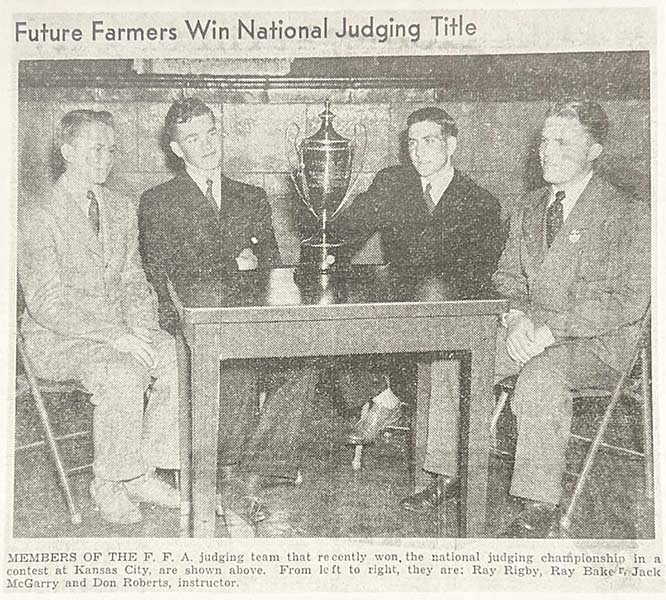
Ray was born in Rexburg on April 16, 1923. His interest in becoming an attorney stems back to his childhood on the family farm.
“The family almost lost the farm during the Depression,” Jerry says. “He worked on the farm throughout his youth and (the experience of nearly losing it) and recognizing that the law could be very powerful made him want to understand (and practice it).”
In a 2009 interview with the Rexburg Standard Journal, Ray cited his experience in public speaking and debate as a student at Madison High School that sparked his interest in becoming a lawyer. He took second place in a state public speaking contest and later won a regional competition in Oregon.
“(In that state tournament), they picked the 10 top debaters, and I was one of them,” he told the newspaper.
Similarly, his election as student body president during his senior year likely contributed to his interest in politics. Jerry cites his father’s service in World War II as the catalyst for Ray’s public service.

But the seed for Ray’s interest in public service was planted generations earlier. His grandfather, William F. Rigby — from whom the town of Rigby gets its name — served one term in the Idaho Legislature beginning in 1898.
The Porter’s, who founded what became Porter’s Craft & Frame, were influential in Ray’s early life. They were among the people who initially encouraged him to run for county prosecutor.
It was during this time that he developed a philosophy of “equal justice for all.”
“I made a decision early in my career that I would never turn anyone away that needed help just because they didn’t have any money,” Rigby told the Journal.
The generosity of his parents to poor people during the Great Depression is where Ray said that philosophy comes from.
His association with Gordon Thatcher and Rich Andrus led to the formation of what is now Rigby, Andrus & Rigby Law in Rexburg. They were his partners in the Rigby & Thatcher law firm, which was established in January 1951.
Sen. Ray Rigby
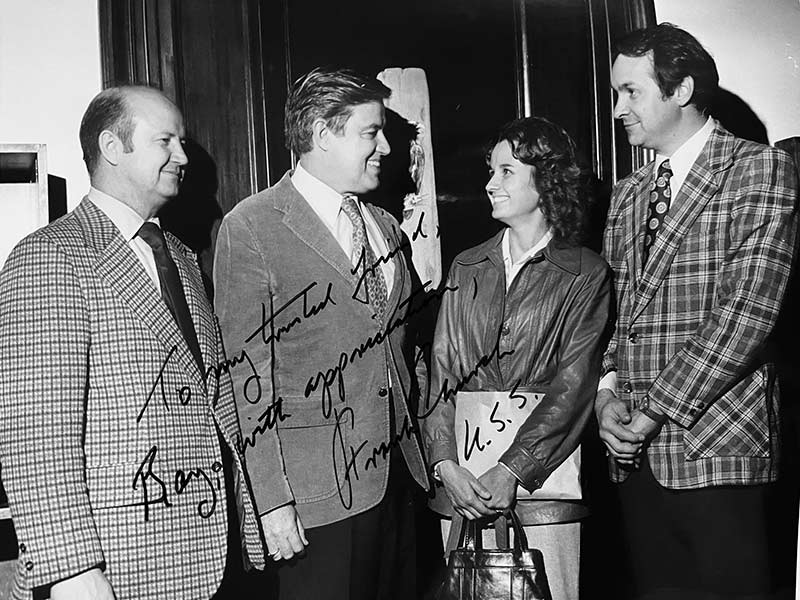
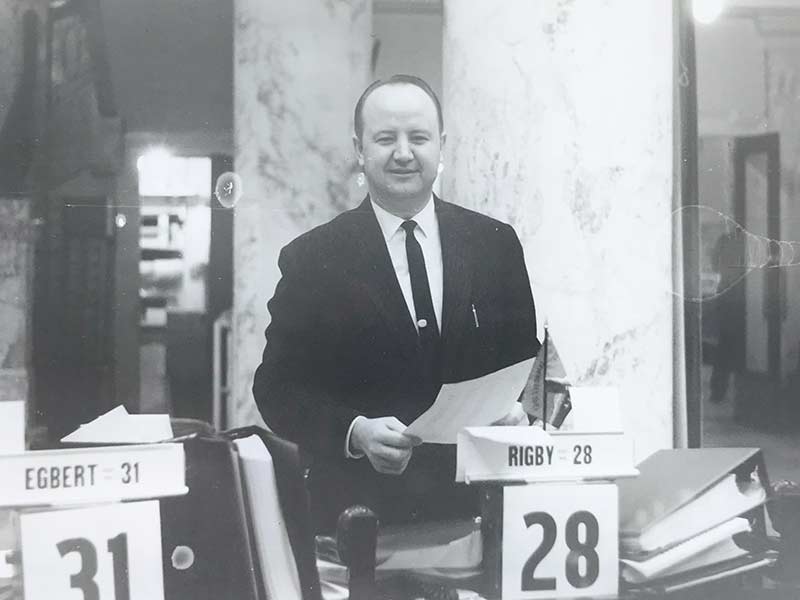
Ray’s election to the Idaho State Senate in 1965 was motivated by his experience as an attorney. Jerry says his dad’s involvement in dealing with specific state statutes made him want to make tweaks and adjustments in the law that he felt would be more beneficial to Idahoans.
Ray held a Senate seat from 1965 to 1974. He helped pass many bills during his time in office, including the creation of the public employees retirement system, also known as PERSI. Driver’s education and training requirements were also adopted under his leadership, along with the state sales tax.
During his tenure, Ray served on several committees. Among them was the Judiciary Committee, where he was involved in a lot of court reform legislation. One of the most significant is the current way in which judges are elected, appointed, retained and paid.
“This revolutionized the whole system and it’s still in place today,” Jerry says.
Jerry says his dad was a strong advocate for paying judges higher salaries than they’d make in private practice as an attorney. It’s an issue Ray lobbied for up until his death.
RELATED | New Idaho law will increase annual salaries for judges by $17,000
Ray also helped create the first law allowing for the use of deeds of trust in Idaho. This gives those who buy land the ability to put a down payment and finance it, rather than pay the full amount at the time of purchase.
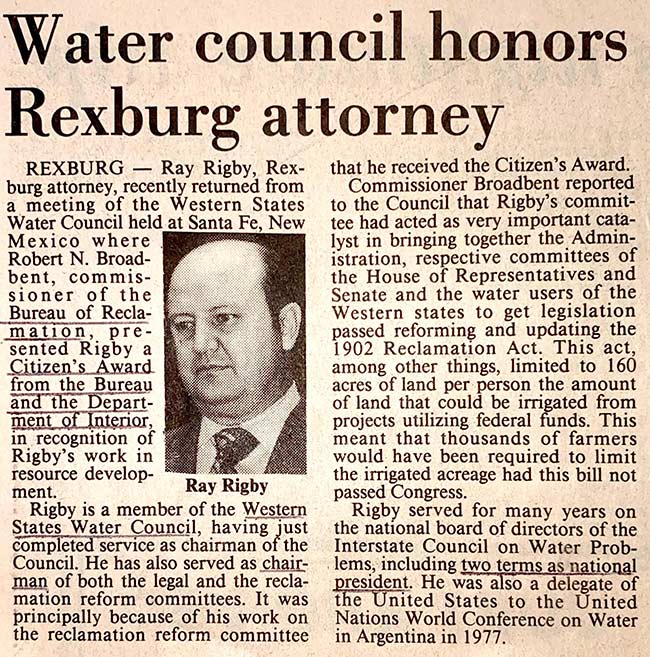
Ray’s greatest passion was understanding Idaho’s water law. His greatest accomplishment, as far as Jerry is concerned, happened after he left office. As chairman of the Western States Water Council, Ray helped resolve one of the most contentious water battles in state history. The Swan Falls Water Agreement of 1984 settled a lawsuit between Idaho Power Company and 7,500 upstream water users. In the lawsuit, IPC, which had senior water rights on the Swan Falls Hydroelectric Dam near Murphy in western Idaho, claimed the junior rights of irrigators impaired its ability to store water and produce electricity.
Much like the decade-long dispute between surface water users in Magic Valley and groundwater irrigators in eastern Idaho that was resolved last fall, it was a contentious debate that lasted a long time.
Ultimately, it was settled through the creation of the Swan Falls Trust. It gave the state control of the water to allocate future water rights to IPC and water users.
“IPC agreed to subordinate its hydropower rights at Swan Falls and 10 other facilities to all upstream uses existing as of October 25, 1984,” Jerry explains. “The state secured minimum flows to protect instream values and IPC’s generation capacity.”
Jerry says it was his dad who authored the trust concept, which was accepted by the state and Idaho Power. It was codified in Title 42, Idaho’s primary law dealing with water rights and water usage.

When it comes to mediating legal disputes, Jerry says his dad was “an extremely good negotiator.”
“My dad could go into a meeting and negotiate between two parties. When they got out, both sides thought (he was on their side),” says Jerry. “He was extremely good at not losing his cool and looking to both sides to come up with a fair and equitable solution. That’s why he was so successful.”
The Swan Falls Agreement was the focus of another water dispute in 2009, which Jerry was involved in resolving. Questions arose about the scope and intent of the 1984 agreement, especially regarding Snake River Aquifer recharge and future beneficial uses.
The Second Swan Falls Agreement, as it’s known today, provided clarification and a reaffirmation framework of the initial agreement.
Final years
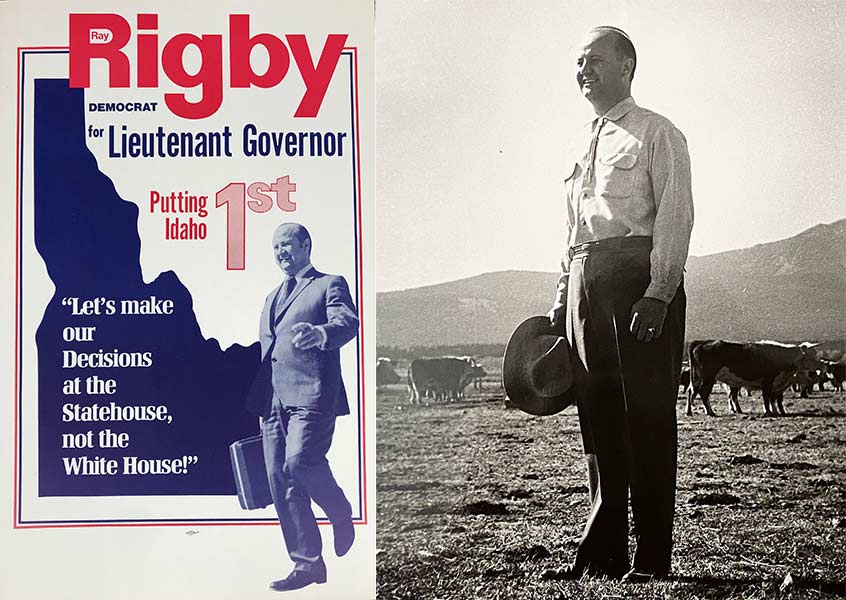
After nine years in the state legislature, Jerry says Ray was ready to step down and have more time for his family. The party had other plans, however, and said they would nominate him as the party’s candidate for Lt. Governor. John Evans, who was good friends with Ray, beat Ray to the punch in announcing his candidacy and secured the nomination.
Years later, when Idaho Governor Cecil Andrus accepted a nomination to serve as the U.S. Secretary of Interior, Ray was thrilled he wasn’t in Evans’ position.
“Evans immediately became governor. Dad never wanted to be governor, never wanted to leave Rexburg and that would’ve really caused havoc for him,” Jerry says. “It was a blessing in disguise for him to have lost that election.”
Ray continued to practice law into his 90s. He was an active member of The Church of Jesus Christ of Latter-day Saints and served in high-profile leadership positions throughout his life, including as a bishop, stake president and patriarch. He was also involved in Rexburg’s Rotary Club.
Ray was 96 when he passed away on June 12, 2019.
Jerry started working at his dad’s law firm as a kid. He was always proud of his dad and that inspired him to follow in his footsteps. Like Ray, he’s been involved in mediating many water rights cases over the years and he’s honored to carry on that legacy.
Six years after his passing, Jerry says he misses being able to walk into his dad’s office and talk to him.
“Talking about a case and his take on it — the institutional memory, the good, sound reasoning (are all things I miss),” says Jerry. “(My dad) was so successful in negotiating (legal disputes). I’ve learned a lot about how it works … but I’ll never take credit for coming close to (being) the negotiator he was.”