



Covering the news when disaster struck on Sept. 11, 2001
Published at
When the first plane hit, it took several minutes for news channels to break away from their Tuesday morning talk shows.
I had just sent the front page of the small daily paper to the pressroom. No one really understood the magnitude of what we were watching on the newsroom television mounted above the sports desk at The Piqua Daily Call in Ohio, where I was working back in September 2001.
I glanced up in time to see another plane circling around.
RELATED | These local events will commemorate the 24th anniversary of 9/11
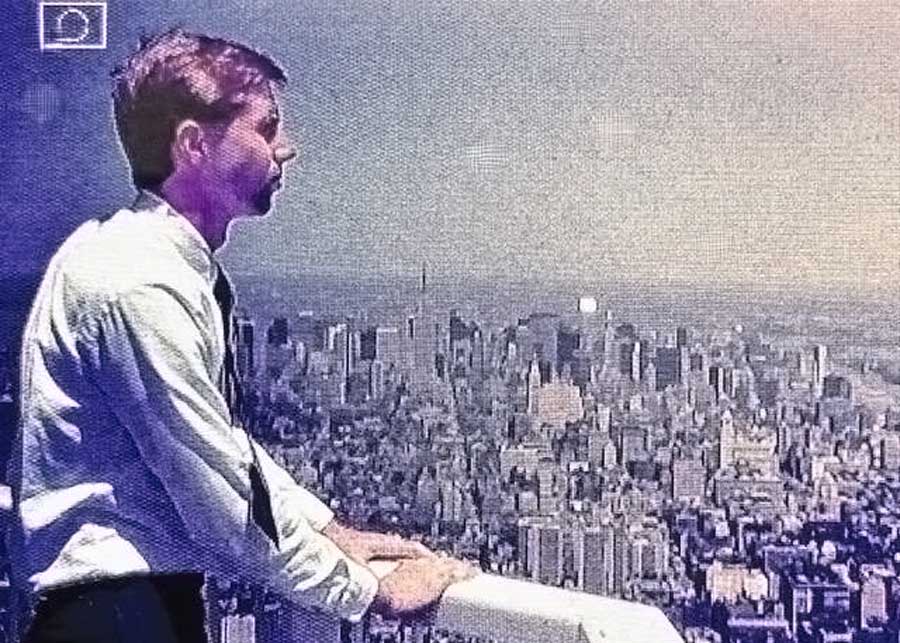
Having lived in New York City in the mid-1980s, I was familiar with the World Trade Center’s Twin Towers and their location relative to nearby airports — Laquardia and Newark.
Automatically, I began thinking like a journalist, quickly organizing my thoughts: who, what, when, where, why. Like all Americans watching the news play out in real time, I was having a hard time making sense of what exactly was happening.
Conversations in the newsroom began to rise above the novelty of just another news event taking place a long way from our community newspaper office.
Seconds later, television news reporters broke into the broadcast to report that a second plane had just slammed into the South Tower of the World Trade Center. Any doubt that this might have been a planned attack was immediately erased.
About that same time, I heard the bells in the pressroom ring, signaling the beginning of the afternoon paper’s press run. I pushed my way through the small crowd now gathered in front of the television, but by the time I made it over to the other side of the building, the press was running at full speed, churning out the evening edition I had just approved. It was too late for a true stop-the-press moment.
Thousands of papers had already been printed and many were already in bundles ready for delivery to a small army of paper carriers. It meant thousands of our readers would get their paper later that afternoon without any news of the terrorist attacks in New York, Virginia and Pennsylvania. We weren’t alone; afternoon papers across the country faced the same dilema.
The staff at one of our sister papers located in Troy, Ohio — about a half hour south — was also working on their afternoon paper. I knew their press start was at 11 a.m., meaning they’d still have time to get a story in.
The voice at the other end of the phone came from the newsroom’s top editor. “David, get your (expletive expletive) down here now,” then it hung up.
I grabbed one of our reporters and sped, literally, the 30 miles to the Troy office. It took less than half an hour on that day.
News reports dribbled in at first, as newspapers and broadcasters from around the country began sending available stories and photos to each other. Content from various new agencies that we would normally pay for was made available for all news outlets free of charge.
So many images from people at the scene helped tell a story that no one could explain.
I remember tearing up at the sight of ash-covered people fleeing the scene. The photo that moved me the most though, was that of firefighter Mike Kehoe making his way up the stairs of the north tower as crowds of people hurriedly fled past him down the service stairs to escape the destruction above.
Thankfully, Kehoe made it out of the building before its collapse; many others did not.
By the time the second tower came down, our small news staff knew we would miss our press deadline. Thankfully, the press room gave us some extra time, enough to get the news in the afternoon edition.
Several months later, I was fortunate enough to visit the site of the World Trade Center with my wife and children. Still hanging from the chain link fences were flowers, photos of people who died and letters of thanks to first-responders, many of whom were still on the site sifting through the debris.
Now, 24 years later, as a journalist, I reflect on the events of that horrible day and still struggle to fully understand how to answer those basic news questions: who, what, when, where and why.
David Kennard is the news editor at EastIdahoNews.com. Reach him at David.Kennard@eastidahonews.com.