



‘He was always looking at what could be done better’: Emma Atchley honors late husband’s farming legacy
Published at | Updated at
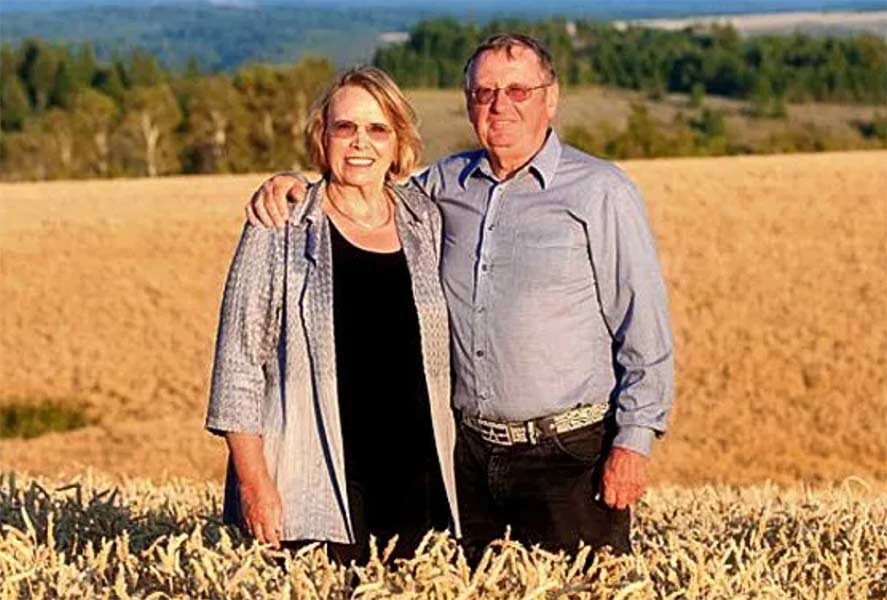
ASHTON – Since the passing of her husband in 2024, Emma Atchley has carried on the ranch they started running together in the late 1970s.
Flying A Ranch, established in 1972 in Ashton, is recognized nationwide as a leader in certified seed potatoes. It grows between 800 and 1,000 acres of seed potatoes on the 5,000-acre spread, according to the Ashton Chamber of Commerce. It sells between 200,000 and 250,000 sacks of seed potatoes every year, most of which are sold to customers throughout the Pacific Northwest and used to make French fries.
“We tend to specialize in the russet type. We have Russet Burbanks and rangers. The rangers are a French fry potato that processors like because they get big, long, and smooth, and they have less waste than some of the other varieties,” Atchley tells EastIdahoNews.com. “It’s a popular variety right now. It’s one of the few potatoes that has had commercial success after having been introduced in the last 20 years.”
The Atchleys also harvest wheat and canola and have a small cattle operation.
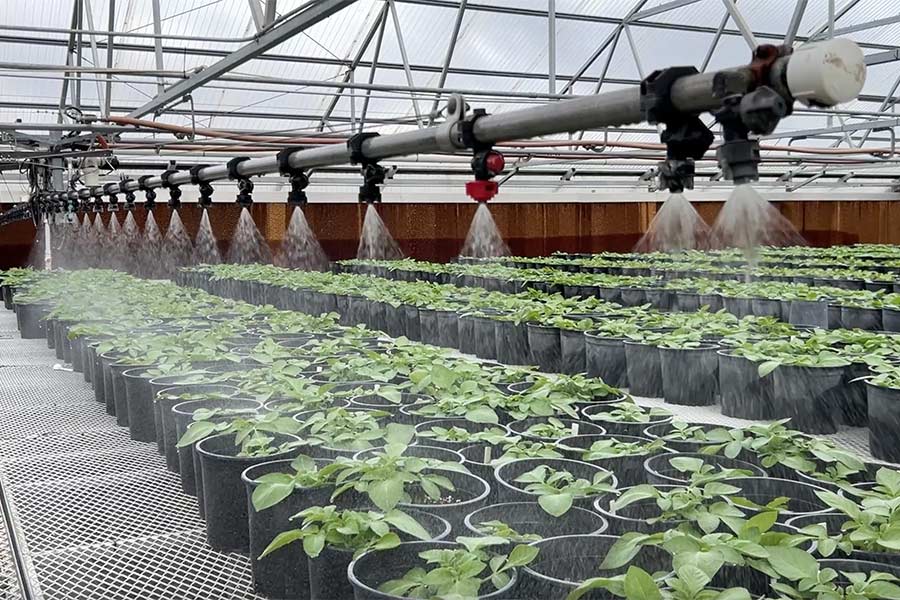
Emma is mostly retired now. Her daughter, Laura Pickard, and her husband, Clay, run the ranch full-time. Last week, a group of graduate students from the University of Idaho visited the ranch’s 20,000-square-foot sterile greenhouse, where seed potatoes are meticulously grown year-round. It was one stop on the group’s Idaho potato industry tour, which lasted three days. EastIdahoNews.com also paid a visit, which you can watch in the video above.
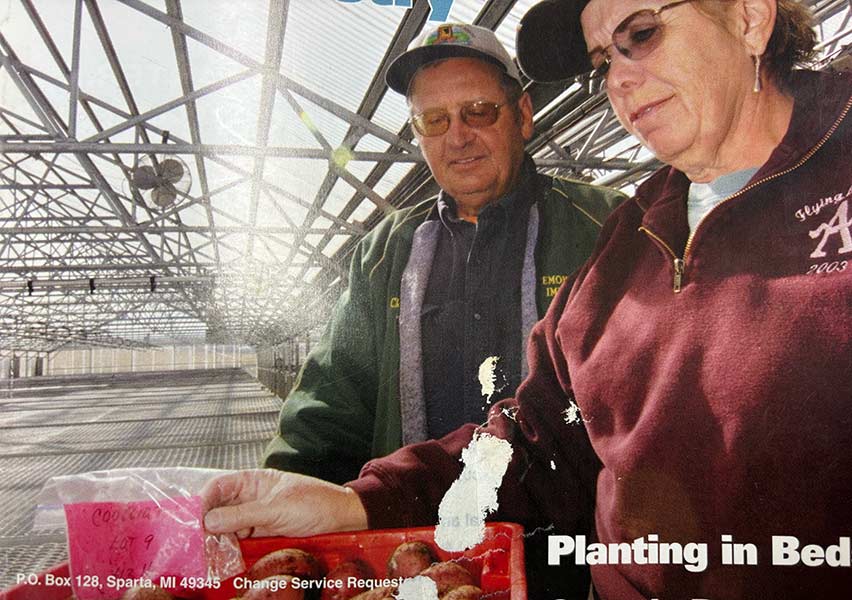
The Atchleys have a special relationship with the University of Idaho. Emma and her late husband, Clen, met there as students in the 1960s. They were married in 1970. After taking over the ranch Clen’s grandfather started decades earlier, the university eventually became their sole supplier of seed potatoes.
Laura and her husband also met at the U of I.
EastIdahoNews.com sat down with Emma after the students left to learn about the ranch and its beginnings. During our conversation, she reflected on her husband’s passing. Although he was diagnosed with prostate cancer in 2016, Emma says it was scar tissue in his abdomen and kidneys that ultimately killed him. It was the result of exposure to Agent Orange during the Vietnam War. His experiences in that conflict influenced “much of the rest of his life,” according to his obituary.
Before he left, he helped his dad, Preston, through a particularly challenging harvest season. Emma says that’s when Clen decided he was going to be a farmer.
She says her husband was instrumental in modernizing the harvesting process, moving from hand-picking potatoes to using harvesters and other equipment.
“When Spudnik started developing potato equipment, Clen was very interested in anything that could make (harvest season) more efficient,” Emma says. “He was also interested in improving irrigation possibilities” and made a lot of innovations.
Clen installed the first pivot systems east of Ashton and was instrumental in bringing the Marysville Pipeline Project to fruition.
Clen and Emma Atchley were inducted into the Eastern Idaho Agriculture Hall of Fame in 2020. The following year, Emma stepped down from a 12-year stint on the Idaho State Board of Education.
RELATED | 7 agricultural leaders will be inducted into hall of fame this month
After managing the ranch’s financial records for 25 years and traveling extensively with her husband for 35 years, Emma says it is Clen’s intellect that she misses most.
“He was really bright and really forward-thinking. He was always looking at things and evaluating what can be done better,” says Emma. “It was exciting to see the changes in the generations of farm equipment (under his leadership). He was one of the early adopters of most innovations.”
Agricultural roots
While Flying A Ranch was established in 1972, its beginnings stem back much further. Clen’s grandfather, James Arthur Atchley, founded Atchley Farms in 1906, about 1.5 miles from the ranch’s current location.
The Atchleys story is told in a book written by Clen’s brother, Chan, called “The Soul of the Land.”
Emma, who has secondhand knowledge of the family history, says James moved to the area from Tennessee in 1901 and landed in Marysville after traveling out West for two years.
“J.A. came here because he knew this was one of the last places where homesteads were still available,” Emma says. “They happened to have cousins who had settled in this part of Idaho.”
RELATED | How a Missouri man founded an eastern Idaho town and became the Gem State’s 13th governor
They cleared the land that first year and planted a small wheat crop while living in a tent.
A Conestoga stagecoach provided James with a steady income early on.
“He was a Yellowstone National Park guide and gave rides (to tourists) through the park,” Emma says. “That was the only way people could get into Yellowstone until they opened the roads up to automobiles.”
Clen had the stagecoach restored years later, and it sits on the property today.
It’s not clear when the potato operation started, but Emma says the earliest record they have is a blue ribbon James won for some potatoes he entered in the Eastern Idaho State Fair in 1923.
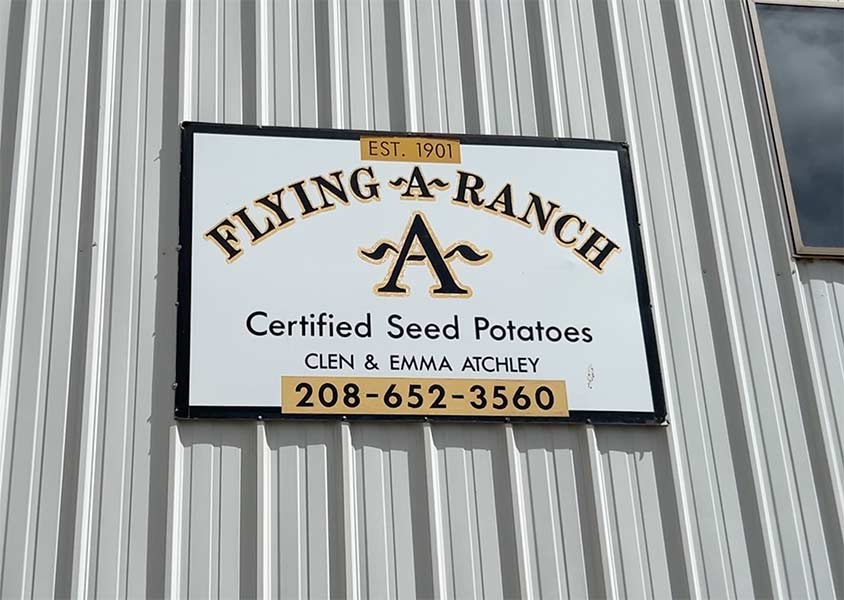
It became Flying A Ranch when James’s son, Preston, took it over years later. Preston ran cattle on the land, and the ranch gets its name from his cattle brand, an image of a letter A with wings.
As an early pioneer in the potato seed industry, Preston paved the way for Clen and his accomplishments.
“He had the first forced-air potato cellar in eastern Idaho,” Emma says. “He helped start the Idaho Crop Improvement Association.
A forced-air potato cellar, according to the University of Idaho, is a climate-controlled cellar that uses industrial fans to push a controlled airflow through large piles of potatoes. The Idaho Crop Improvement Association is the agency that administers and conducts seed certifications throughout the state.
RELATED | Former lawmaker and rancher being inducted into Eastern Idaho Ag Hall of Fame
Preston was inducted into the Eastern Idaho Agriculture Hall of Fame years before Clen and Emma received the same honor.
RELATED | Cindy Siddoway on family ranching, Hall of Fame honors and the future of Idaho agriculture
Clen grew up working with his dad and got involved full-time after returning from Vietnam in 1969. Preston retired in 1975, and Clen and his wife fully took it over a few years later.
Agriculture’s demise?
A generation after beginning life on the ranch, Emma says she’s proud to see her kids and grandkids continue the tradition their family started more than a century ago.
She hopes it will continue for generations to come.
About 50 years ago, Emma says, more than 50% of the country’s population worked in agriculture. The latest data shows that as of 2023, agriculture employs between 812,000 and 3.4 million people, which is less than 1% of the population.
In addition, she says the mindset of farming is to do what you love, help your neighbor and be honest — attributes she says are the basis of the American character.
“I don’t want to see us lose that,” says Emma.
Emma touts the importance of agriculture today in a world where it’s quickly disappearing.
“People have forgotten, in the United States at least, the importance of agriculture. To me, agriculture is the basis of all culture. I don’t care if you’re an engineer, an artist, or in a space ship, we all eat,” says Emma. “I think it’s critical for people to remember that.”
If you have a From the Field story idea, send it to rett@eastidahonews.com. Remember to use ‘From the Field’ in the subject line.
IN CASE YOU MISSED IT…
- State sells 160 acres of Idaho endowment land near the Tetons to billionaire’s LLC for $5M
- Marsh Valley’s Tietsie Fly has done a lot – and dealt with a lot – on the road to rodeo queen
- Idaho Falls exhibit puts farm life front and center through western art
- ‘Really wonderful miracle’: Two-headed calf born on Utah ranch